Help a Local Homeless Cat with Ear Cancer

$_27There are a lot of stray cats struggling to get by in the town I live in, and I recently found a post by a local family who are doing their best to support their friendly neighborhood stray, Teddy.

Teddy is a sweet little girl who has developed skin cancer and needs to have her ears amputated. This kind family has decided to take her in and take care of her surgery which will cost upwards of $2000. They’ve started up a fund for Teddy and are grateful for any help.

Please consider making a small donation, as I have, to help this very lucky kitty who is now receiving treatment instead of slowly wasting away on the street like so many. You can follow Teddy’s progress by visiting the link at the bottom. Here is Teddy’s story:

We met Teddy almost 5 years ago. She was a lively neighborhood cat, always friendly and rubbing against you as you were walking by.
She was living in a house but didn’t seem to get along with the other indoors cats so she preferred to stay outdoors where she could have peace and quiet time for herself.

Very independent and yet very loving with humans she was a leader in her area. All the other cats were following her as she was projecting a certain confidence.

But last year, for some reason, she started to lose weight. We did not worry much as we knew she had owners. Then, as winter started to set in, she was hanging more and more by our house to finally ask to come in as she was obviously cold.

Since last winter, we noticed Teddy was losing energy and was also increasingly scratching her ears. Her ears were so red and itchy that one started to bleed and get infected.

A visit at the veterinarian informed us that Teddy had skin cancer and that both her ears had to be surgically removed. Unfortunately the price was excessively high for our budget.

We already have a family and two cats. But we sincerely love that shy yet loving cat. We are ready to give her a home but we would need your help to finance her surgery. It’s the only way to stop the cancer progression and save Teddy’s life.

We thank you in advance for your generosity. Your donation will definitely make a difference.

Nathalie, Teddy and Family

https://fundly.com/help-us-heal-teddy

Californian Kits are so Cute

DSC_0058

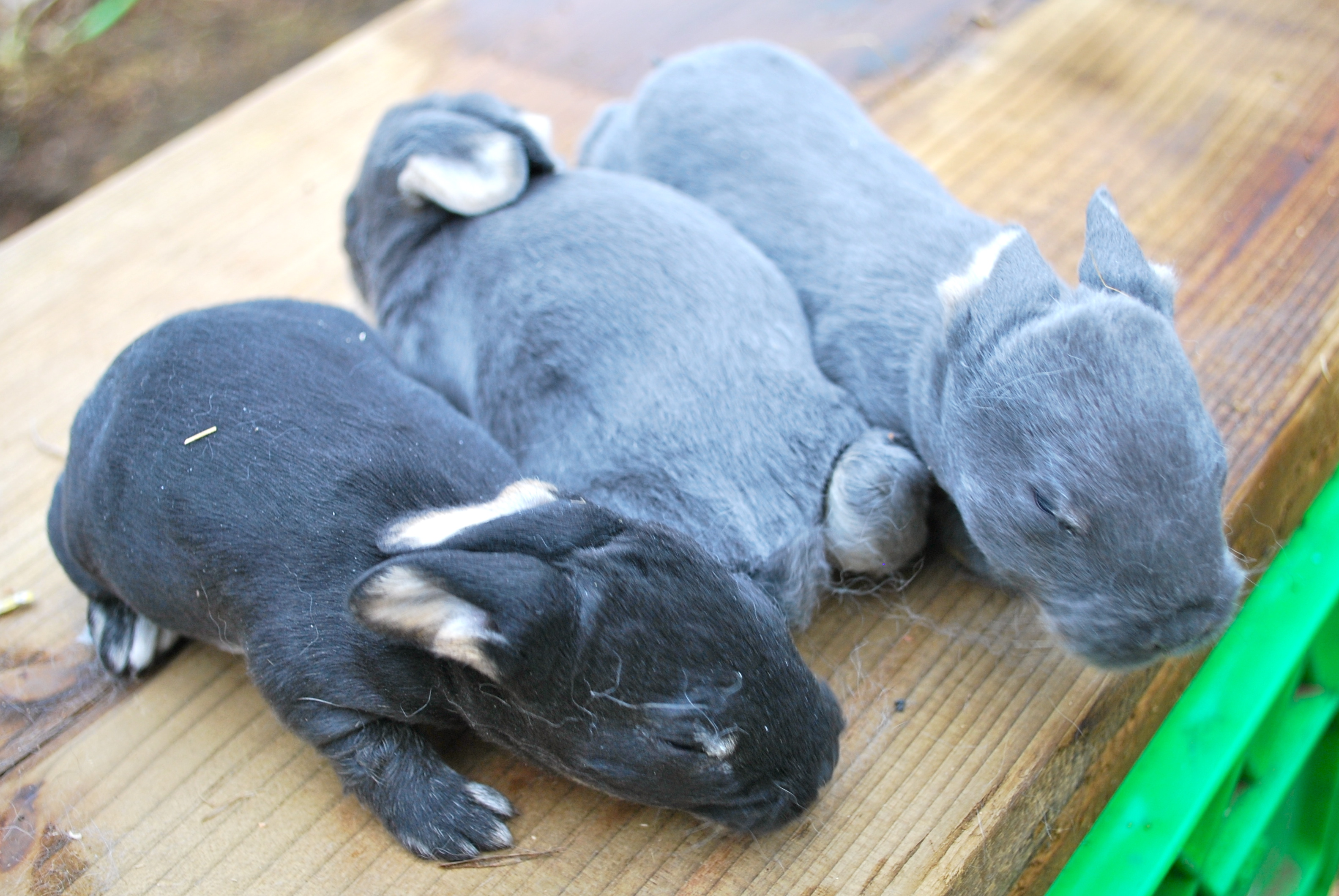
Of course while I was shooting the Rexes, I had to get some shots of the fluffy white puffball, three week old Cal kits. These bunnies are just so tiny and sweet. I’m going back on the barley fodder system now, and I think that will make for even healthier and happier rabbits. I’d say the new nesting material is a big winner, based on how fat, healthy and issue-free both these litters of kits turned out.

DSC_0066For at least the past week, these kits have refused to go into the nestbox at all, instead mom uses it to escape from them when required. I’ll be taking it out soon.

DSC_0081

The Trick to Easy-Peel Quail Eggs

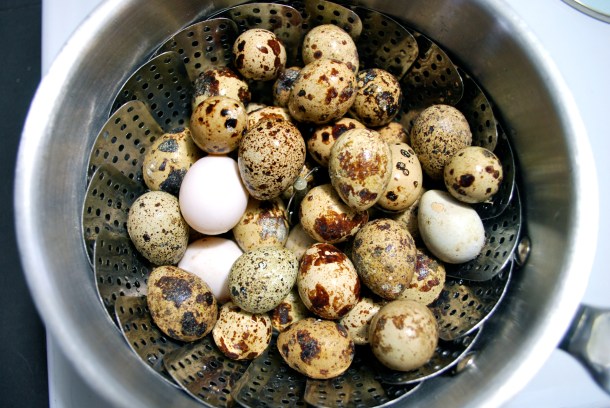
DSC_0025Anybody who has ever tried peeling a hard-boiled quail egg knows that it’s a tedious chore, at best. Anybody who raises their own quail knows that fresh quail eggs are next to impossible to peel cleanly.

The solution? Never boil another quail egg. Steam them.

Simply use a vegetable steamer in a pot with about an inch of water and a tight fitting lid. Turn the heat up to maximum and when the steam starts coming, set a timer for six minutes.

After that, rinse your eggs well in cold water and let them sit in the water for a few minutes.

DSC_0027

This egg is so fresh it was actually laid today, not bad huh?

Then peel. Quail eggs have a thin shell and a thick membrane, so pinch through the membrane at the fat end of the egg, where there is an air pocket, to make sure you get a clean removal.

Of course, this method also works for fresh chicken eggs. Steam them for about 12-15 minutes. You’ll be amazed!

Squab Update

DSC_0033Well, here is the first squab born here looking all grown up at 38 days old. Isn’t he handsome? It’ll be awhile yet before I actually know if it’s a hen or a cock. I’ve been using colored zip ties for banding thus far, but I’ll be ordering proper bands soon. At the rate everyone is reproducing I’ll need them.

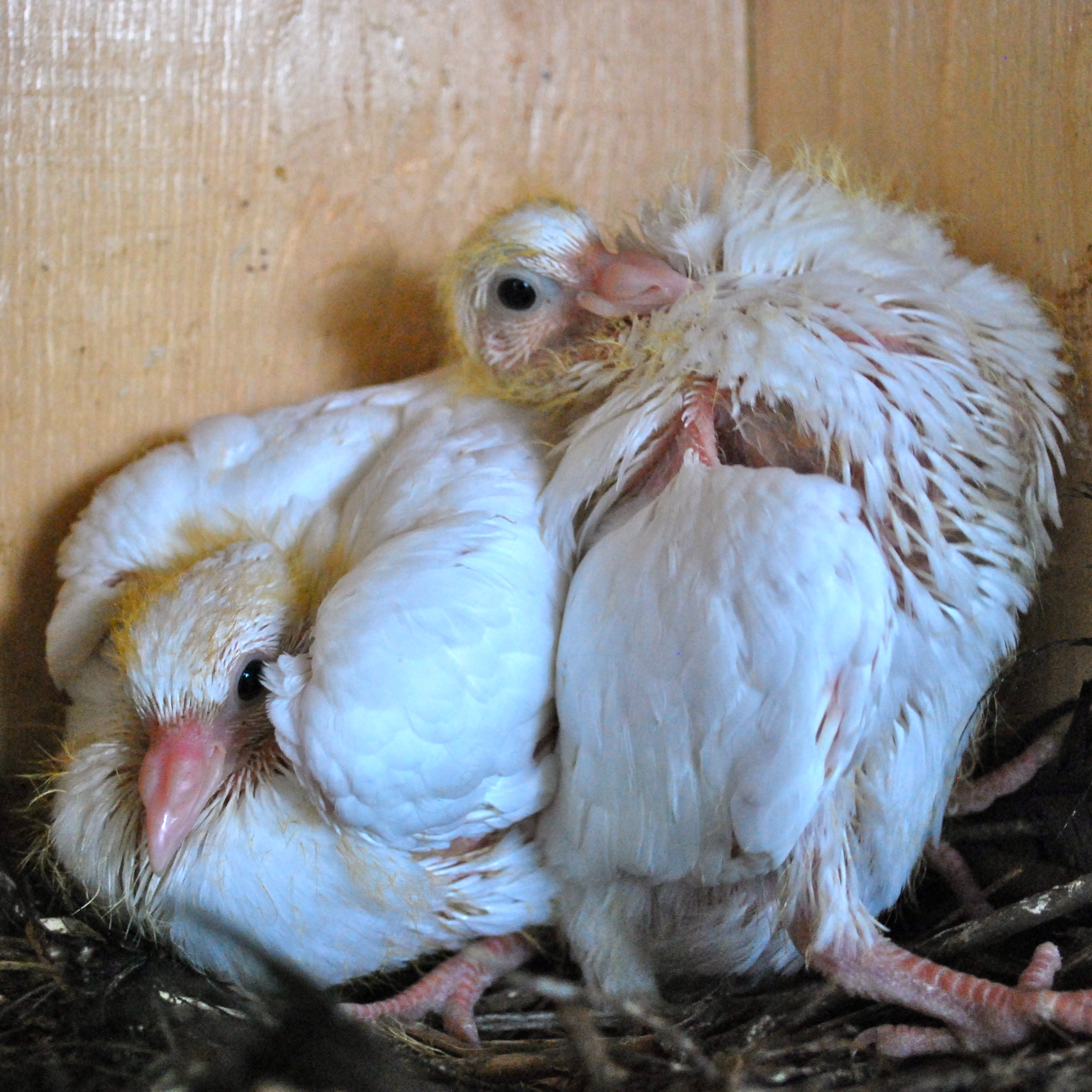
DSC_0029And here are the first two pure white squabs born here at about two weeks old. They like to stand up and look menacing and click their beaks when I get too close, to scare me away. Too bad it doesn’t work! I banded both of them today and luckily didn’t have anybody die on me like last time. Phew! These two birds will be the first ones trained for release since they were born here, unlike their parents. I’m very excited for that.

Photos of the New Rex Litter

DSC_0050I have some requests from potential buyers for pics of this litter, so I figured I might as well share them with everyone.

DSC_0054These kits are now twelve days old. As it turns out, there are two black otters, two blue otters and two solid self-blacks. One of the black otters has funny little bent over crumpled ears. I’m sure they’ll straighten out in time.

DSC_0042I think the reason I thought they were all blue at first is that the Rex black is much lighter when they’re born than in some of the other breeds I have. I’ll have to remember that.

DSC_0044My other Standard Rex Bluefin is due to kindle her very first litter on the 23rd. I gave her a nestbox today and she kind of exploded it.

DSC_0037

Yes, there is actually a nest and a rabbit underneath all that


Gardening: A Retrospective

DSC_0004

Poppies are one of my favorite perennials

I realized the other day that I never write about gardening on this blog, even though it’s a big part of my life and one of the main reasons I bought my own house and yard.

Throughout my apartment-dwelling life I’ve had many container gardens. One particularly nice one was in Halifax, Nova Scotia during my university days. It was on a modestly sized sunny balcony on the second floor of a huge heritage house. That was probably the garden I was most proud of… It was packed with poppies, nasturtiums, delphiniums, a giant dill plant, violas, sweet alyssum and wildflowers. I used to sit out there in the sunshine with my cats with butterflies and bees flying around everywhere and feel like a pretty damn good gardener.

Switch it up to my previous ground level place in Vancouver, British Columbia which had a great 40 by 6 foot outdoor patio area that was unfortunately in deep shade for most of the day. A lot of the plants I knew how to grow well withered away in that shade, although a few I expected not to survive surprised me. Like my giant sequoia redwood tree which has been toughing it out in the same pot for going on ten years now. (Where on earth do you plant a giant redwood on a normal urban lot?)

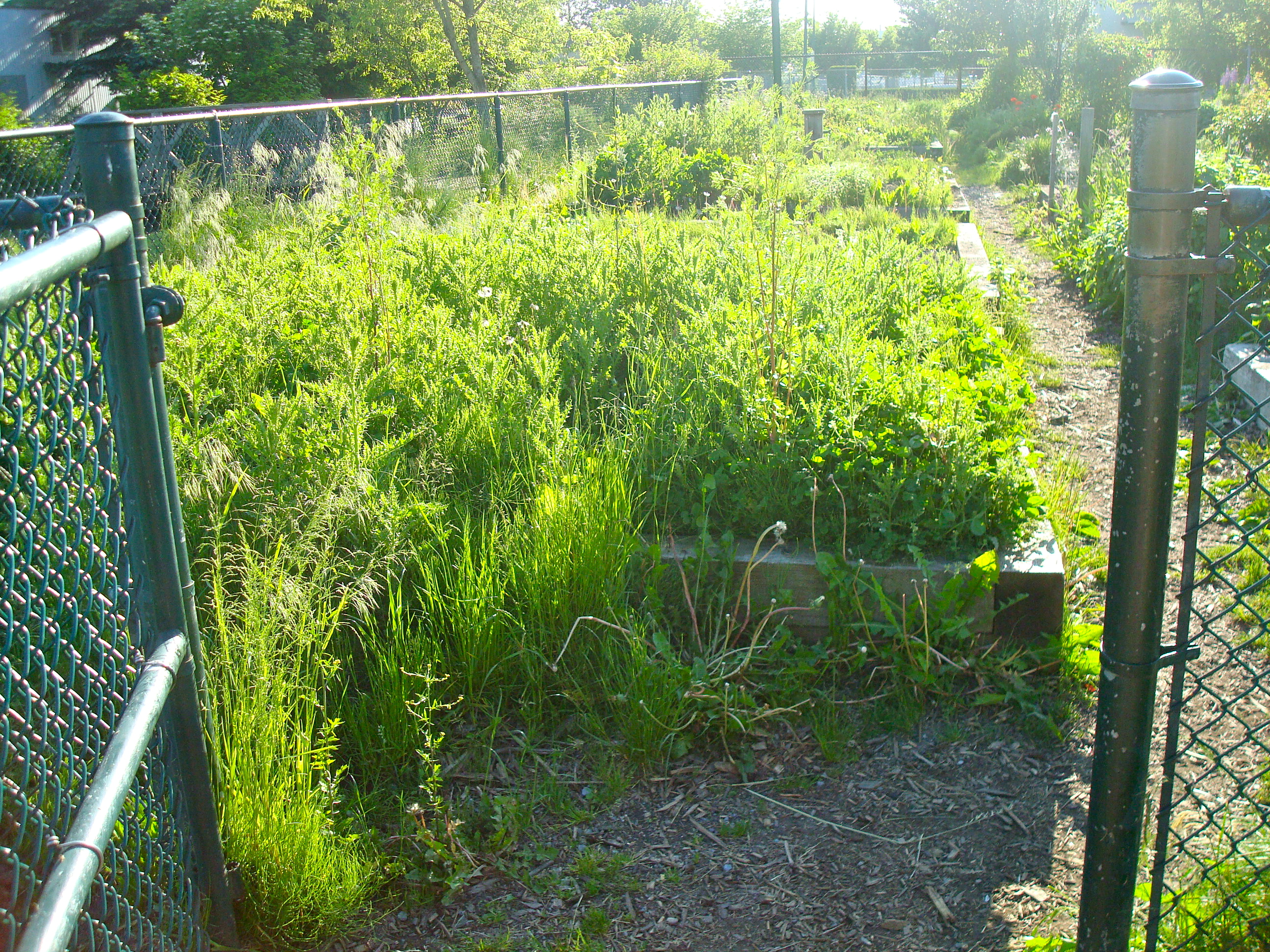
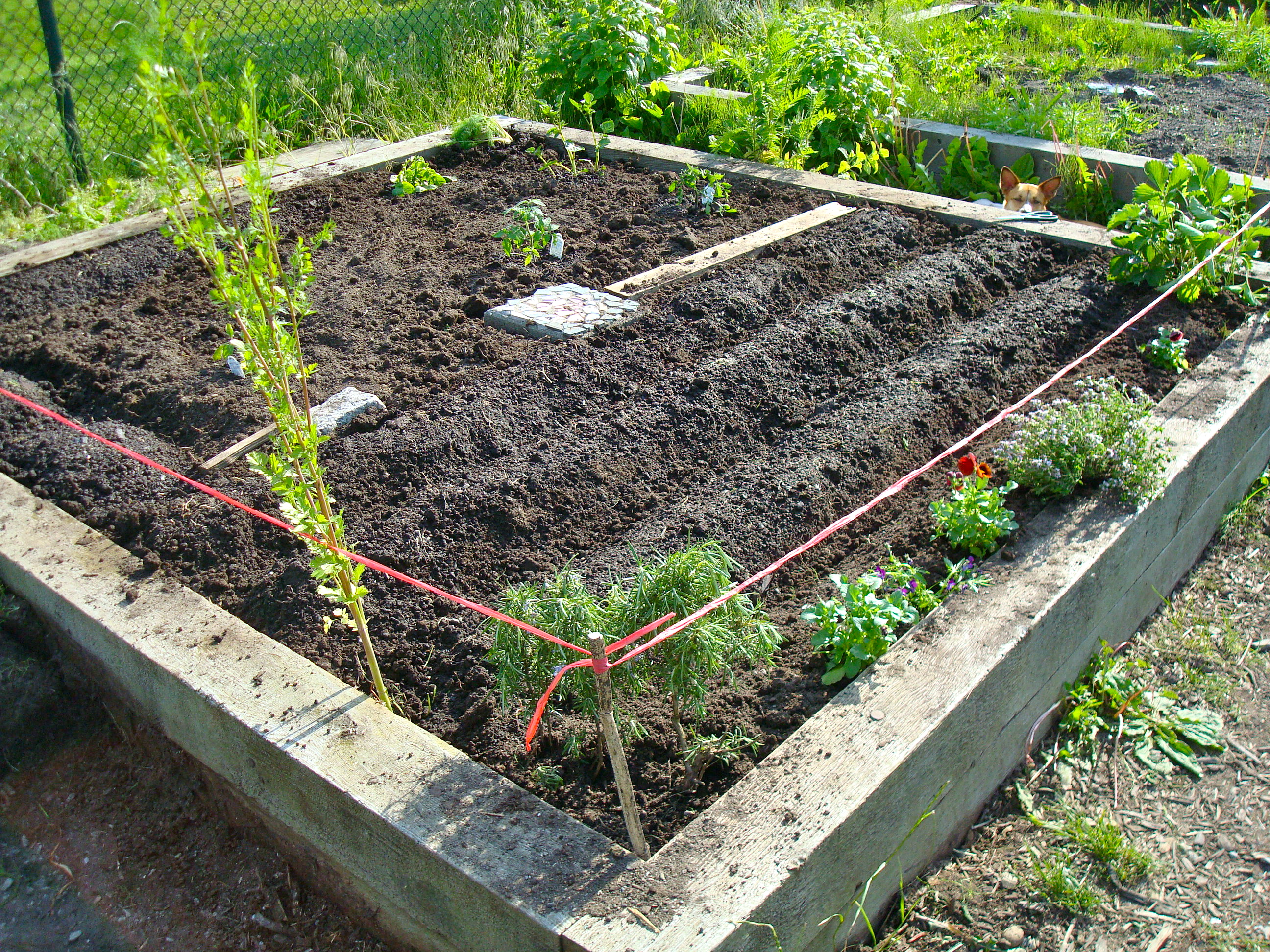
Luckily around the end of my stay there I was able to glean myself a community garden plot at the elementary school down the street. I had what seemed to me like a huge, 10 by 10 foot raised bed, stuffed to the brim with amazing rotted manure and compost. And weeds.
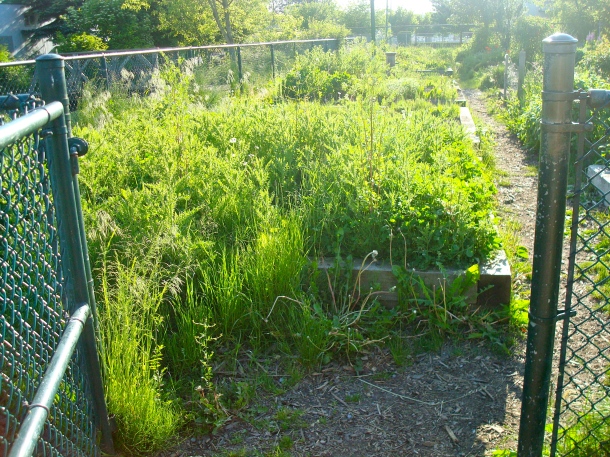
DSC09484

This is what my community garden plot looked like before I took it over
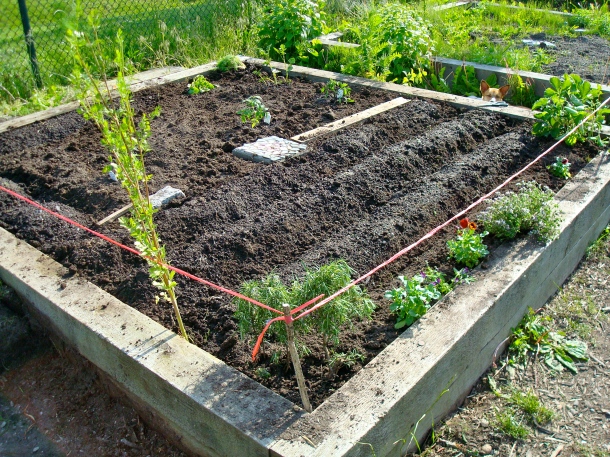
DSC09489

And here it is after

It was a beautiful sight! Without doing hardly anything other than the initial weeding, including not staking my indeterminate tomatoes, my vegetables were producing madly. I think other community members were probably watering my plot sometimes which I’m sure helped and was very nice of them.

Sadly, in the part of town I was living in, you were lucky if you were able to harvest anything out of your community plot before someone else did. It was always a gamble between letting something ripen for one more day, and it being gone. I had to improvise by planting unusual varieties like Aunt Ruby’s German Green Tomato, which fooled thieves into thinking the tomatoes were still unripe. It turned out to be one of the best things I’ve ever done, because they are now one of my favorites, (much more flavorful than any reds I know), and I grow them every year.

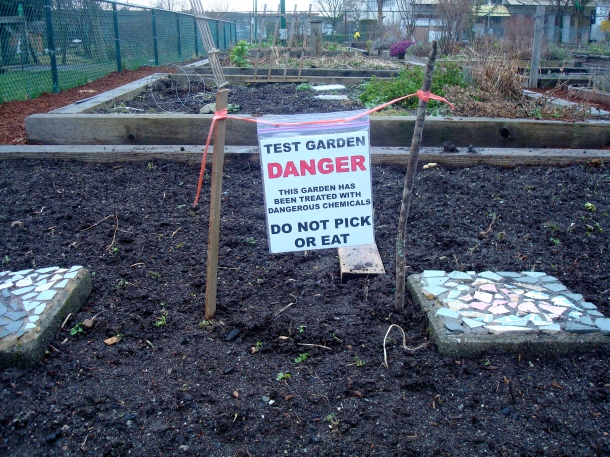
I also employed psychological warfare which worked pretty well, despite many strange questions from fellow gardeners.
DSC00042

In retrospect, I should have added an official-looking logo of some kind…

One time, my entire beautiful huge row of beets were taken all in one night. Another time, my whole big, bushy chive plant was razed to the ground, along with everyone else’s. Then there was the time I actually caught red-handed the person who had been doing most of the pilfering: an elderly chinese woman who I had been helping to carry water and move compost to her plot for months. It was a crushing experience. After that, I just didn’t have the heart to grow anything there anymore.

But now I have my own garden in my own yard with a great big fence around it and two guard dogs. Someone taking something out of my yard without my consent is not going to happen.

When I moved here two years ago there were really no gardens at all save for a weak attempt to “landscape” the front with a few ill-fitting shrubs. The weed-packed yard had been mostly neglected save for two sad, old dwarf apple trees in the back. One of my top priorities upon moving in was getting gardens dug and plants in. I had visions of so much food that I would be producing with all this new space… Tomatoes, peppers, potatoes, beets, spinach, mustard greens, strawberries, asparagus, artichokes, celery, carrots, herbs, onions, tomatillos, sunchokes…

After hours of backbreaking work removing sod and tilling over what looked like amazing soil, I had a garden that year. But it was a pitiful one. Despite the addition of some rabbit manure; with the protective surface layer of grass gone, my amazing-looking soil baked in the sun, became hydrophobic and a total weed magnet. I got something of a harvest that year, but the rabbits and chickens were thrown far more weeds than I ever had of tomatoes or peppers.

Now I’ve made some important changes around here. I think I’m finally getting the hang of things. In many ways, the traditional rules of gardening were always somewhat counter-intuitive to me, and I’ve discovered that when I simply follow the guidelines that I observe working in nature, I end up with much better results. I’ve learned a lot over the years and I’m ready to do things right. I don’t want to be constantly weeding and watering, I don’t want to use chemicals, and I don’t want to shell out money for things like manure or mulch.

Check back soon for part two of this post, where I talk about what I’m doing with my gardens now. Thanks for reading!


My Ducks

DSC_0027

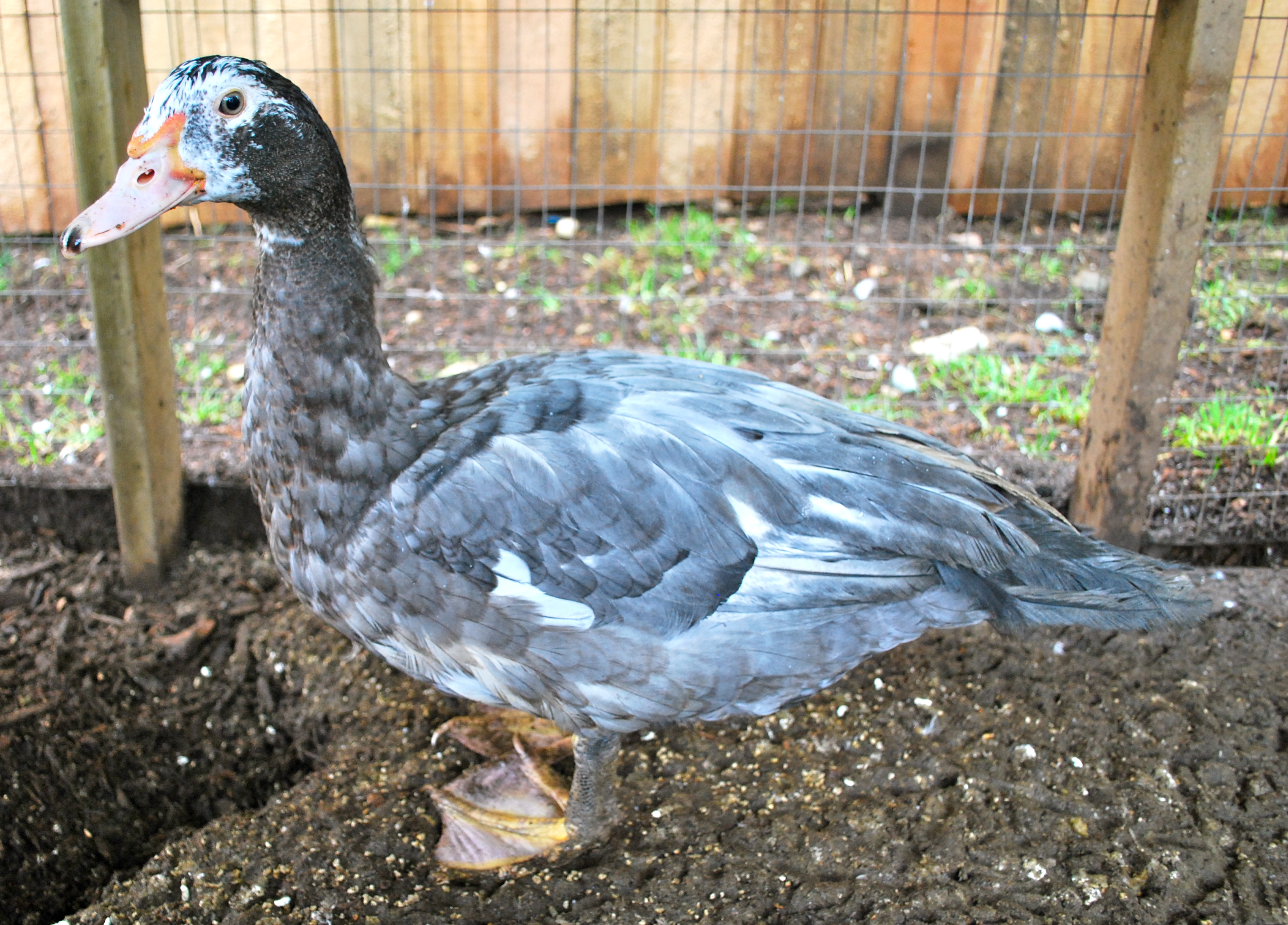
The lilac drake

Muscovy ducks were the first livestock of choice here on my little homestead, and unfortunately met to an untimely end.

Since then, I’ve had many more Muscovies and am now down to just two, a nice little brown duck and a mottled lilac drake, both with white heads. I hope to get a second hen at some point soon to form a trio. Muscovies are great for urban or city coops because they are basically silent, brood their own ducklings, are prolific, do not require a pool and you can keep a male, unlike with most chicken bylaws.

I like the solid brown, bronze or black coloration in these ducks. I had a beautiful solid brown duck last fall who flew away permanently after my other duck went crazy and chased her out of the yard. She also killed my solid black drake by biting his neck until he bled to death. She foiled my plans good. Needless to say I was pretty pissed at her, and she ended up being culled. She was the mother of these two but I’m pretty sure they had different fathers. They seem like much nicer ducks than their mom, thankfully.

DSC_0024

The brown duck

First Look at White Squabs

DSC_0054Here are the first pair of pure white squabs to be born here, they’re about 4-5 days old now. Aren’t they cute? I like that they look like they’re smiling.

DSC_0059And here’s the first squab born here at about one month old. He’s finally venturing out of his corner to look for food himself but still getting regular meals from dad. He has a pure white mother and a blue check sire.

DSC_0064Finally a shot of one of my white hens on her eggs, guarding her nest from my approach. They don’t budge easily when they’re incubating. So fluffy and fierce.

Standard Rex Kits are Here

DSC_0014

Blue otter kit from last year

On schedule, Tuna kindled seven kits this morning. This is her second litter, and I was expecting mostly black otters with maybe a couple of blues, since Tuna and Timmy are both black otter. That’s what happened the first time around. This time however, she gave me all blue/grey kits. They all look healthy and I expect them to do very well. Now I’m extra curious to see what Bluefin kindles at the end of the month since she’s a blue otter too. Will there be blacks? Brokens? To those who don’t know, broken is a mottled coat pattern.

DSC_0020

Black otter kit from last year