New Spring Bunnies Part 2

DSC_0016

Opal’s small litter

As predicted, the last two does kindled on Friday and now all our first spring bunnies have arrived.

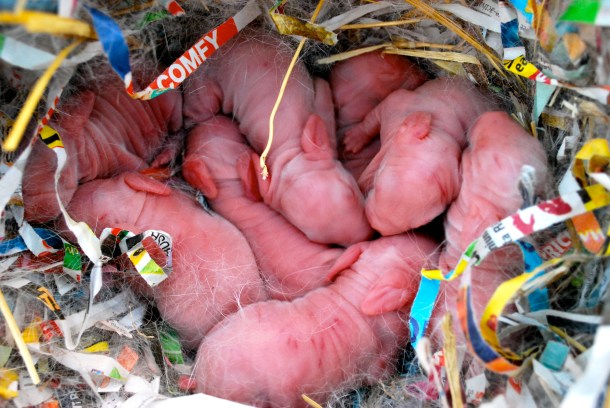
Fire Opal had a small purebred Standard Rex litter of three, two broken blue/opal and one broken black. Esther had a Creme d’Argent/Champagne d’Argent litter of six. With the bunnies that were born Thursday, that makes a total of 28.

The advantage of having does all due at the same time is I can even out the litter sizes for better survival rates. Most of the kits from these litters are pretty distinct looking, so I’ll still be able to tell who’s who once they mature.

I took four kits from Caraway and added them to Fire Opal’s nest, leaving them both with seven. Then I took one pink kit from Samphire and put it in with Esther’s agouti litter, leaving them both also with seven each. A very reasonable number that each mom should have no trouble taking care of properly.

DSC_0017

Esther’s Argent cross litter

New Spring Bunnies are Here

DSC_0009.JPG

Samphire’s Californian litter. Don’t they look comfy?

I had four does due today, but as of 7pm only two have kindled. I expect the other two will have kits by tomorrow morning.

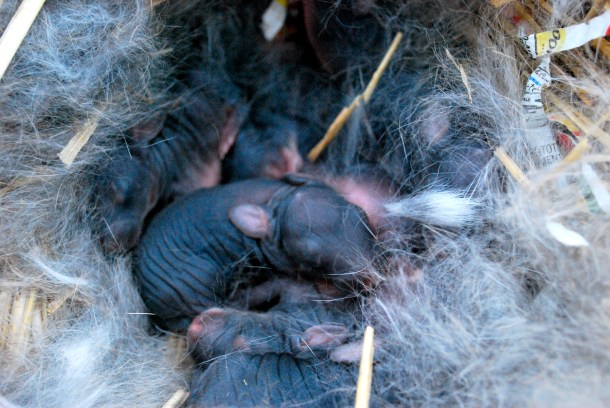
Samphire threw nine purebred Californian kits, one of which one was found dead in the nest, so a total of eight. Caraway, who is half Standard Rex and half Creme d’Argent, was bred to my new Champagne d’Argent buck Gonzague, and she threw eleven kits, all of which look to be agouti colored.

Tomorrow should bring a litter of purebred Standard Rex, and a litter of Creme d’Argent/Champagne d’Argents. The Argent crosses are new, so I’ll be interested to see what colors result.

Rabbits are being reserved fast, so contact me if you’d like to place a deposit.

DSC_0012

Caraway’s litter. Lots of fur pulled for this nest!


Seed Starting

DSC_0001

I think I can say that this is the first time in my life I’ve started my seeds on time, and properly. I now have a seedling heat mat, and was happy to find small greenhouse flats at the dollar store for a buck each. I made free plant markers out of plastic yogurt lids, and the seaweed snack trays I’ve been saving fit perfectly six to a flat. Let’s go!


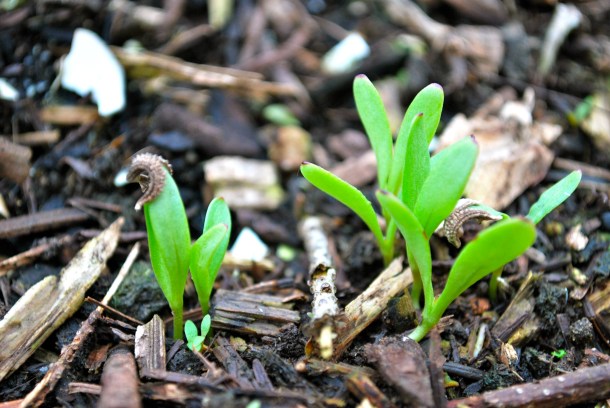
First to sprout was the curly endive and broccoli in less that 24 hours, followed by the marigolds, okra and thyme at about 48 hours. I have my tomato and pepper seeds going, as well as some herbs that I’d like more of. I go through thyme so quickly and it grows so slowly!

The tomatoes I have started are Aunt Ruby’s German Green, Prudens Purple, Black Sea Man and Green Grape. A couple of the seed varieties are older so I may have to start more. The Prudens Purple are from 2008!

For peppers right now I have Jalapeno, Poblano, Sweet Banana (thought it was hot),  and New Mexico 6 Chili. Planning to also do Habaneros.

DSC_0003


I went seed shopping today and got a bunch of fun stuff. Seedy Sunday is next weekend but I just couldn’t help myself.

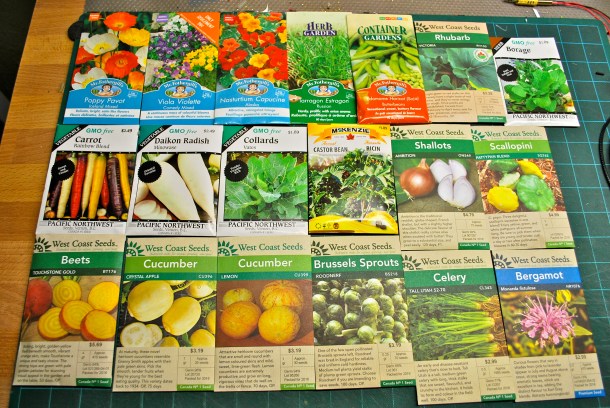
Starting from top left we have mixed Iceland poppies, mixed violas, variegated nasturtium, tarragon, edamame, rhubarb, borage (I know it’s a weed!), rainbow carrots, daikon radish, collard greens, castor bean, shallots, scallopini squash (pattypans), golden beets, crystal apple cucumber, lemon cucumber, brussels sprouts, celery and bergamot. Phew! Did you know that some people hide seeds behind other seeds at the seed store? They do!


I also picked up a flat of Winterbor kale since there were no seeds available and it’s a variety I wanted to try. It’s the curly green kind most often found at the store.

Last I grabbed some elephant garlic and a canna since I’ve never grown one and I find them lovely. It will need to be lifted in the fall and stored in a frost free area for the winter, but I canna see that being much of a problem!

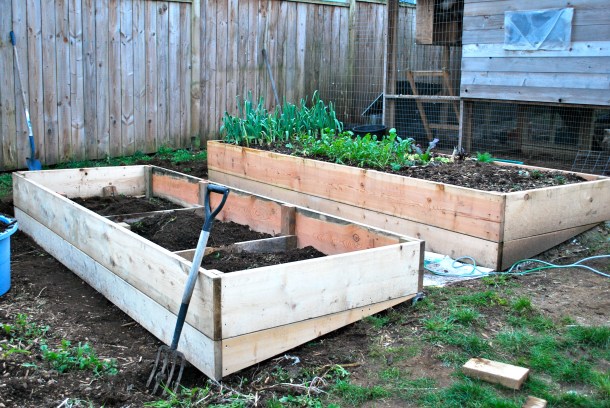
Second Raised Bed Filled

DSC_0047

Things have been moving along well with the beds, the middle bed now has a deep layer of aged compost and manure, topped with some chicken coop flooring, and finished with topsoil/decomposed mulch from the existing garden. I hardly know where to start planting!

DSC_0050

While I was emptying the compost pile to fill this bed, I uncovered another rat’s nest. I knew they were hanging out in there. A couple more wheelbarrows in and a huge momma rat jumped out and ran off. We were too slow to get her. She’s still been too wily to step into a rat trap, but she sure doesn’t like the cayenne pepper I’ve spread around the perimeter of the coop where she used to dig in every night. I’m also putting it into the poultry feed itself.


February 29th Garden

DSC_0020

Peonies coming up

March has not yet hit, but the garden is already back in full force. Some things like the kale, calendula, and chamomile have been going strong all winter long.

DSC_0021

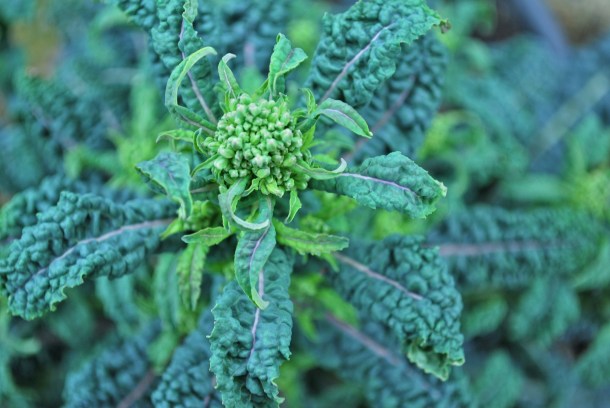
Cavolo Nero (aka black kale/Lacinato kale) getting ready to flower

DSC_0057

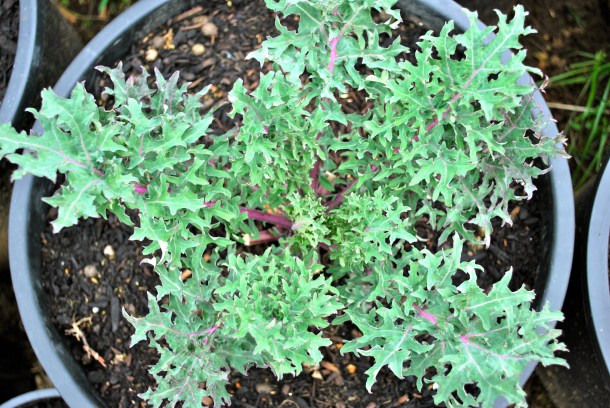
Self-seeded and transplanted red Russian kale from last year is starting to take off, this is a 5 gallon pot!

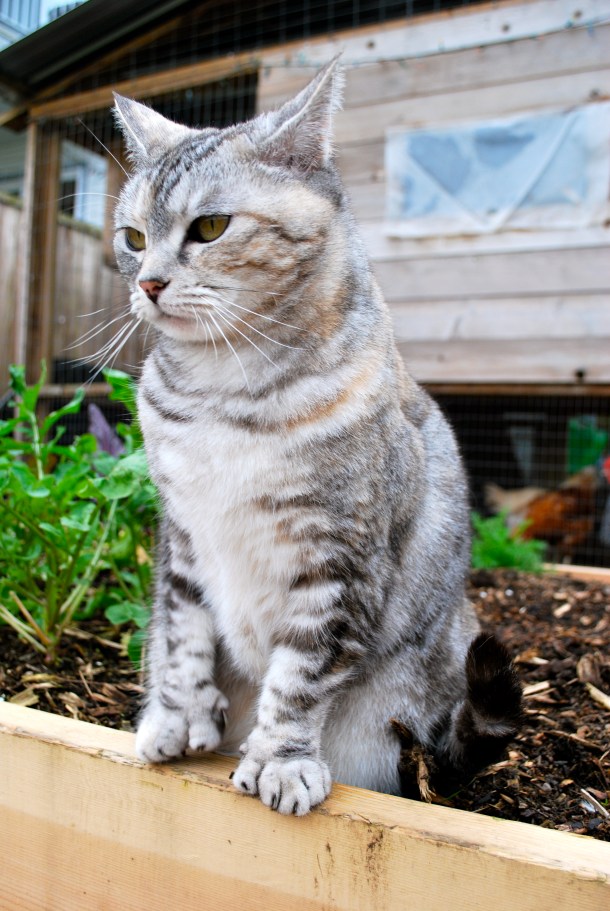
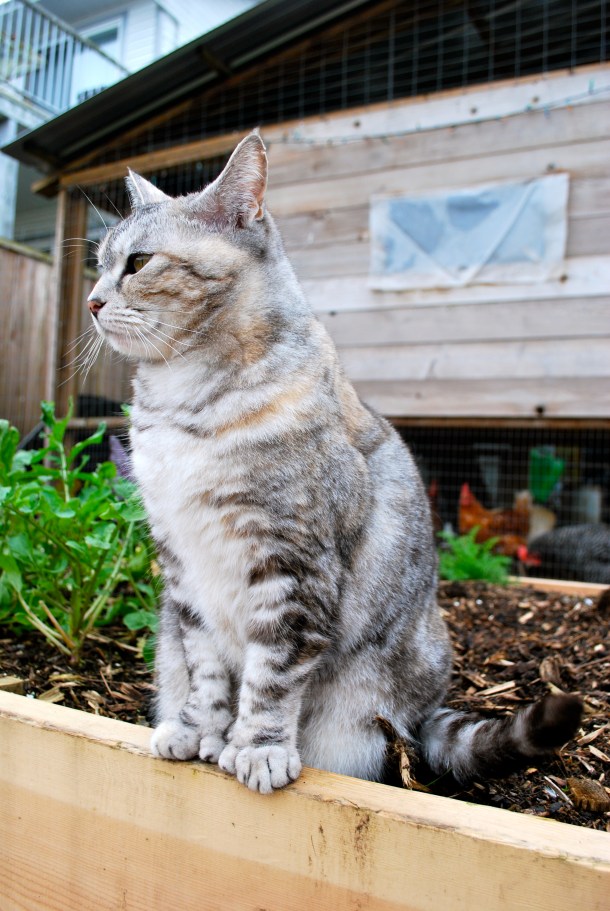
I wandered around today with Parsley the cat as my companion and took some pictures to share with you.  I think we’re going to have a prolific year!

DSC_0027

“I have decided to supervise this activity.”

DSC_0016

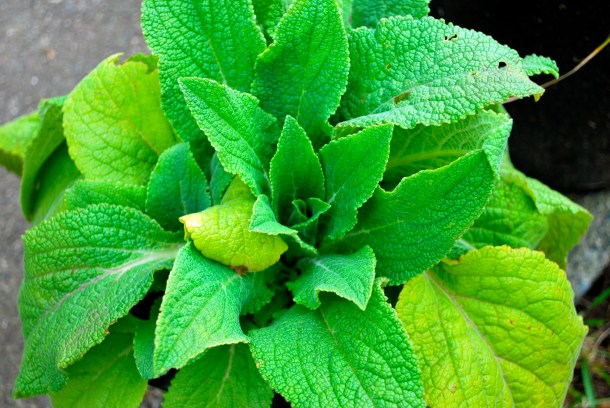
Digitalis or foxglove, started last year from seed. Should flower this year!

DSC_0015

Blue and pink delphiniums started super early

DSC_0019

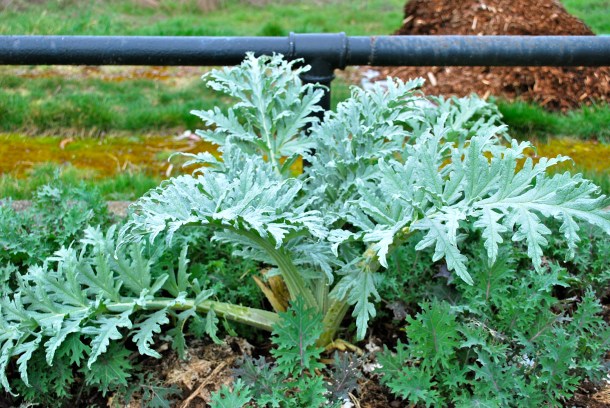
Looks like I may get a few artichokes this year! Check out the self-seeded kale all around it…

DSC_0044

Princess Parsley surveying the raised beds

DSC_0014

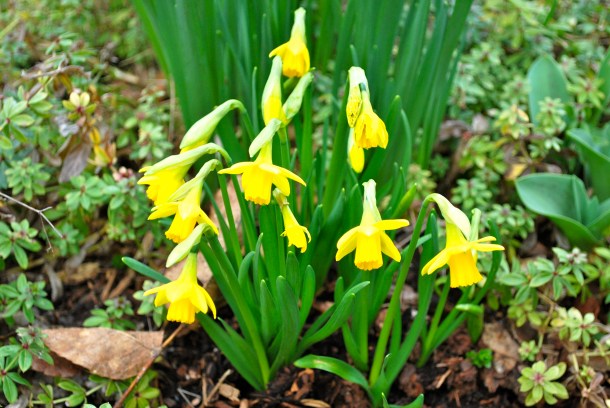
Cheerful mini daffodils surrounded by sweet woodruff

DSC_0025

Some potted up Egyptian walking onions and self-seeded miner’s lettuce

DSC_0026

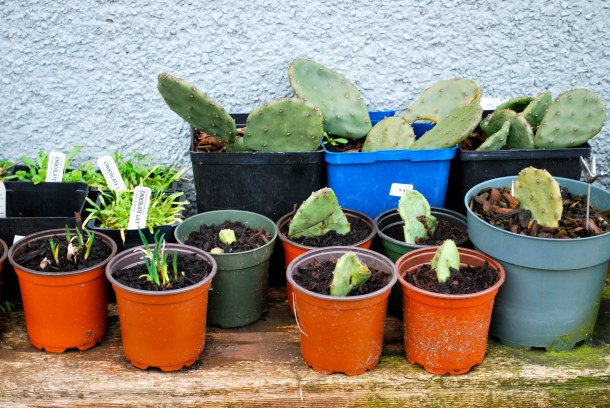
Potted up prickly pear cactus

DSC_0018

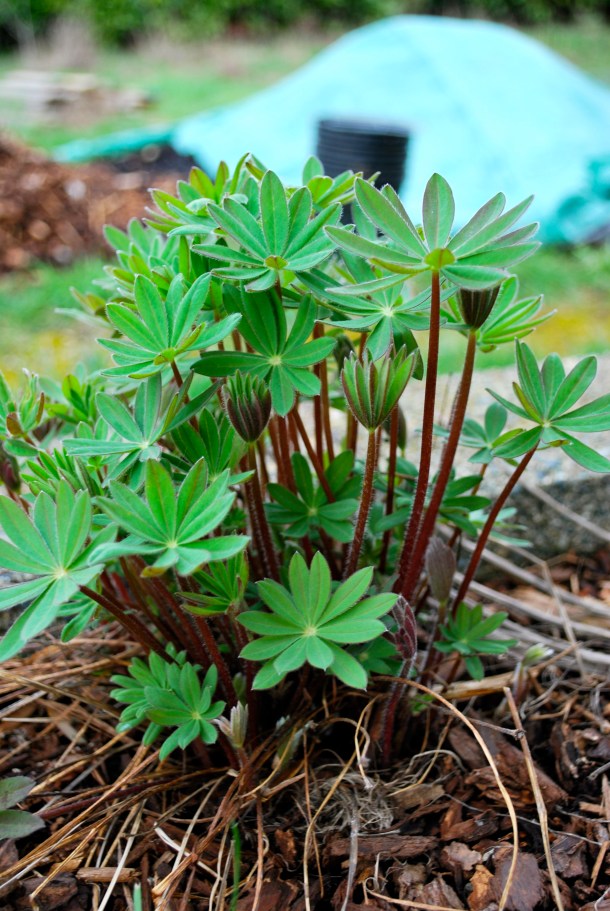
I love how thickly last year’s lupines are coming in

DSC_0051

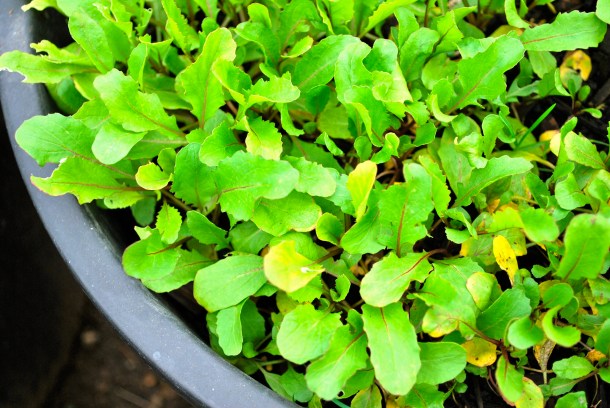
And of course the arugula, one of my favorites. It’s already trying to bolt!

DSC_0058

Good thing I have all this baby arugula started. I could eat arugula all day.

DSC_0039

Young red mustard greens

DSC_0024

One of the little bee balms from last year now trying to engulf its pot. I think this is the red flowering one

DSC_0023

Moroccan tea mint doing excellently, as expected

DSC_0069

Hops are popping up

DSC_0013

This is a Persian cornflower I got late last year on sale. Can’t wait to see the blooms!

DSC_0076

My big pink tea rose in the front yard is looking good even after being blown down and staked back up last year

DSC_0071

The little hyssop under the nest box made it though too. This herb is too strong-tasting for me straight up but a few leaves chiffonaded into a salad are delicious

DSC_0036

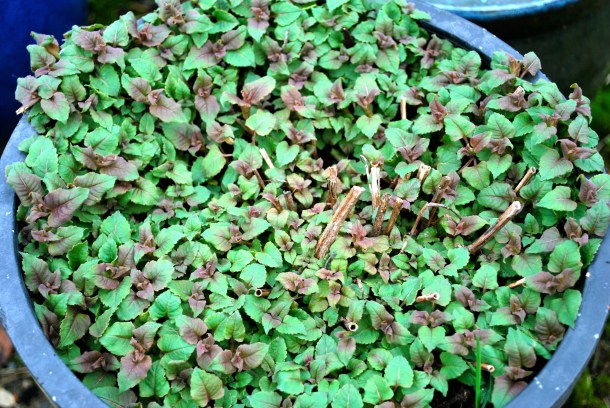
The calendula plants that made it through the winter are pretty scraggly, but new babies are coming up all over the place now

DSC_0011

The wallflower is bravely bursting forth

DSC_0029

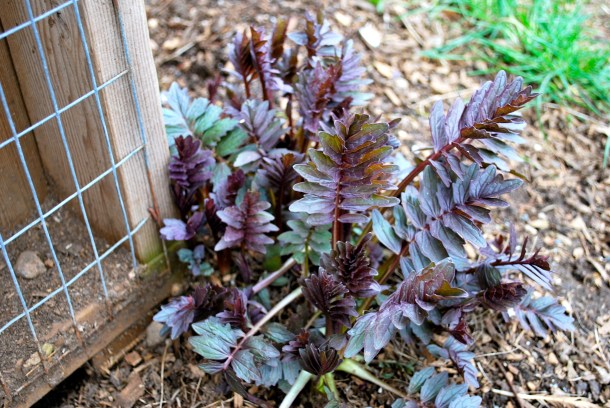
Valerian at the foot of the coop off to a good start

DSC_0046

Satisfied ruler of all she can see

Second Raised Bed Complete

DSC_0026

This middle bed was knocked out more quickly than the first, but the leveling and alignment took way more time.

Now that it’s in, I can see that the grade of the yard next to the fence is higher than the center here, and I’ll have to figure out a strategy for dealing with that. The grade needs to come down a bit anyway to allow more clearance for the bottom of the fence. My preference would be to fill this whole area around the garden beds in with woodchip mulch.

Much of the backyard is a muddy pit right now and major regrading and updating need to be done everywhere. At least the garden beds will be nice and level so I can use them as reference.

Bed two has a deep, rich layer of decomposed woodchips and compost at the bottom of it, and to this I have been adding partly composted rabbit manure and bedding. I’ll try to fill it up with as much as possible since the rats are using this compost pile as a hideout and they need to be evicted. The top six inches of the bed will be chicken pen flooring or finished fish compost.

I’m so glad to finally have this bed done. At last I can plant some new things! I’m planning to put in peas, carrots, mouse melons, johnny jump ups, and maybe a tomato.

DSC_0024


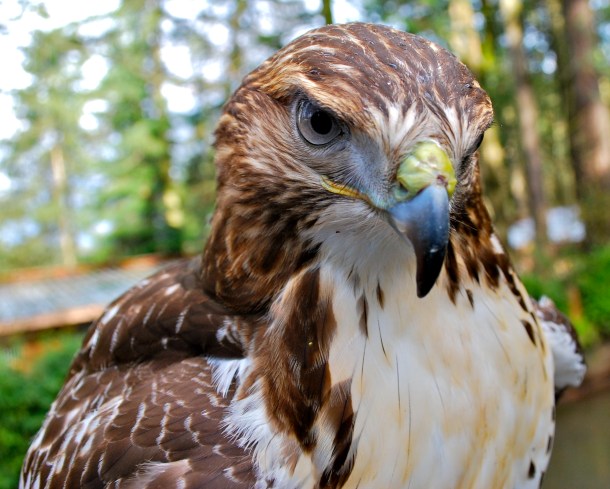
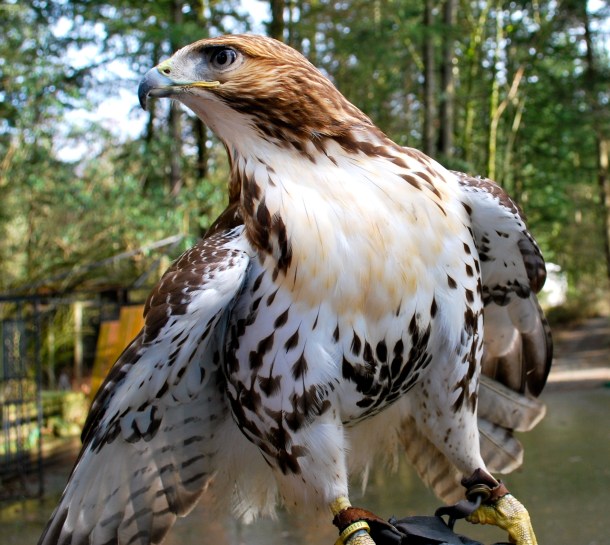
Female Red-Tailed Hawk Up Close

DSC_0023

This little girl has actually lost most of her tail for now. Luckily she has luxury accommodations and room service for as long as it takes to grow back!

DSC_0022

If you ever get a chance to man a redtailed hawk, you’ll understand how serious their talons are. They are strong birds that can grip almost hard enough to crush your hand if they really wanted to.

DSC_0020

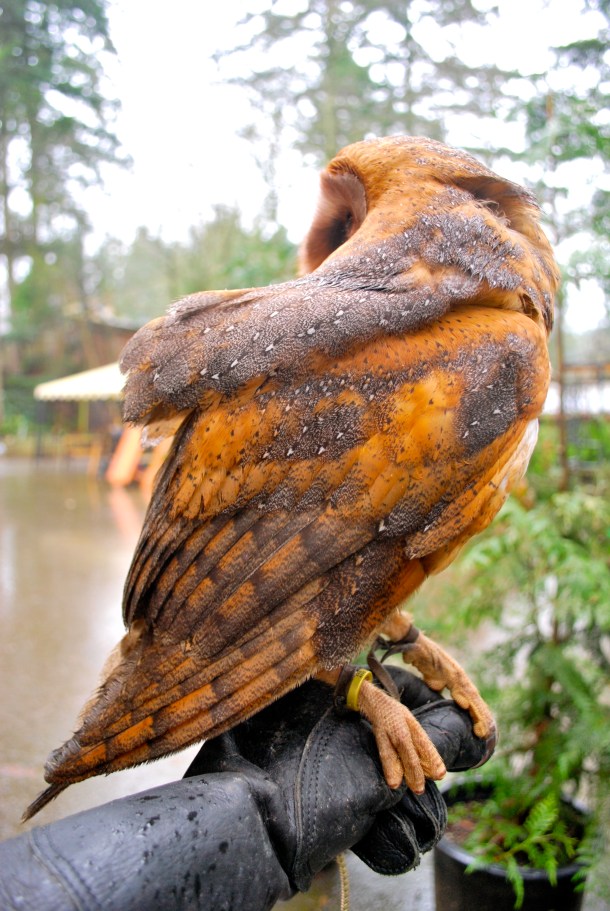
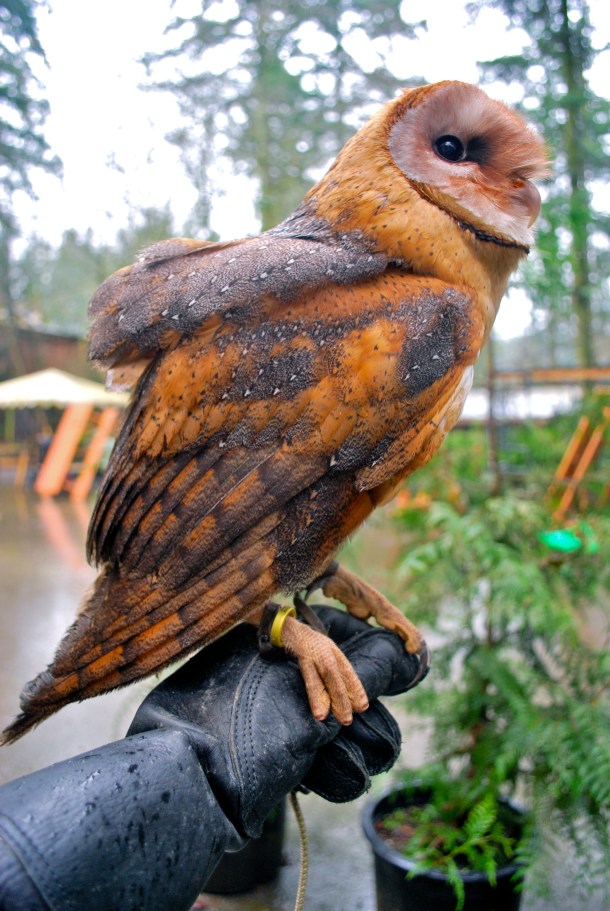
Here’s a Little Barn Owl

DSC_0011

On the glove, to brighten your day! If you ever get a chance to hold one, they weigh next to nothing. I think he weighs about 250 grams if I remember right. I love being able to have him up close so I can admire his intricate feather patterns.

DSC_0012

Barn owls are definitely one of the strangest birds I’ve ever met. They can seem a bit deranged, especially when they’re well-fed and display this very menacing behavior where they hold out their wings and rock back and forth, clicking their beaks at you. It’s pretty demonic.

DSC_0014

I still quite like them though!

Chicks at 10 Days Old

DSC_0017

Well, all the baby chickens are doing great. Nobody has died, although there were a couple of mild cases of pasty butt, which is unusual here. I think the heat lamp may not have been quite low enough in the first couple of days.

They are a very nice batch of chicks, they all come running when I make my “chick, chick, chick” call, and they gather around my hand as though it were a mother hen.

I think you can tell a lot about the adult birds from the way they act as chicks. I’ve had very docile, calm chicks like Buff Orpingtons, and I’ve had very skittish chicks like my Black Copper Marans. Although my adult Maran hen is perfectly friendly now, she’s more interested in chicken things like being at the top of the pecking order and getting the best roost at night and yelling for fermented grain in the mornings. Whereas my Buff Orpingtons were more likely to follow me around while I was gardening and carry on chicken conversations with me.

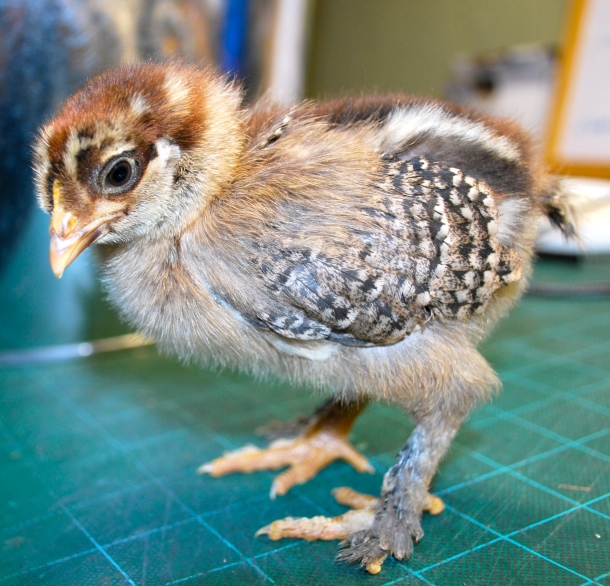
I have my favorite chick picked out, of course:
DSC_0013

You may recall that I hatched out eight Light Brahma/Cochin cross chicks. This one is my favorite. She came out with the same partridge markings as the Welsummers, although the spots on her head are more ornate. She almost looks like a turkey poult to me, she’s surely the biggest of the bunch. I’m calling her “she”, because I’m hoping for a hen. Here’s a top view:

DSC_0016

DSC_0001

After much online research I was unable to conclude whether Cochins and Brahmas are fast or slow feathering breeds. It seems that even color variation may play a part in which sex feathers out first, so all I know is that I have two fast feathering Cochins, and six slow feathering ones. My favorite chick, as you can see in the photos, is fast feathering. There is also a black Cochin chick who is fast feathering. So it could mean two things, either I have two hens and my favorite is a hen, or I have six hens and my favorite is a rooster. He/she is also one of the most friendly and outgoing chicks out of all of them, so does this lean towards roo? Either way something good will come out of these eight.

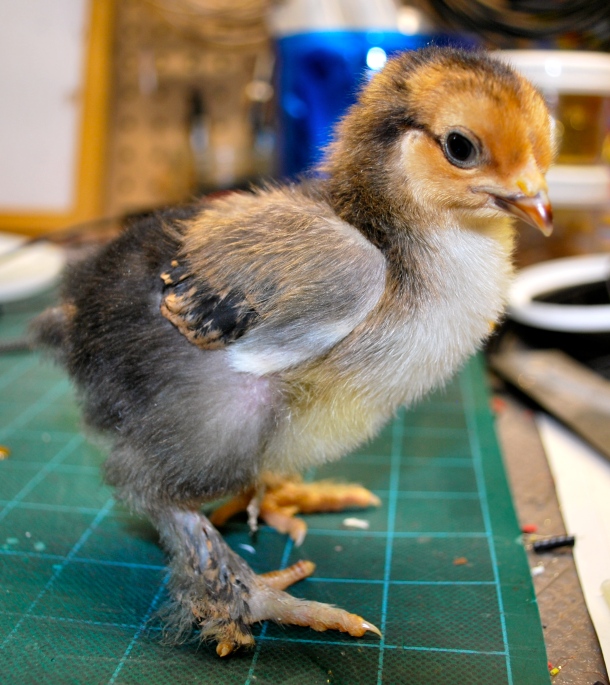
Below you can see an example of one of the slow feathering black Cochin cross chicks. You can see that his flight feathers are much shorter, he has almost no tail feathers coming in yet, and even his toe feathering is very slow.

DSC_0011

Here is one of the reddish-colored Cochin cross chicks that is also slow feathering. The wings are still just little nubs but the red lacing coming in on the flight feathers and toes looks very nice.
DSC_0007

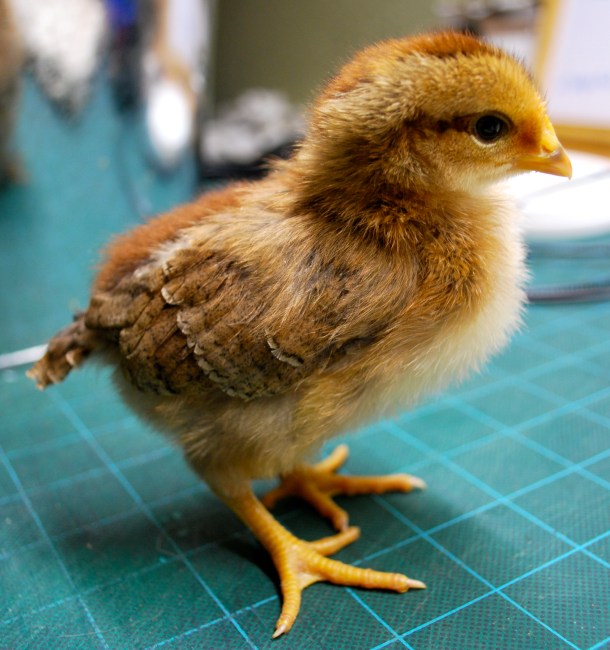
Next up are the Welsummer chicks. Although they came from what I would consider very small pullet eggs, they are big, robust chicks that are pretty cool, calm birds. Welsummers can be sexed by color because they are born with the distinctive partridge pattern, and from what I can tell I seem to have four roosters and eight hens. I like those odds!

Female Welsummer chicks will have a defined dark V shape on the top of the head, a dark brown eye stripe, and two defined dark lines on their back. Here’s a top view photo of a future hen on the left and a rooster on the right.

DSC_0021

Here’s a side view of the female chick, you can see the dark eye stripe:
DSC_0019

And here’s a side view of the male chick, with a weakly defined eye stripe:

DSC_0022

And a pair of females seen from the side and from above:


Last but not least are the three tiny Old English Game chicks. They were all fast feathering and of course I’m hoping for all females. They are growing very slowly compared to the large fowl chicks and I may have to separate them out in the next few weeks, since I use a hanging nipple waterer and everyone has to be able to reach it. They’re so tiny I can’t see that being much of a bother though!

DSC_0027

DSC_0029