Chickens Have Hatched

DSC_0040

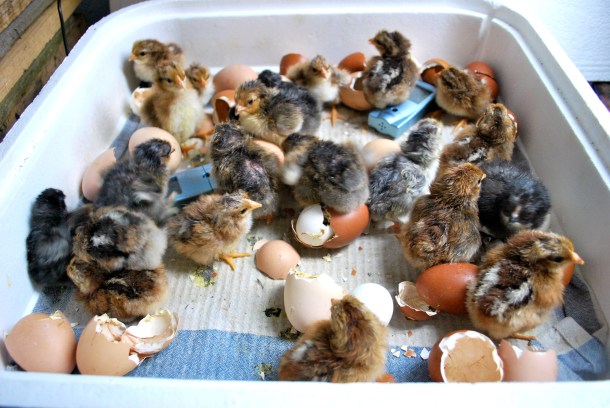
Today is day 21, and my chicken eggs have mostly all hatched. I got a 100% hatch rate from my Welsummer eggs, which is great as they were the most expensive. I also got three little black OEG banties, and eight Cochin/Light Brahma crosses. The Cochin crosses are very hefty chicks and they’re so cute with their little fluffy feathered legs and feet.

I just returned home and set them all up with food and water in their brooder. So far they are pretty much just resting and continuing to fluff up. The Welsummers can be sexed by color, and I bought some leg bands today to mark the suspected roos and see how they turn out. The Cochin crosses I will attempt to feather sex after they’re a couple of days old.

So, out of 42 eggs we have 23 live chicks. Everyone looks healthy with straight feet and they all hatched right on time, so I think the incubator conditions were pretty much bang on. Always good to know.

DSC_0039


First Raised Bed Populated

DSC_0007

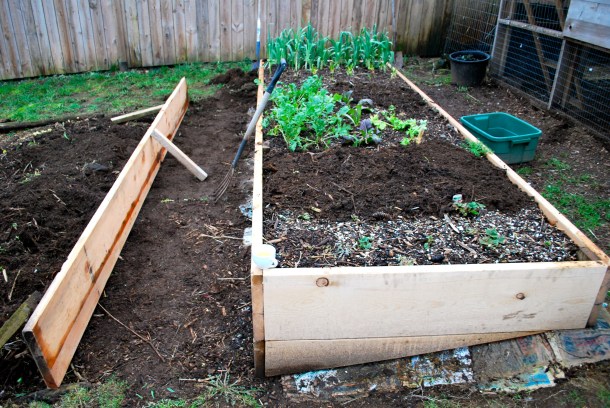
Progress on the raised bed garden has been slow and steady. I was able to transplant my leeks, some arugula, my strawberries, some mustard, yellow and red onions, shallots, some chamomile, beets, celery, calendula sprouts and a couple of stray garlics and bok choys out of the ground and into the bed. This now leaves me lots of room to erect raised bed #2.

The first bed has also received some amendments, I added 1kg of crushed eggshells and have been moving the partially decomposed woodchip mulch layer from the former ground-level bed on as a top dressing. The initial fill of soil has settled around three inches lower and it would be a shame to bury all that rich worm-filled media at the bottom of bed number 2.

Everything you see planted in this bed are edibles that overwintered in the ground and are now starting to take off with new growth. I was surprised to see the celery survive and I look forward to lots of it this year, I use it often when making stocks or mirepoix for soups and sauces. The arugula self-seeded as always and I’ve already been eating it for weeks. The leeks are really filling out and I’m looking forward to making them into soup too. I’ll probably also let a few go to seed so I can replant them next year. They are expensive to buy in the grocery store and keep in the ground year-round.

My strawberries never fared well on the ground for some reason, and I kept losing plants. I maybe got 6 strawberries out of them last year. They were the first transplants into the new bed and despite my concern that the soil would be too “hot” from being taken directly out of the chicken pen, it seems that they are very happy now and have been putting out fresh new growth. Please let’s have a real strawberry harvest this year!

An unexpected benefit of the raised bed is more light can reach the plants. I don’t know why I didn’t realize that before, but I’ll take all the extra light I can get. This bed is right next to the coop, so it’s a bit shadier than the other two will be.

I also leveled out the pathway between the beds and lined it with old paper feed bags. My hope is to eventually cover this with a nice thick layer of coarse wood chips to provide good drainage and weed control.  If I can’t get a free wood chip delivery I’ll make do with straw. In the meantime, the feed bags can start to decompose. I have about a million of them taking up space and it’s great to finally be able to use them.

DSC_0009

Some of the damp bags were even beginning to colonize with wispy white strands of mycelium. I guess if I don’t use them all up in landscaping projects, I can set up a stack of them to grow mushrooms!

DSC_0008

Over Five Pounds at Nine Weeks!?

DSC_0007.JPG

Black triple hybrid buck, 5.31lbs!

When I started with rabbits a few years ago, I was getting very poor grow out rates. I attribute this to the fact that I was trying to stick to purebreds. My Californian rabbits, which are considered to be a top meat breed, probably have the worst grow out rate of all. I don’t think I’ve ever waited long enough for them to reach 5 lbs, and I’ve let them grow for probably up to 16 weeks in the past. The Rexes are a bit better, but are maybe 4lbs at 10 weeks at the most. The purebred bunnies sell well, but they don’t make good meat stock by themselves.

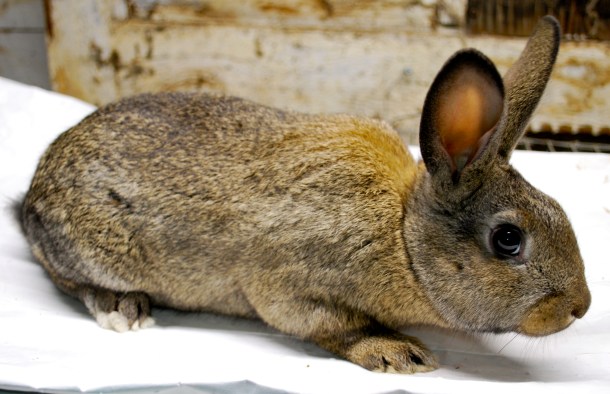
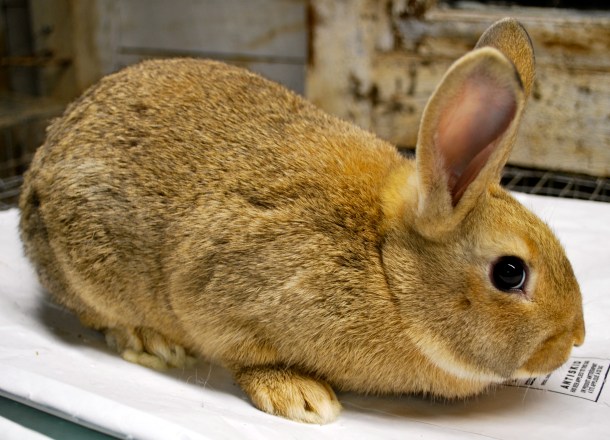
So I’ve been hybridizing. I have only one Creme d’Argent rabbit, and so she has always been bred to either a Californian or a Rex buck. It was easy to see that the resulting hybrid offspring were putting on weight faster, and when she finally had a doe that hit the 5 pound mark at 10 weeks I kept her. That doe is Caraway and she’s half Creme and half Rex. She is 10.5lbs fully grown and looks like a big brown cottontail. Total sweetheart.

After she reached six months of age she was mated to Scorch, my big Californian buck, since she had to be paired with a third breed in order to maintain F1 hybrid vigor. Her first litter only produced five kits, which were a mix of browns and blacks.

DSC_0006

Dark triple hybrid brown buck

These kits have grown so fast I almost can’t believe it, they were nine weeks old on Monday and I weighed them today (Wednesday). The bucks’ weights were 1961g (4.32lbs), 2050g (4.52lbs), 2263g (4.99lbs), and 2410g (5.31lbs)!

DSC_0012

Lighter triple hybrid brown buck

There is only one doe in this litter, a dark brown/black girl. She also happens to be the largest in the litter at 2418g, or 5.33 pounds! That’s just unheard of for a rabbit barely over nine weeks old in my experience.

DSC_0004

Black triple hybrid doe

Day 13: Candling Eggs

DSC_0004.JPG

Today is day 13 of my chicken egg incubation, and I decided to take a few minutes to candle and check fertility. I do this by turning off the lights and using a high-powered LED flashlight held up against the eggs to check for a large dark mass and veins, which is the developing chick inside.

I’m happy to report that all 12 of my expensive Welsummer eggs seem to be fertile and developing well. They’re harder to see into because the shells are so dark, so hopefully I’m right about that.

I did find that six of the Old English Game eggs and seven of the Cochin/Light Brahma were duds. I had been wondering if the OEG eggs with the mottling that looked a little bit like wet paper or moisture seepage through the shell would develop, and it turns out they did not. I’ll be careful not to incubate eggs showing this mottling from now on.

Above you can see the rejects that came out of the incubator and are destined to be dog food. We’re now down to 29 eggs due to hatch in eight more days. Stay tuned!

Part 1: First Big Chicken Hatch – Day 1


Two Male Peregrine Falcons, a Juvenile and an Adult

DSC_0033

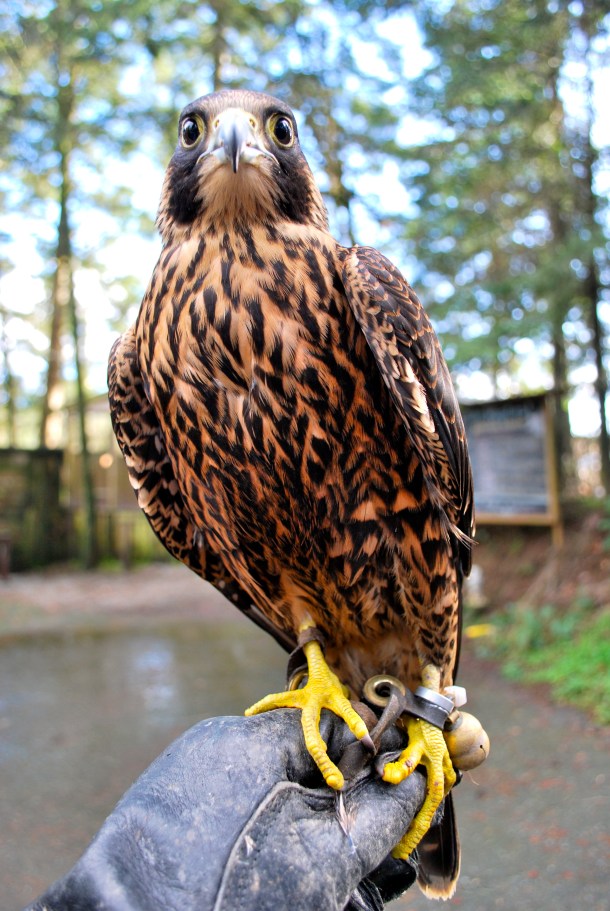
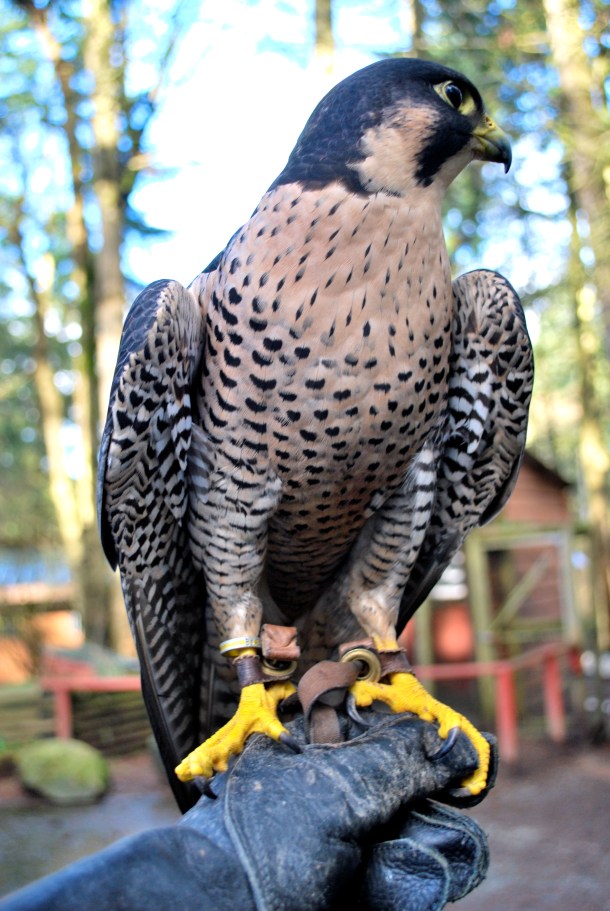
Just wanted to share some shots of two birds I worked with today. Above you can see a superb little male peregrine falcon, who is still young and sporting his rusty brown juvenile plumage.

DSC_0032

DSC_0034

Compare him to this adult male peregrine, with his much different creamy beige and pale blue plumage. Stunning, isn’t he?

DSC_0038.jpg

DSC_0041

Two undeniably gorgeous boys.

Rat’s Nest and Cooper’s Hawk

DSC_0004

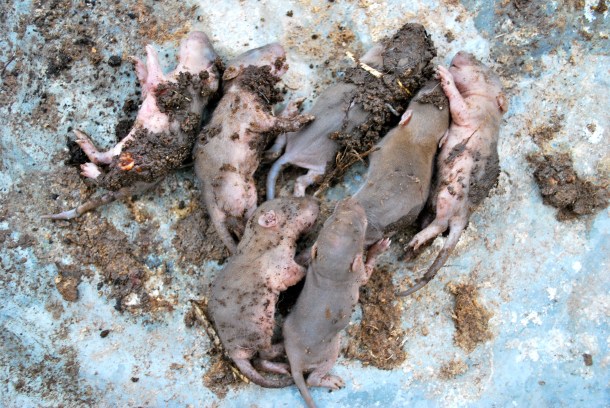
Yesterday while I was working outside, my dog was also hard at work. We have a couple of rats that have dug some burrows near the chicken coop, and she has been diligently trying to excavate them. She was extra intense about her task yesterday and it wasn’t long before I heard the telltale squeaks of baby rats. I went over to see that she had uncovered a rat’s nest containing seven baby rats, about a week or two old.

She pulled them out one by one, dispatched them each with a quick bite, and continued her search for the adults. I am very pleased that there are now seven less potential rats living here and I hope mom and dad rat have been reminded yet again that this is not a safe place to set up house.

DSC_0003

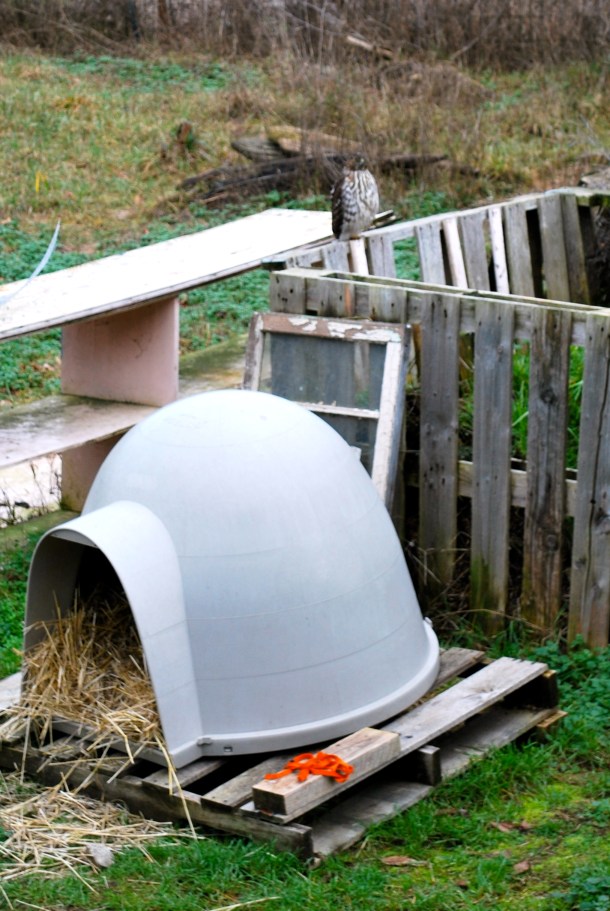
The baby rats were tossed onto the compost pile, and the next morning I awoke to see what I think is a large female Cooper’s hawk perched on the edge of the bin. She is a young (passage) bird as you can tell by her juvenile plumage. This is the first time I’ve seen a hawk of any kind in my yard and I quickly grabbed my camera and got the best shots I could, which are unfortunately not very good. I’ve definitely been spoiled by being able to photograph raptors up close at the Raptor Centre. Anyway, at least I have some evidence of her visit!

DSC_0004

When I went outside a little bit later I noticed that all seven baby rats were gone from the pile and I assume she ate them. I’m glad she was able to get such a good meal here and I’m once again happy I do not use poison as rodent control.

If you’d like a more up-close shot of a passage female Cooper’s hawk, I just happen to have one here for you:

DSC01050


Introducing: Champagne d’Argents

DSC_0006

We have a new breed here at Abernathy’s!

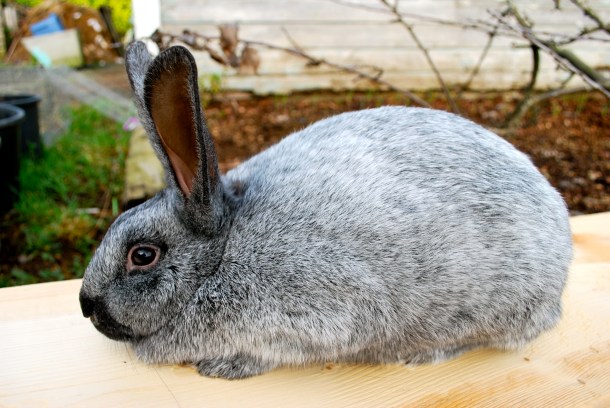
This lovely young pair of Champagne d’Argents were dropped off today by a very reputable breeder operating out of Victoria. I met her last summer at the Vancouver Island Exhibition, and have been waiting for a suitable pair to become available ever since.

There was a lot of interest in these bunnies so I was very lucky to snatch them up. The buck has even won a grand champion leg already, and of course they are fully papered and pedigreed.

The Champagne d’Argent is an old breed that originated in France almost 400 years ago. Along with the Creme d’Argent, they were initially bred for their fur, but are now bred mainly for meat. They have been called the “black angus” of rabbits and are purported to have a tenderness and flavor that is superior to other breeds, as well as an excellent grow out rate.

They are also great mothers, very calm and sweet rabbits and of course they are beautiful. They do very well on forage which is a big plus for me since I offer a lot of wild greens in the warmer months. This pair do not have names yet, but are already settled into their freshly scrubbed new cages and seem quite content.

I’m now at maximum capacity here and I’ll need to build some new cages soon. I may sell my Californians. They are excellent rabbits with very good personalities, but they were supposed to come with pedigrees and the breeder never provided them. There’s now no way for me to get their papers and unfortunately I only want to deal with fully papered rabbits at this point. We’ll see what happens.

DSC_0002

First Raised Bed Filled

DSC_0003.JPG

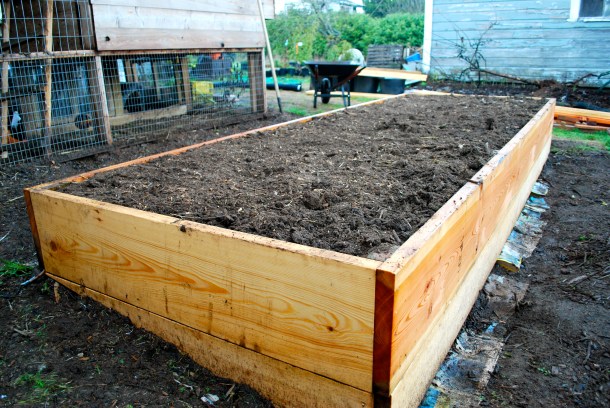
I took a couple of hours today in the sunshine to fill up the first raised bed I built. I need this bed filled before I can start on the other beds, because there are a few things that need transplanting when I clear the area, like my leeks.

The entire top half of this bed was filled with earth taken from my chicken pen floor. A little over a year ago my lovely boyfriend dug out the pen about a foot deep and we filled it in with wood chips. These did a really good job of keeping the mud down and providing the chickens a loose surface to scratch. It also mixed with the droppings and broke down over time into beautiful, rich black earth.

DSC_0001.JPG

It’s time to dig it out again and put in another load of wood chips, and luckily I had the bed ready to be filled. I probably transferred about 20 wheelbarrow loads out of there, and there’s easily another 20 to go which is good because I’ll have another two huge beds to fill soon.  The chickens were beside themselves with joy at the layer of worms and fresh earth I uncovered for them.

I loaded it right to the brim as it will settle with time. I also plan to top dress it with some finished fish compost that I have left over from last spring. I can’t wait to get planting!

DSC_0002.JPG

Peregrine Falcon on the Glove

DSC_0001

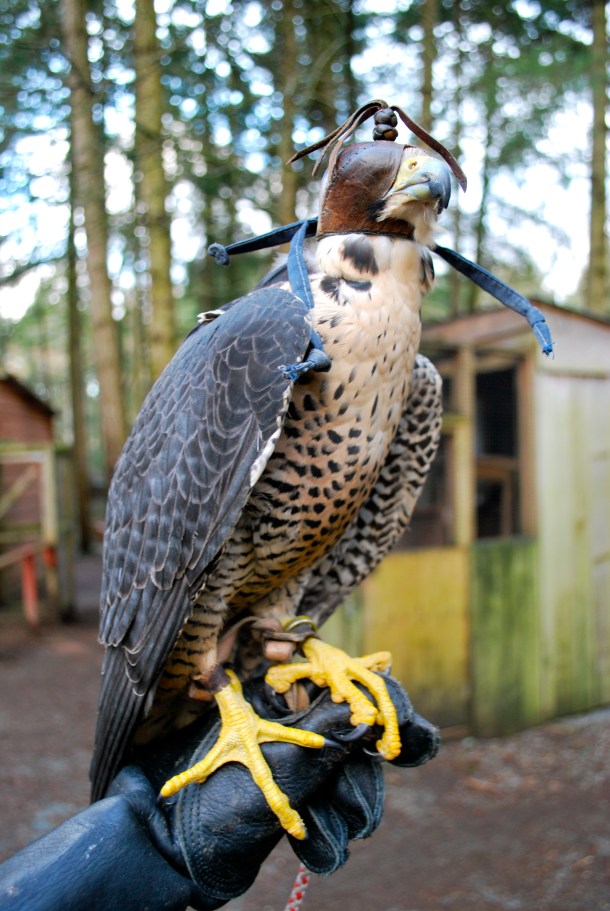
I wanted to share some shots of one of our female peregrine falcons being manned while hooded. The hood works because in most birds, their instinct when it gets dark is to become quiet and still. This is also where the term “hoodwinked” comes from. This little girl is so serious, she’ll sometimes try to fly while hooded! Not good.

She may be naughty sometimes but she sure is pretty.

DSC_0002DSC_0003