Back to the Rabbits

DSC_0012

Hybrid meat bunnies

I haven’t posted about rabbits for awhile, especially considering the name of this site. There have been a lot of changes in the past few months.

The biggest and best change is that I finally replaced the roof on my barn. For two years whenever it rained the poor bunnies had to live with the occasional drip which slowly turned into a constant drizzle as the tarp I put up weathered away. I even lost a whole litter once when they were drowned by accident. That was a horrible experience. Now I’ve installed a nice new metal roof that I’m proud to say I built myself and learned a lot in the process. I still have work to do on it yet like fascia boards but at least things are now watertight. You wouldn’t believe the constant anxiety it was causing me knowing the rabbits were living without a proper roof! Summers were fine but spring and fall are very wet here. Soon I will be replacing the old falling-off, flip-up garage door with some nice dutch barn doors. To these I would also like to add a dog/cat door so my team can maintain a constant mouse vigil.

I also went through a paring down process with the rabbits themselves. My first purebred rabbits here were Silver Martens, as that was all I could get at the time. While they were nice rabbits, they just didn’t grow fast enough or large enough for me to be viable as meat rabbits. So I got rid of them.

Now I’m down to four does and two bucks. I have Esther, my reliable Creme d’Argent doe, Samphire, my Californian doe, Tuna, my Black Otter Standard Rex doe and Bluefin, her daughter, a Blue Otter Standard Rex. My bucks are Scorch, the Californian and Timmy the Black Otter Rex. It’s a nice variety and a good number for me right now I think.

As of this moment all of my does are (fingers-crossed) bred. I’m expecting a litter of Cal/Creme meat hybrids, a litter of pure Cals, and hopefully two litters of Standard Rex. Three of those litters are due this Wednesday. Nest boxes go in tomorrow.

I resisted getting Californian rabbits at first. Not sure why, I guess they looked kind of boring to me as predominantly white rabbits. Now I’ve changed my mind, and I really like my Cal pair. They were skittish at first, but have calmed down a lot as adults and seem to enjoy petting. They are never, ever aggressive. I also love Esther, my Creme doe. She’s been with me from the beginning and was a gift from a local rabbit breeder. She’s a big, beautiful, sweet girl who is a fantastic mother, does excellent on forage and has never shown a hint of aggression, ever.

Then there are the Rexes. While Timmy, who is an ex-pet rabbit would never think of being mean (he is also the only rabbit who I can free range in the yard and trust to return to his cage), the girls have had their moments. Both Rex does have stomped, growled, boxed and lunged at me, although I’ve never been bitten. I’m kind of split on the issue because I really like both of them as breeders (not that they’ve proven to be reliable mothers yet at this point), but I also don’t see the point of having aggressive rabbits here at all. It’s possible they act out primarily when hormonal, so I’ll have to be mindful of that. They’ll have a chance to prove themselves as moms in the next few weeks and that will help my decision, I’m sure. At least I hope it does.

They’ve been very good lately, but that may be because spring brings lots of fresh treats. If they continue to be aggressive with me once they have kits, I think I’ll have no choice but to cull once the kits are weaned. I do not want to be bitten by a rabbit.

Check back soon for baby bunnies!
First Easter Egg

DSC_0022

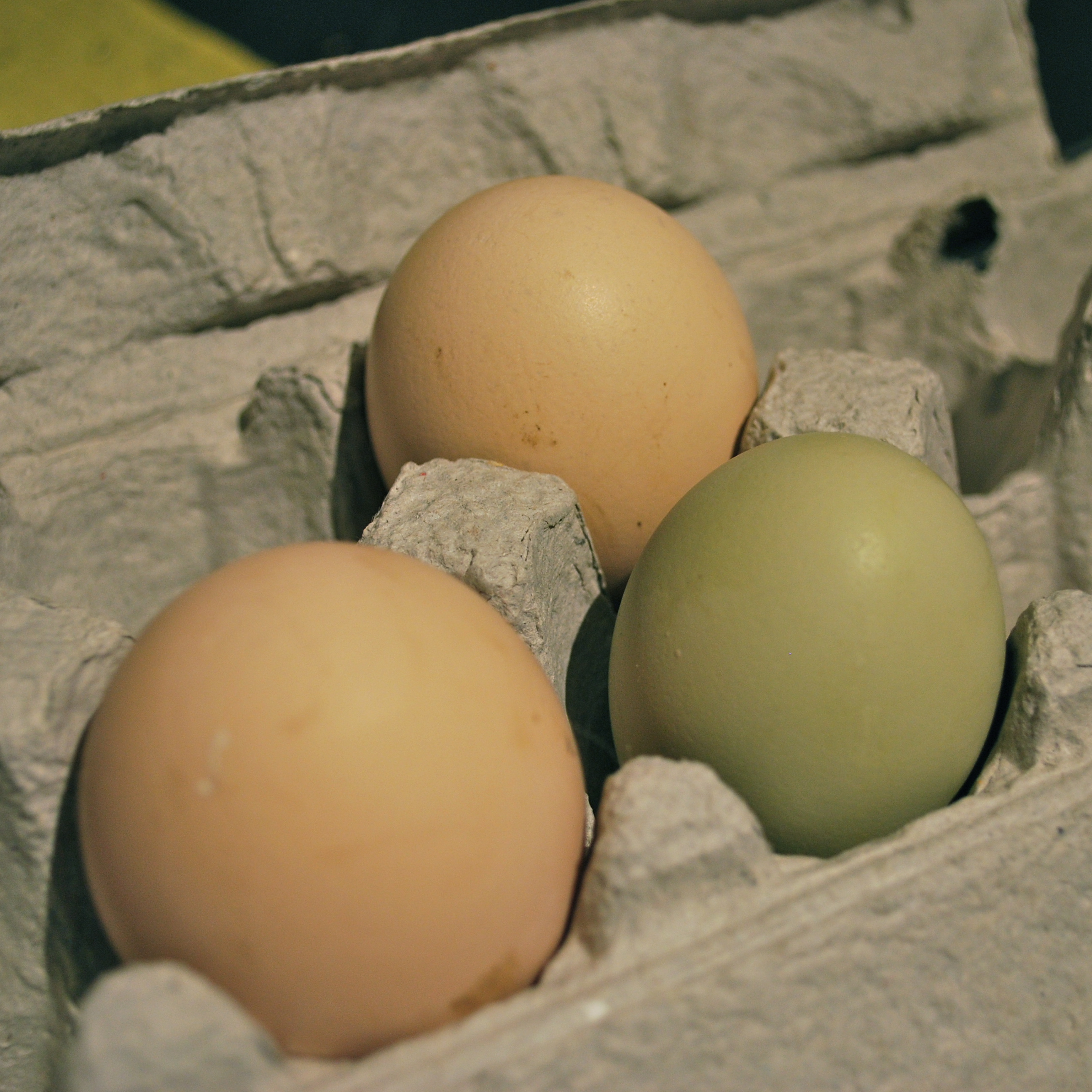
Sometimes things seem to work out almost too perfectly here. No sooner had White Chicken and Black Chicken been loaded into a dog kennel in the back of a van and driven off to their new home, that I noticed that Other White Chicken, my favorite, had laid her very first egg.

Her little blue-green egg is the same color as the one she was hatched from and is the first colored egg to be laid here, in other than shades of brown. I’m not sure what she is exactly, she looks a lot like an Ameraucana but the farmer I got the hatching eggs from said they were a mixed flock. Two layers gone and one layer gained!

We Have Squabs!

DSC_0018 I was in the coop today passing out corn and wheat and noticed that my first nesting female homer, the blue check, was not on her nest for like the first time ever. Since she’s nesting in a rather hidden spot that’s tough to see, I put my hand up to check what was in there and felt something warm and soft that could only be chicks.

I kind of expected that she might have chicks by now since she’s been on that nest a long time. I’m not sure how old these guys are but they’re fairly huge already. It will be exciting to watch them grow up. Should I kidnap them in a few weeks and hand raise them as pets? Decisions, decisions…

My other nesting pigeon, the white homer, abandoned her first nest and eggs for some reason, then transferred all the nesting material to the box next door and is now sitting again. Here’s hoping for at least a couple of pure white chicks to go with my blue checks.


The Chicken Dance

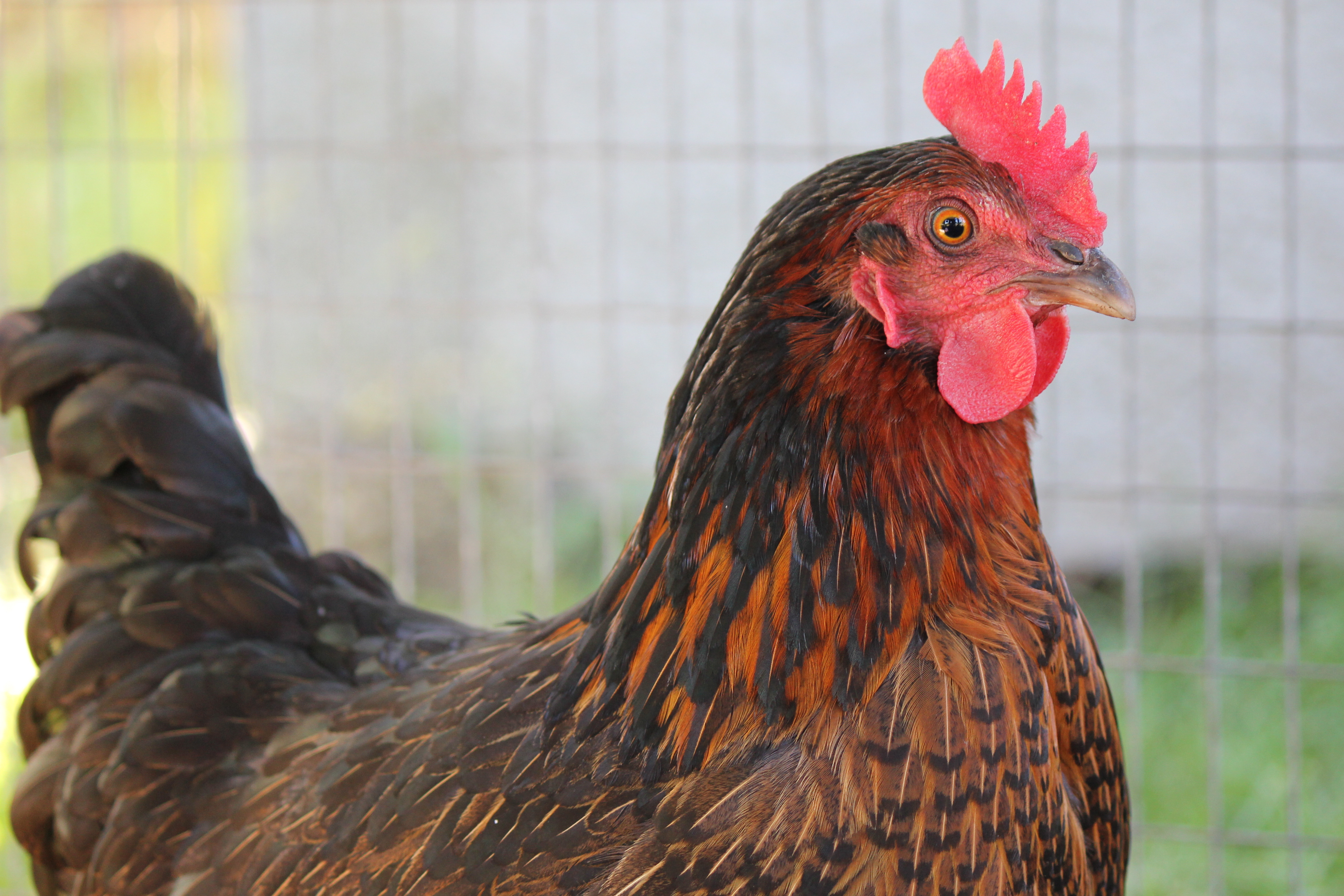
black chicken

This is Black Chicken, accomplice to White Chicken who will be finding a new home together soon because they can’t shut up

I’ve wanted chickens for as long as I can remember. Finally getting some was a learning curve. You don’t just “get chickens”, you begin doing the chicken dance.

Let’s forget about all the stuff like coop building, basic care and maintenance, parasites or integration of different birds. I’m talking about the fact that laying heritage breed chickens have a window of productivity from about 6 months of age to about three years old.  Before that they are chicks and after that they taper off laying and are generally replaced. On top of this, there are certain other things involved in keeping chickens I never really considered.

I started with three Buff Orpington chicks. One was a roo, so he had to go. One pullet was killed by a raccoon before the coop was fully finished. Then I got a Columbian Rock and a Red Rock chick. Both grew into nice, reliable hens. I bought two huge Blue Orpington girls. They starting breaking all the other eggs in the nest from their weight so they had to be resold. I got three Black Copper Maran chicks, one was a roo and had to go. Then one of the two hens was sold because I was getting too many eggs. After that I sold my last Buff Orpington because she kept going broody to the point of near-death and bought a nice Barred Rock pullet instead. Then I hatched some Easter Eggers, out of which I got one nice little pullet. Now I’m trying to sell my Columbian Rock and Red Rock hens because although they are great producers, they are just too noisy in the mornings and I have to sleep with a pillow over my head.

Once these two chatty ladies are gone I’ll be down to three hens. This seems like a good number since it’s just me here now, although the dogs do help me eat the eggs. I haven’t had any hens long enough yet to retire them, although I’ve “retired” a couple of hundred spent layers and roos from other local flocks. I’m curious to see how productive my hens remain as they age, if I can ever hold on to one long enough. This has also led to wanting hens that all lay different colored eggs, so I know what’s up.

I’m at the point where I don’t really want baby chicks anymore. They’re incredibly cute, but they take too much care before they can become good producers, if they even make it that far. I’ll probably stick to buying pullets or hens at the local poultry swaps or from online ads if I need more eggs, or let’s be honest, more chickens. I do really enjoy trying out the different breeds and learning about them. I can always sell them right?

The Pigeons are Nesting

DSC_0012

I’ve had a lot of different baby animals born here: rabbits, ducks, quail, chickens and mice. But one thing I have never had, and am very excited to finally have, are baby pigeons.

I think few people ever see baby pigeons, or squabs. They are naked, fed on a regurgitated “pigeon milk” by their doting parents and stay hidden away until they look mostly like adults.

Anyone lucky enough to get the opportunity to raise a young pigeon by hand, as I have, will know how amazing these birds are. They are so intelligent and loyal. Not to mention beautiful. I’m actually surprised more people don’t keep them as pets.

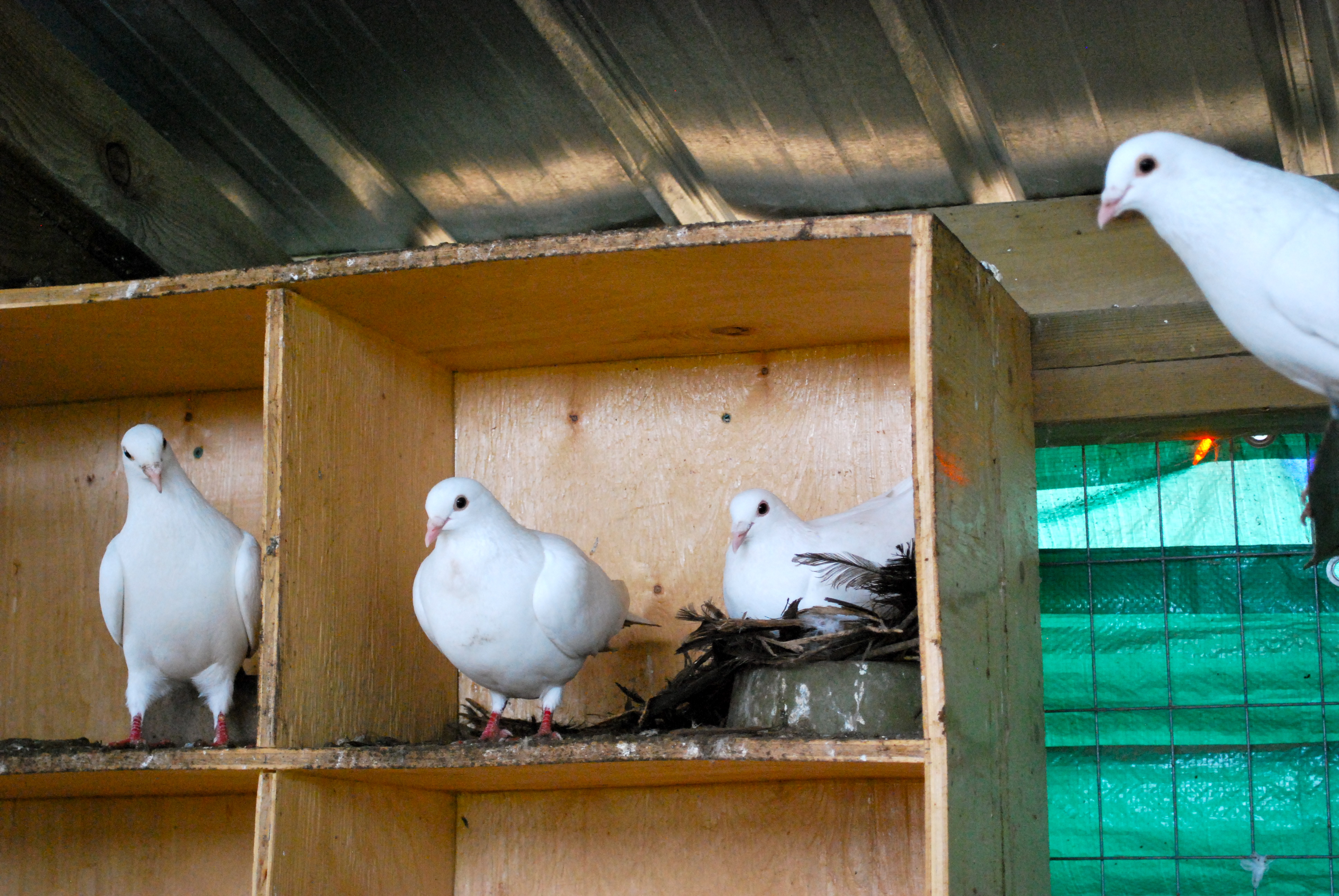
I have 16 homing pigeons right now. Six of those are pure white while the rest are blue bar and blue check. The white pigeons were given to me for free by a long time breeder who had lost most of his flock to hawks in late fall and couldn’t take it anymore. I’ll likely keep these birds captive and only fly their offspring occasionally in the summer months when it’s safer.

I love the idea of releasing your pigeon/dove and having it fly right back home as fast as it can.

To keep the white birds white I’ll need a separated loft, otherwise in a few generations everyone will revert back to wild type. That will get built this summer, fingers crossed. I have everyone living together in the chicken coop right now but that is proving to be too messy. Once the separate pigeon loft is constructed I’ll also be able to train my pigeons properly, since I can’t really get them hungry enough in the coop with so much extra food lying around. The plan is to get them trained to load into a box in the coop so they can be easily transported to the release site with minimal handling.

Here’s the technique I plan to use. Prepare to be amazed by the video below, this man is the pigeon-whisperer:

So far I think I have one all white couple who are sitting on eggs, and one blue check couple on another nest. The eggs are white and the size of large quail eggs. Gestation period is 17-19 days. I’ll keep you posted!

DSC_0022

Keeping an eye on me


Bestowing of Names

DSC_0003

Some people name their chickens. I guess I name my chickens too… There’s White Chicken, Black Chicken, Barred Rock Chicken, Other Black Chicken. But then there’s Other White Chicken.

You might recall that last fall I incubated my first-ever chicken eggs. A soggy carton of blue-green eggs that I had picked up for $12 at the poultry swap. You may also remember that I couldn’t make my egg turner work with both chicken and quail eggs, so the chicken eggs needed to be turned by hand. Three times a day for 19 days. 57 times. Was that all? Felt like 5700 times.

Out of those dozen eggs, three chicks hatched. Of those three, two were roosters who are now enjoying the festivities at freezer camp. What was left was a chubby, speckled white chicken with no comb or wattle, fluffy cheeks and green legs. Other White Chicken.

I’m not sure if it has anything to do with the fact that I turned her egg myself three times a day or what, but OWC is like a little puppy dog. She has had a lot less socialization as a chick than my other current hens did, and her brothers were nothing special personality-wise. But from the very beginning she had attitude. As a day-old chick she would charge your hand if you put it in the brooder. She was aggressive and fearless and I always assumed she was the rooster and the other two were hens. Here’s a tip: If your chicks have lovely colors, they are roos. Kind of drab? Hens.

OWC is also a guard chicken, as my farm sitter can attest. Apparently she will fluff up and charge anyone but me who enters the coop and stare them down until they surrender. With me she runs at a perfect heel everywhere I go and begs to be picked up and petted on the head like a kitty. She refuses to sleep in the coop even in winter and instead flies up to sleep with the pigeons in the rafters. She’s also at the bottom of the pecking order, but she’s the youngest after all.

OWC is definitely a special chicken. I’ve had friendly chickens before, but nothing compared to her. It may be time to give her a proper name.

Dogsledding in Yellowknife

DSC_0153

I spent last week driving from Vancouver BC to Yellowknife NT with my boyfriend who is taking a journalism post up there.

DSC_0147

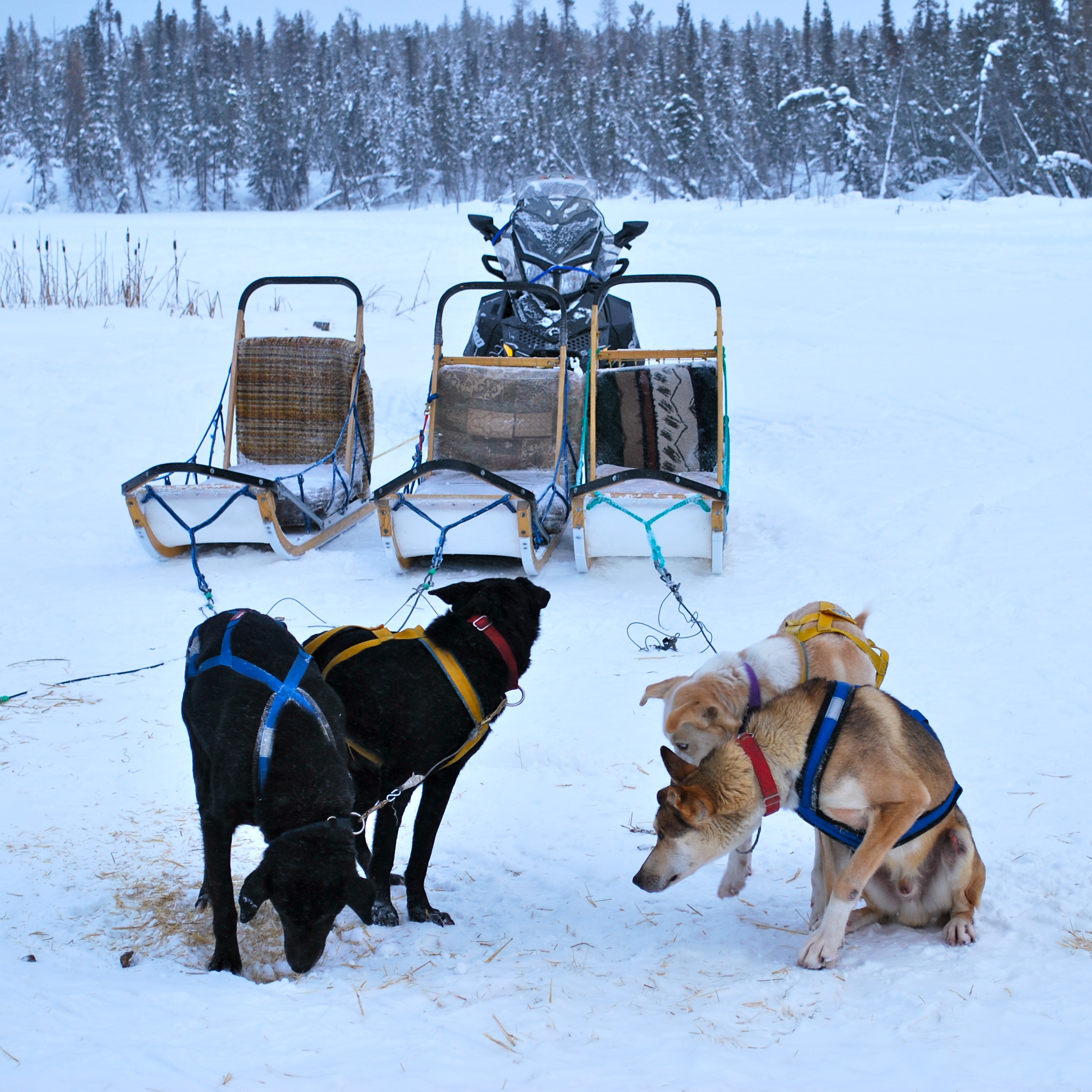
Yellowknife is COLD. Like -40 degrees cold. That didn’t stop us from fulfilling a longtime dream of mine by doing some authentic dogsledding.

DSC_0151

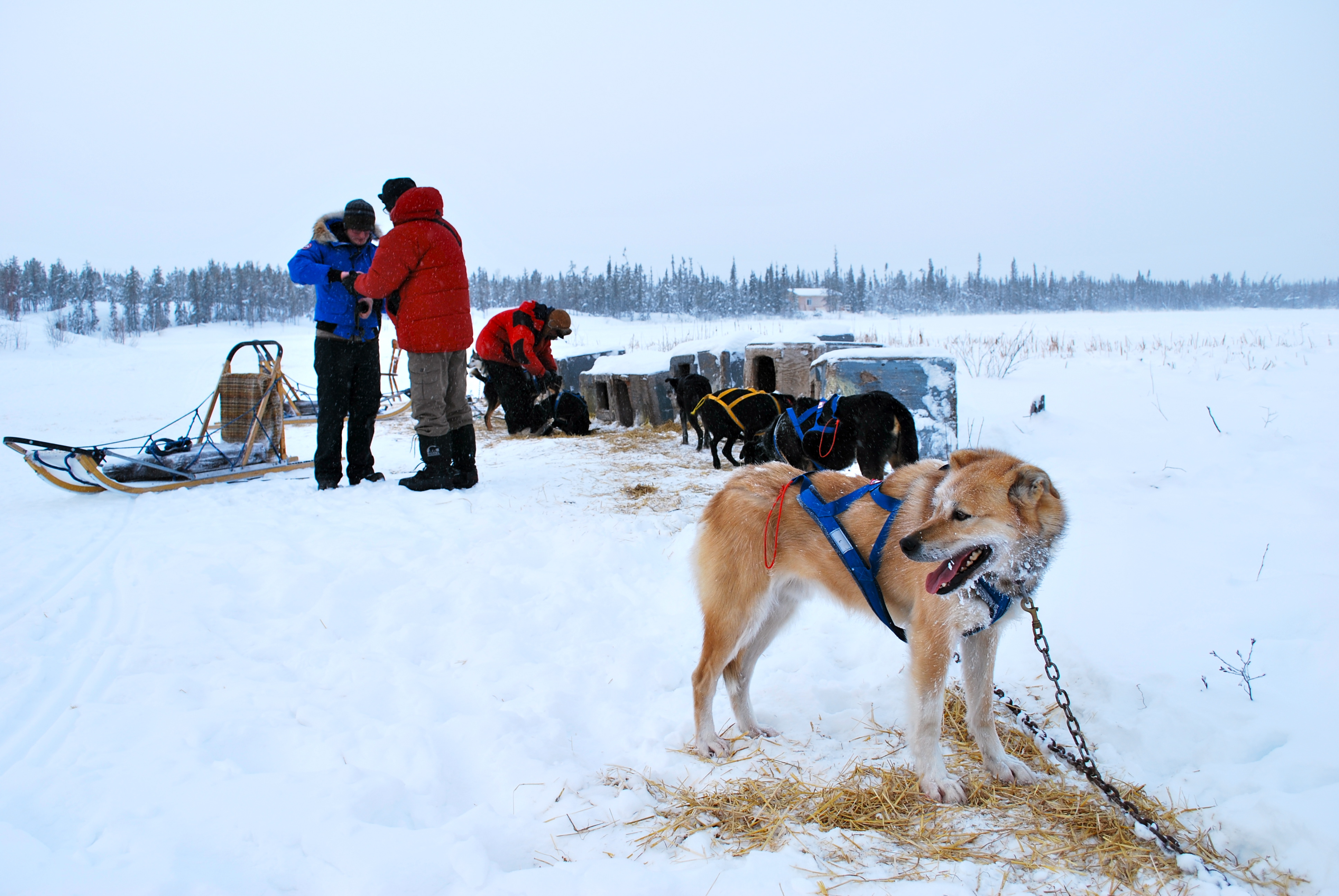
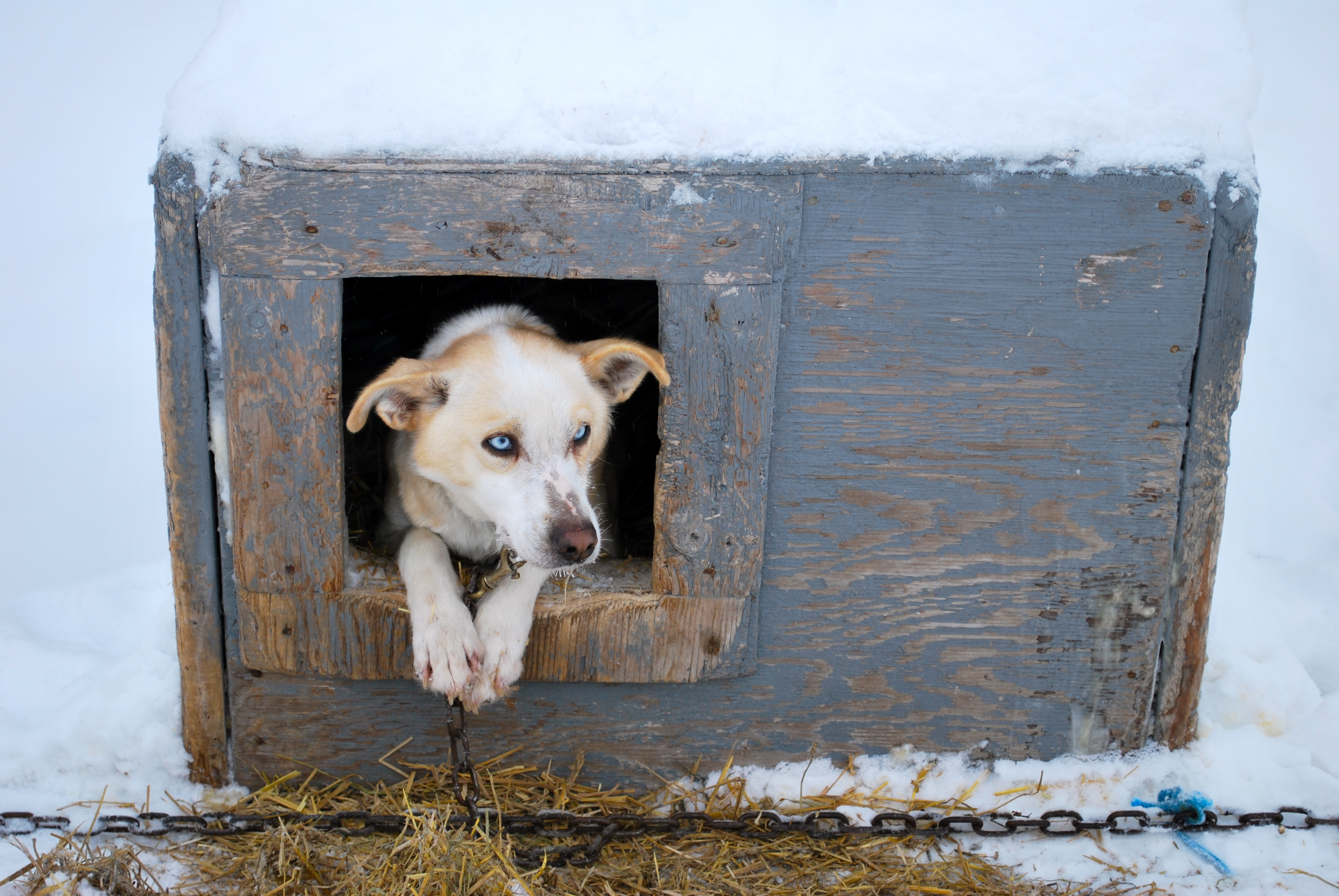
We went to Beck’s Kennels for our ride and had a fantastic time. There must have been about a hundred dogs there, all alaskan huskies which are purported to be a mix of husky, greyhound and some pointer. I was surprised that these slight-framed canines could survive outside in such extreme temperatures with only an insulated kennel lined with straw and a high calorie diet.

DSC_0129

We were some of the only white people there, with the majority of sledders being Japanese tourists. Apparently the Japanese are big fans of the northern lights.

Here’s a fantastic video my boyfriend made of the ride back from the remote cabin on the lake. Take note of the huge cracks in the ice at one point and the dogs taking gulps of snow as they run:

Back home I use my dogs to pull my bike and they know all their mushing commands, but up here the dogs know the way and you just hold on tight. My boyfriend and I kept commenting on how happy my wolf-mix would be as a sled dog. He loves the snow, pulls tirelessly and is numb to all pain. Almost makes me wish our winters here were snowier so I could put him in front of a real sled or some skis and watch him go.


Simple Rabbit Liver Pate

DSC_0040

If you raise meat rabbits, you probably have lots of rabbit liver. I like sauteed fresh livers with crispy fried sage and garlic, but with a little extra effort you can make a delectable and creamy liver pate. The proportions are not so important, but I find that using my copper pan makes a better tasting pate than non-stick.

Rabbit Liver Pate

Fresh livers from 4 rabbits
2 cloves garlic
Sea salt and fresh ground pepper to taste
1T butter
1T cognac

Add butter to a copper saute pan on medium high heat. Salt and pepper your rabbit livers on both sides and saute for about 1-2 minutes per side. The centers should still be pink. Slice garlic and add to pan when you have about 2 minutes cooking time left. Remove livers when done and set aside. Add cognac to garlic in pan and cook for another 2 minutes. Remove from heat.

Add livers, garlic and pan drippings to a food processor. Pulse until very smooth and add more salt if required. Serve warm or cold with toasted baguette rounds. Can also be frozen. Serves 4. Enjoy!

How I save over 90% on Topical Flea Control for my Multiple Cat Household

tumblr_nffaggUBUK1sm7czpo6_1280

Jeffie in the garden, one of the rescued kittens

I don’t like using topical flea meds, but when you have two dogs and ten cats sometimes diatomaceous earth just isn’t enough. When I took in an abandoned cat and her litter a few months ago, they came with fleas. Despite my best efforts dusting with DE, washing bedding and vacuuming; after a couple months everyone had fleas.

Since I was rehoming Mama and most of the kittens once they were ready, I had to make sure they didn’t bring an infestation to their new homes. The only problem: A six dose package of Advantage for cats under nine pounds from my local vet costs $82.94 plus tax. This works out to about $14.50 per cat. A single dose works for about four weeks if you’re lucky. So, for ten cats, I was looking at $145 a month for flea control. NO WAY.

I decided to do a little bit of research. It turns out that the Advantage cat and dog formulation is the exact same thing. The active ingredient in both is imidacloprid 9.1%.

In other words, buy the package for small cats and get a total of 2.4ml of medication, good for 6 cat treatments. Buy the package for extra large dogs and get ten times that amount, a whopping 24ml of the exact same medication, enough for 60 small cat treatments!

The kicker is that the package for extra large dogs costs only a little bit more than the one for cats. At my vet, it’s about $100, dropping our cost per cat dose down to $1.60. That’s much better!

However, you really don’t have to pay $100 either. Since I’m in Canada, I discovered I can take “advantage” of the low price of Advantage in Australia by ordering online. (This particular product is not available to the USA). A bit more research later and I had found by recommendation what looked like a nice little online shop: Pets Megastore. A 6 pack of Advantage for extra large dogs there is $55.91 CAD and shipping is about $6.  I placed my order and they shipped that same day. My order arrived in good shape with no duty owing about two weeks later.

DSC_0013So now I have managed to drop the price per small cat dose down to $1.03. That’s a savings of almost 93 percent!

All you need to do is get a small glass vial and a syringe with no needle designed to squirt medicine into your cat’s mouth. (Note, you WILL NOT be squirting Advantage into anyone’s mouth! It is applied externally between the shoulder blades directly onto the fur.) Simply empty your extra large dog dose into your glass vial, and use the syringe to get the correct dosage out for your cat (or smaller dog). Here is a handy weight to dosage chart that applies to both cats and dogs:

0-10 lbs = 0.4ml
11-20 lbs = 0.8ml
21-30 lbs = 1.2ml
31-40 lbs = 1.6ml
41-50 lbs = 2.0ml
51-60 lbs = 2.4ml
61-70 lbs = 2.8ml
71-80 lbs = 3.2ml
81-90 lbs = 3.6ml
91-100 lbs = 4.0ml

An added benefit here is that you can tailor your dosages more precisely to your pet’s actual weight. This can save you even more money and is healthier for your pet. Keep your unused medicine well-marked and tightly sealed in a safe place that is also cool, dark and dry. Shake it up well before using again as the active ingredients may settle. It won’t lose potency until the expiration date, so mark this down as well. Be careful not to get this medicine on your skin, or wear latex gloves if you’re worried. Wash your syringe out very well with soapy water before storing. Do not use on kittens or puppies under 8 weeks of age.

If you have a multi-cat household, this tip has the potential to save you a lot of money which you can then spend on your lovely, flea-free friends. Consider a home with three small cats who get treated every month. The yearly cost of buying the small cat sized vials from the vet would add up to $522. The cost of ordering the extra large dog vials online would be $37.08. Throw in the cost of the syringe and vial and let’s say $40. You’ve just saved $482. That’s enough to feed those three cats a high quality grain-free canned food (let’s say $3 per can, one can a day) for over 5 whole months.

(I’d like to add that I haven’t been paid or reimbursed by any of the companies mentioned above. Just had a good experience shopping online and wanted to share. Also note, this information applies to Advantage and Advantage II products only. Do not use the newer, K-9 Advantix or Advantage Multi for Dogs products on cats.)