Hepatic Coccidiosis in Rabbits – Graphic Photos

DSC_0028

Notice the white spots on the liver

Coccidia is a parasite that exists pretty much everywhere in the soil. Young rabbits are generally more susceptible to infection, and will show symptoms of diarrhea, loss of appetite and listlessness.

Coccidiosis is very contagious in an environment where feces from a sick animal are present and can be consumed by other rabbits. It’s such a common killer of young rabbits that many rabbit breeders medicate their rabbits against it every few months, whether they show symptoms or not.

In a situation where rabbits are pastured, coccidiosis can be a very real concern. Since I tractor many of my kits I had a couple of cases of it turn up this year. Although nobody died, it left an impact on them physically. I thought it would be interesting to show you the damage that this parasite can cause to your rabbit’s liver.
DSC_0030

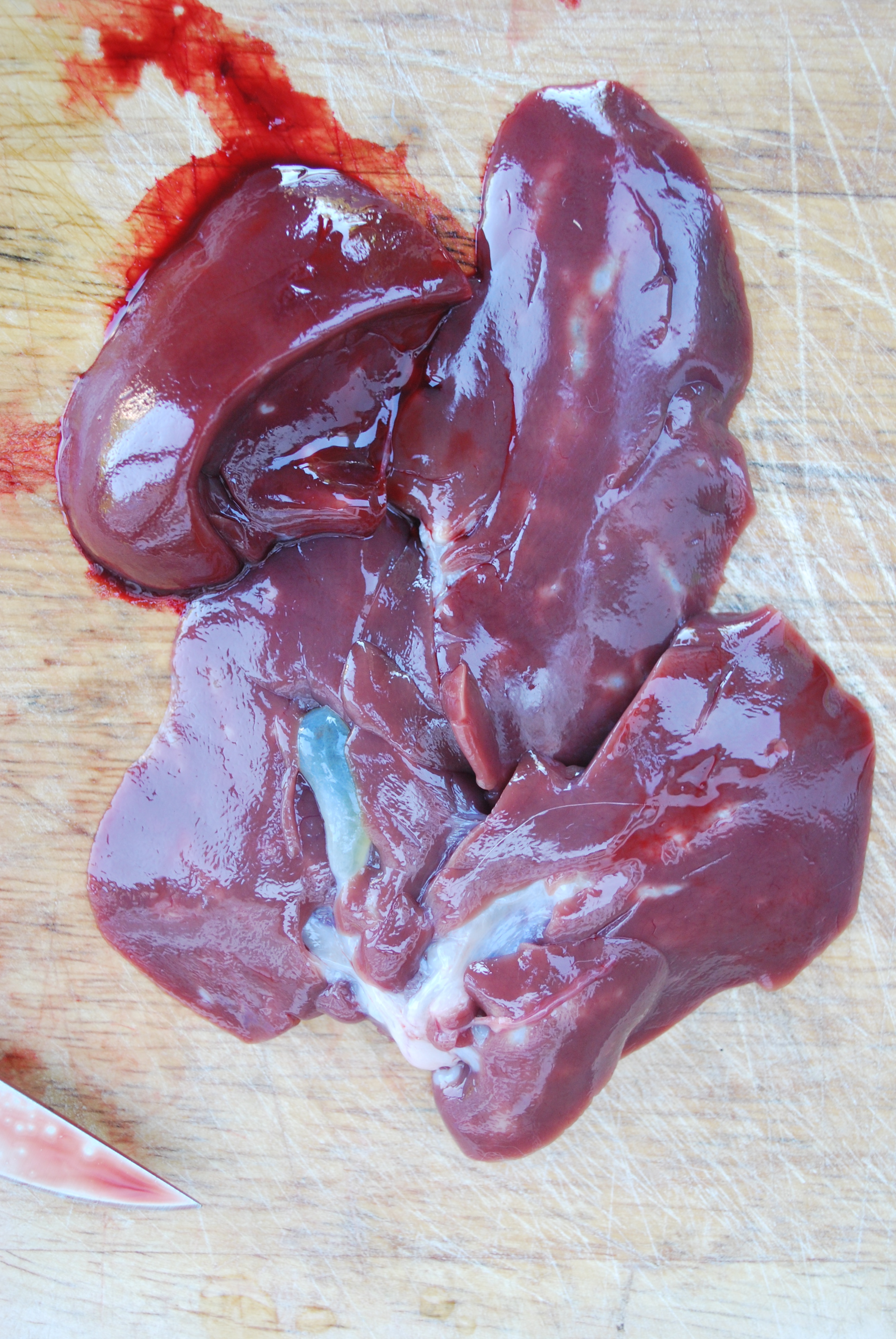
A moderately infected liver

The most obvious thing upon opening up an infected rabbit is that the liver is spotted with white. The amount of spots will vary according to the severity of the infestation. These white spots are actually the hardened edges of small tunnels that the coccidia carve into the liver. If you slice the liver in half you can clearly see the small tubes.

DSC_0036

The tunnels visible in cross-section

Whenever I see symptoms of coccidiosis in my pastured buns, I immediately add apple cider vinegar to their drinking water, feed blackberry bramble daily, make sure they are moved to fresh pasture frequently and ensure everything is kept as clean as possible. So far I’ve been very successful at clearing it out of my herd this way, without resorting to medications.

Usually even if a kit has been infected, once they overcome the parasite and fight it off, they can still lead a perfectly healthy life. Still though, there is obvious damage left to the liver which may or may not heal over time. I’m not a rabbit biologist after all… I’m a whale biologist.

Below is an example of a nice healthy rabbit liver with no white mottling. Infected livers should not be eaten but the rest of the rabbit is still safe to eat.

DSC_0052

A healthy rabbit liver

Rabbit Double Pregnancy?

DSC_0018

All my does were due to kindle today, but Bluefin was the only one who came through on time. Since there has been some fur pulling from the other girls I expect there will be more full nestboxes tomorrow. In the meantime, Bluefin had a bit of strange litter.

Bluefin was bred to Scorch this time around, a first for her. She kindled nine healthy kits, all of which look to be blues or blacks. Since she doesn’t build the greatest of nests, I decided to fix it up a bit after I saw the babies had all arrived. I didn’t want them to end up at the bottom of the wire with no insulation underneath them.

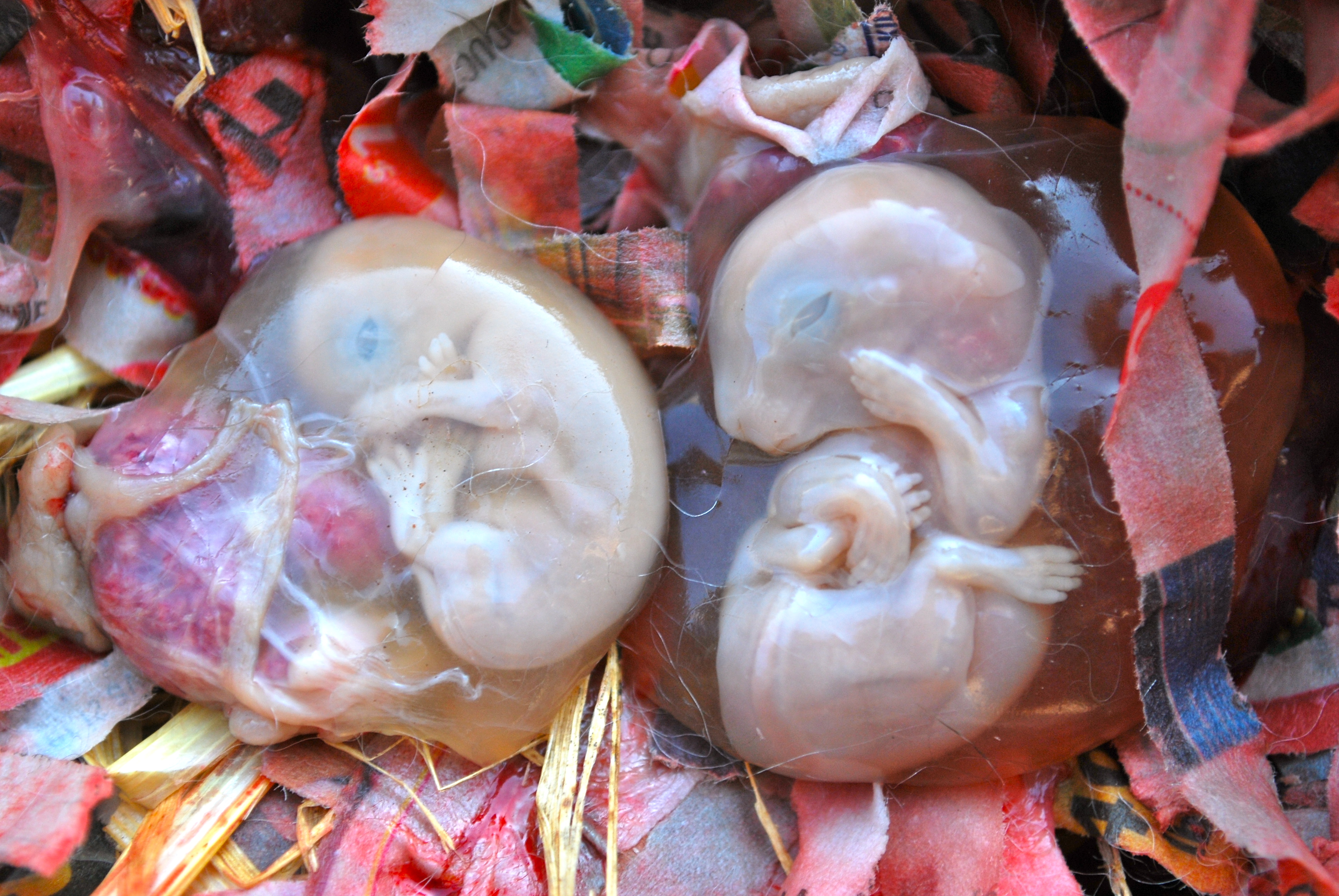
As I was counting them, I noticed a bit of bloody bedding and placenta at the bottom of the nest. This is totally normal and I went to clean it out. I was surprised to see that it was not just placenta, but two amniotic sacs with two tiny, perfectly-formed bunnies inside. They were both about 1.5 inches long, and actually looked very peaceful, as though they were sleeping.

I have had kits born dead, but they’ve never looked like this. These babies look like they just haven’t had enough gestation time. It occurred to me that rabbits are supposed to be able to get pregnant twice at the same time, since they have two uterine horns. How could this have happened? Well, she had her previous litter of kits in with her until they were ten weeks old.

Ten weeks is super early for a rabbit to sire kits, and I never noticed any funny business going on, but could this be what occurred? If so, it looks like I’m going to have to start separating kits out even sooner.

A Lady For Bert

DSC_0020At long last, we have procured a female Chinese Pheasant as a mate for Bert.

This lovely little girl is from the same farm Bert is from, and she is still pretty young and small. She proved just how small by slipping through the 2 by 4 inch mesh of the chicken pen about a half hour after being released. Since she can fly very well already I was sure she would just be instantly gone and I would never see her again. I’m so glad I stayed around to observe!

I nearly had a heart attack while I slowly tried to sneak up on her with my bird net. I’m convinced my time at the Raptor Center helped me with assessing her body language. Luckily I managed to nab her right as Mushrooms the cat walked nonchalantly by and scared her up to the fence. One good swipe and she was mine. Now she’s temporarily in a cage while I arrange a more suitable place for her.

DSC_0037Bert of course is overjoyed, and is glued to the side of the pen where her cage is located, displaying his beautiful plumage for her.  While she was loose in the pen with him he was very respectful, keeping his distance and not crowding her, which was nice to see. What a bird.

Raptor Handling Apprenticeship

DSC_0029

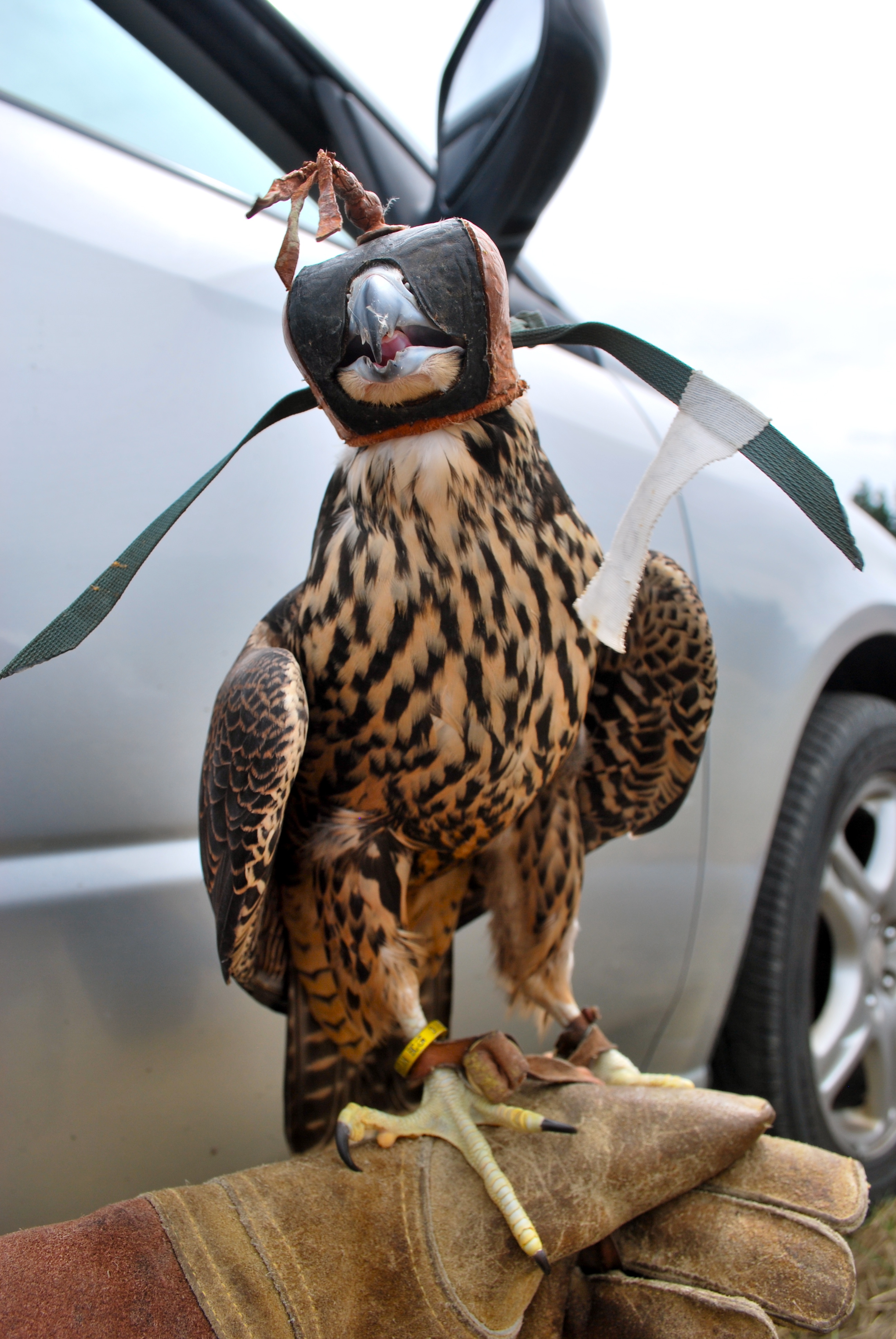
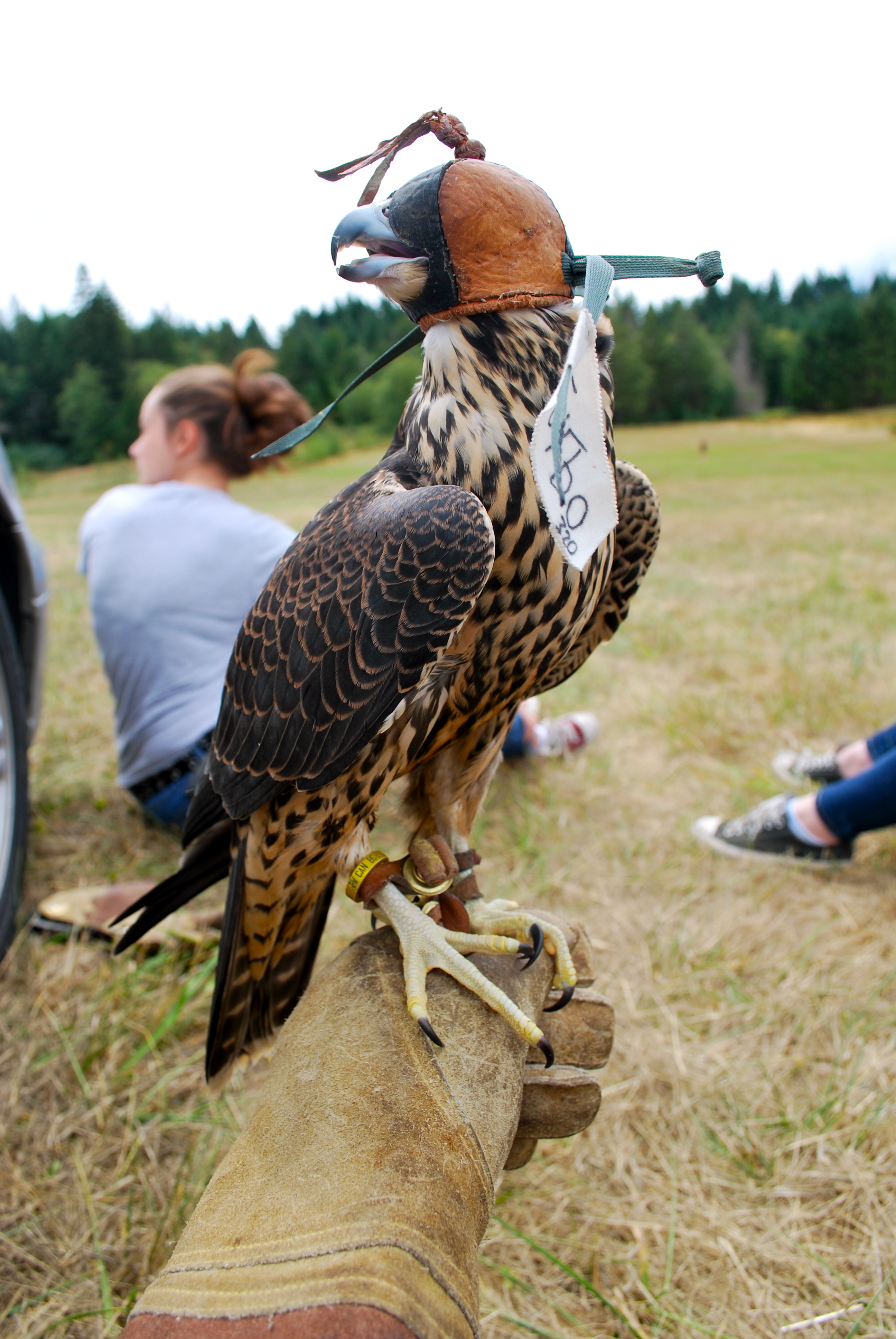
This is Turbo, a young male Peregrine falcon we were flight training today

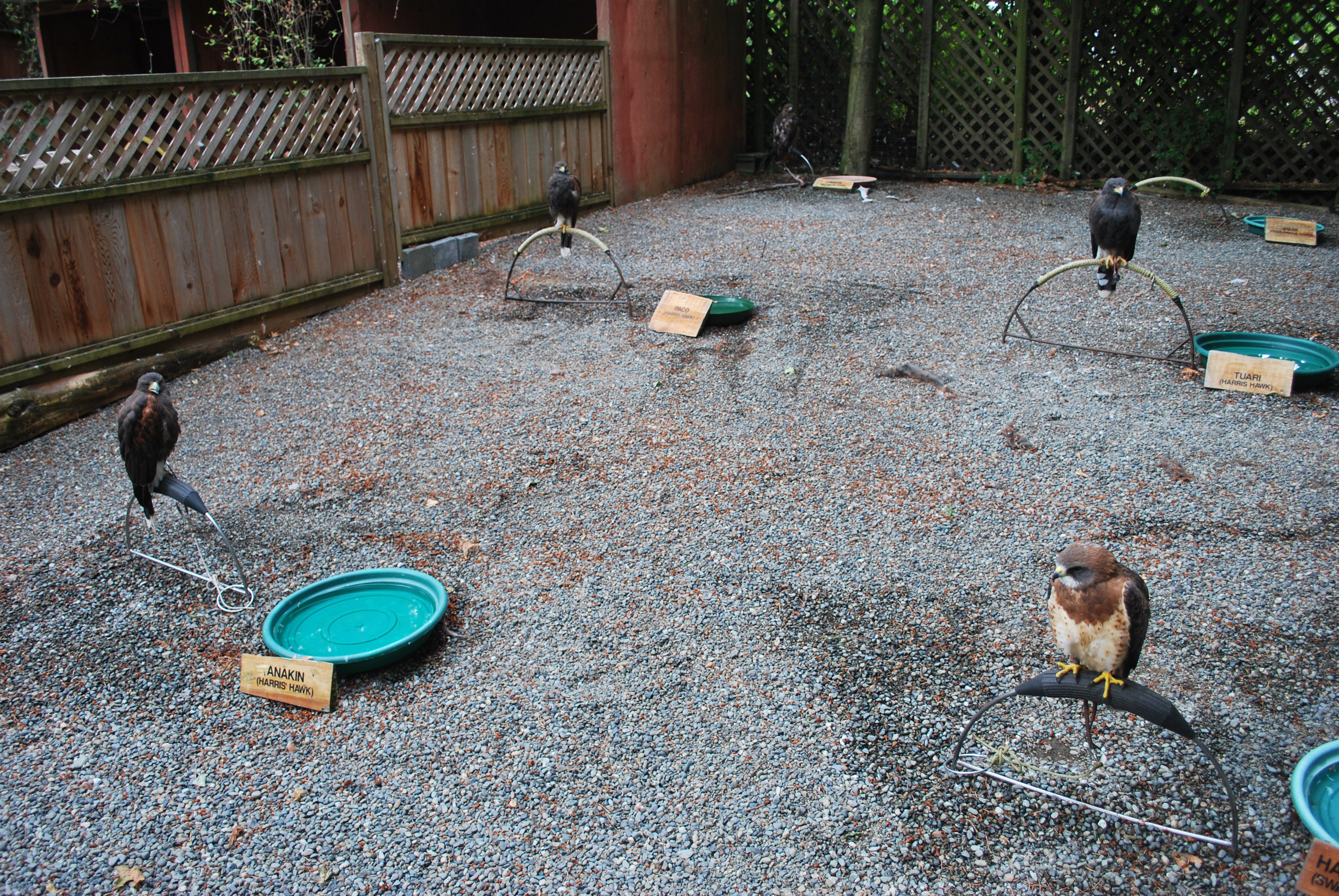
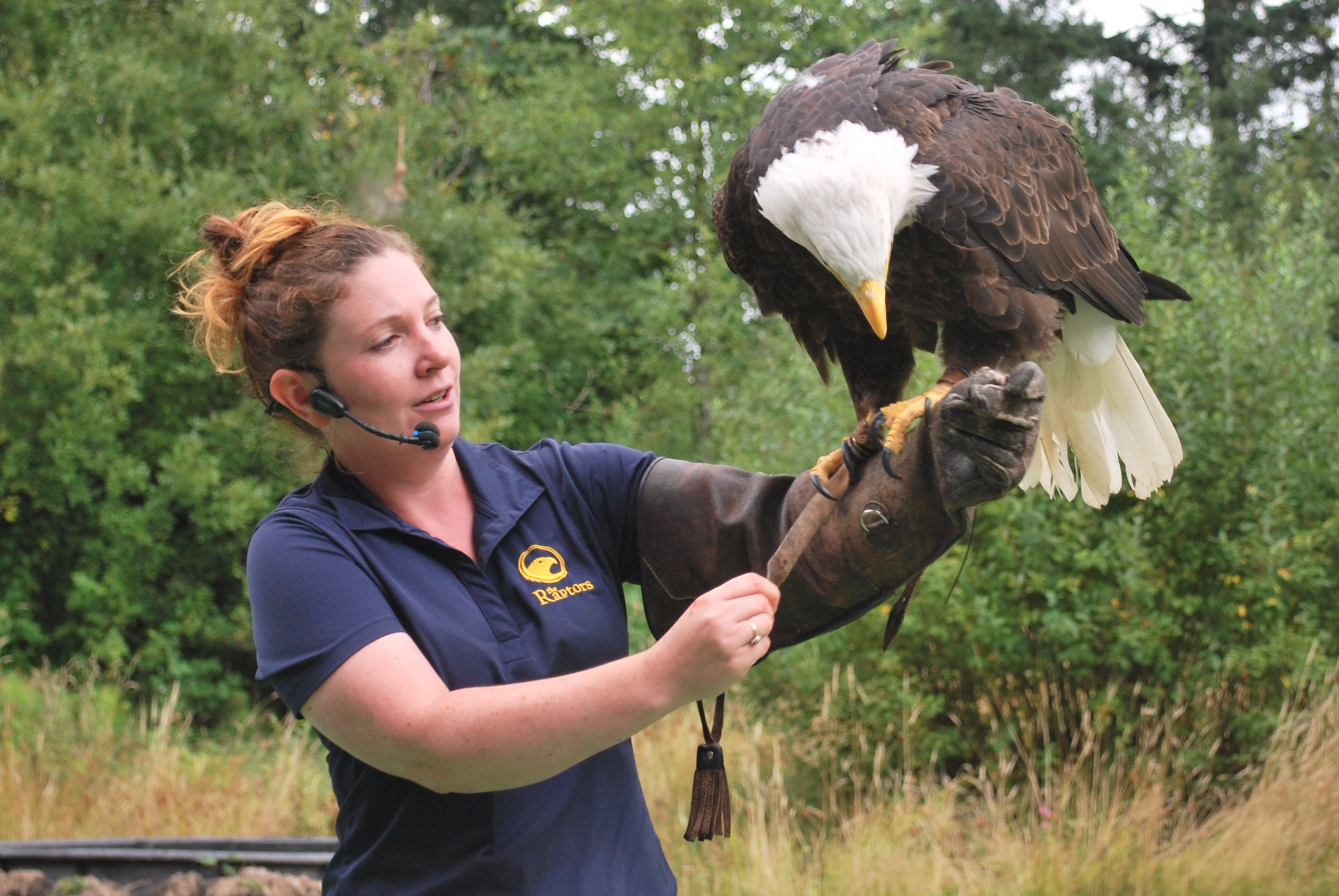
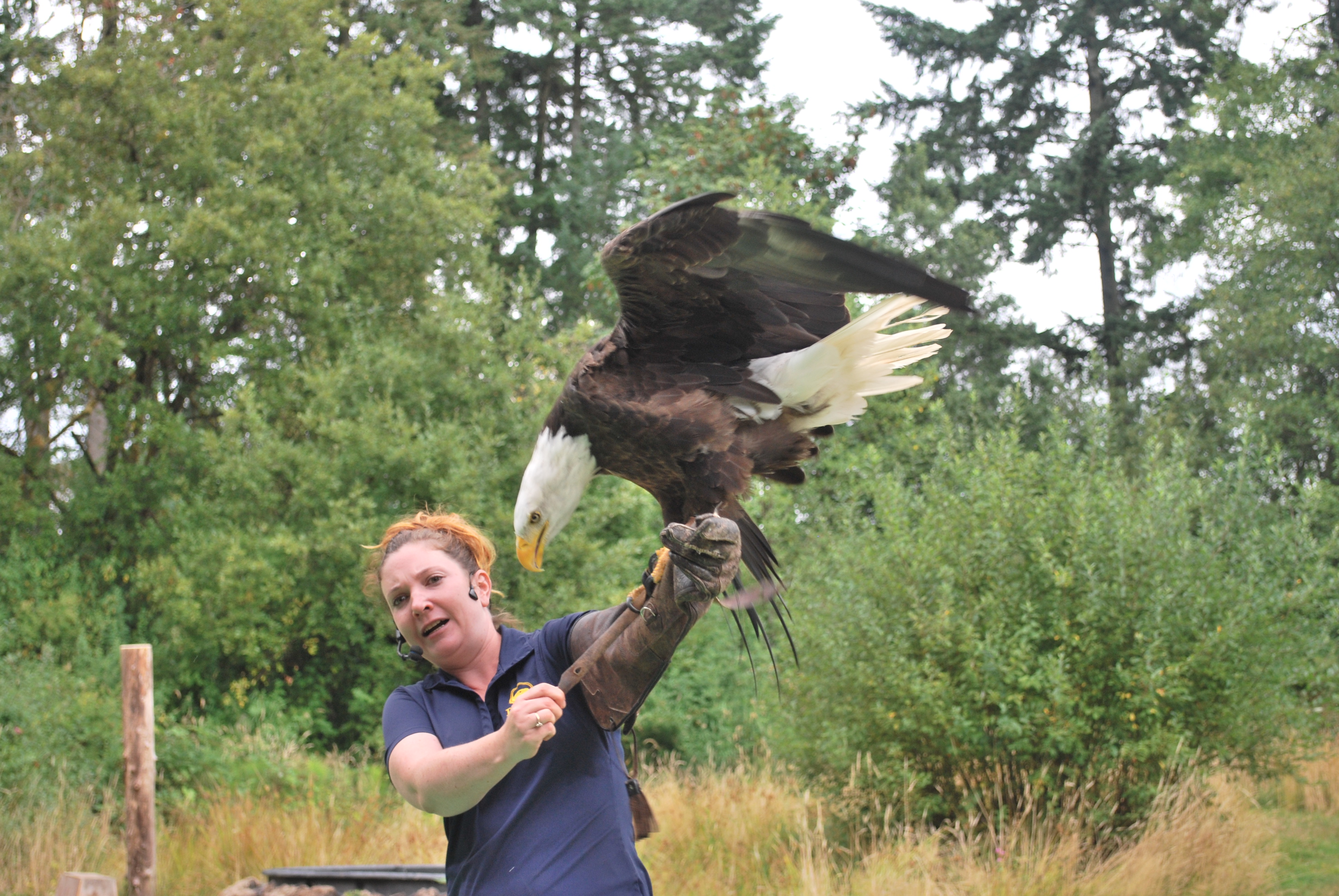
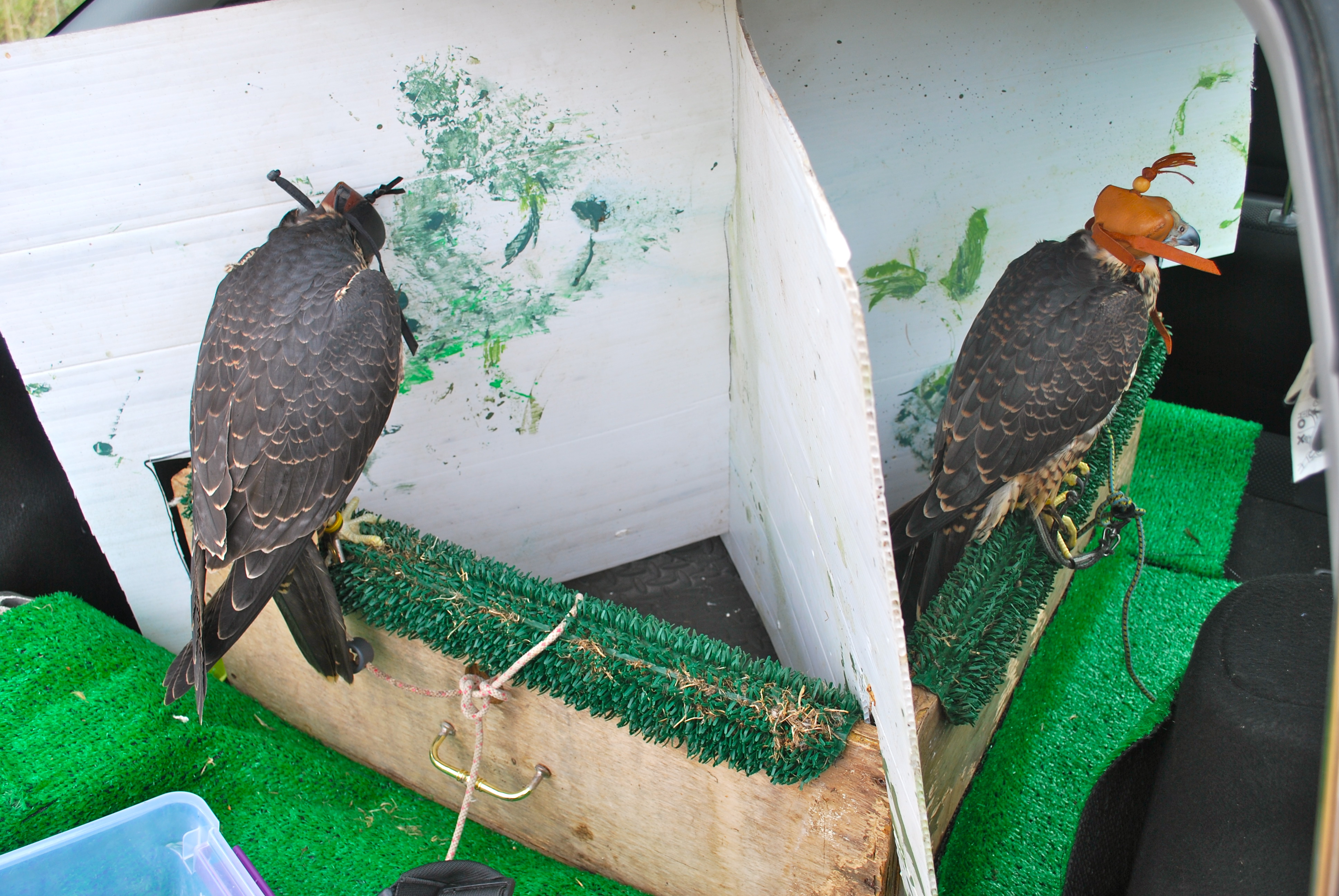
I have been busy for the past week attending a falconry apprentice course at The Raptors center in Duncan BC. An amazing facility with great staff caring for over a hundred different birds of prey. A good number of birds are on display for visitors and many of them are working animals, employed at chasing gulls away from airport runways and dumps and performing for film and television.

DSC_0080

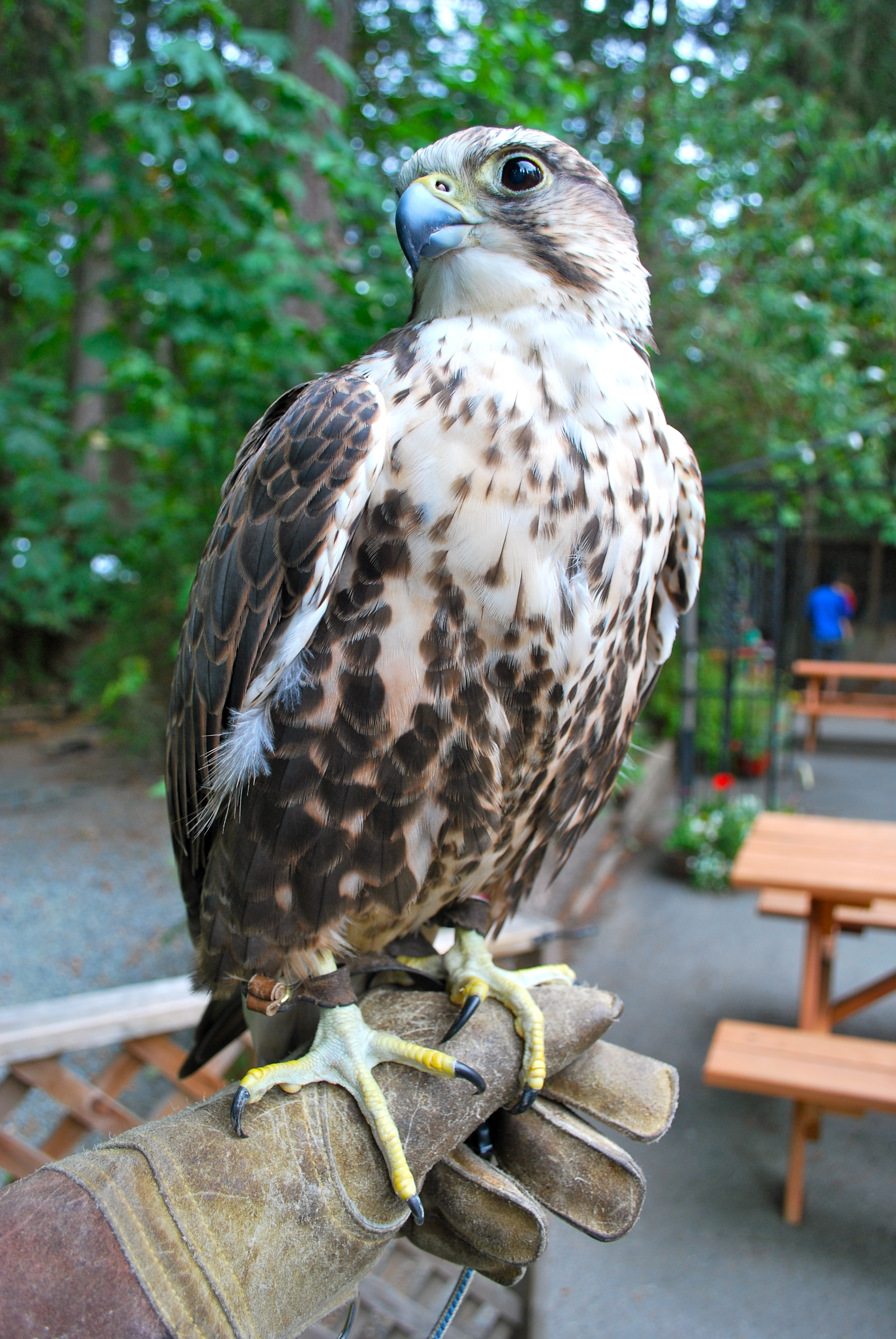
Bell, a 17 year old female Saker falcon who is an absolute sweetheart

Among the more impressive species they have are bald eagles, golden eagles, a Maribou stork and beautiful white gyrfalcons. There are also many species of owls, lots of different species of hawks and falcons, a few turkey vultures and a tiny kestrel no bigger than a robin.

DSC_0075

Little Kessy, an American kestrel. So cute

I learned many things there, including how to man (carry on the glove) many different kinds of birds, how to replace (imp) a lost tail feather, clean aviaries, how to tie a falconer’s knot, and how to train birds with a flying lure. I learned that you need at least two years of experience before you can man eagles because they are very dominant and will do whatever they can to intimidate you. They also hold a grudge against you if you do something like trim (cope) their beaks and you will not be able to work with them for a few days if you do.

DSC_0016

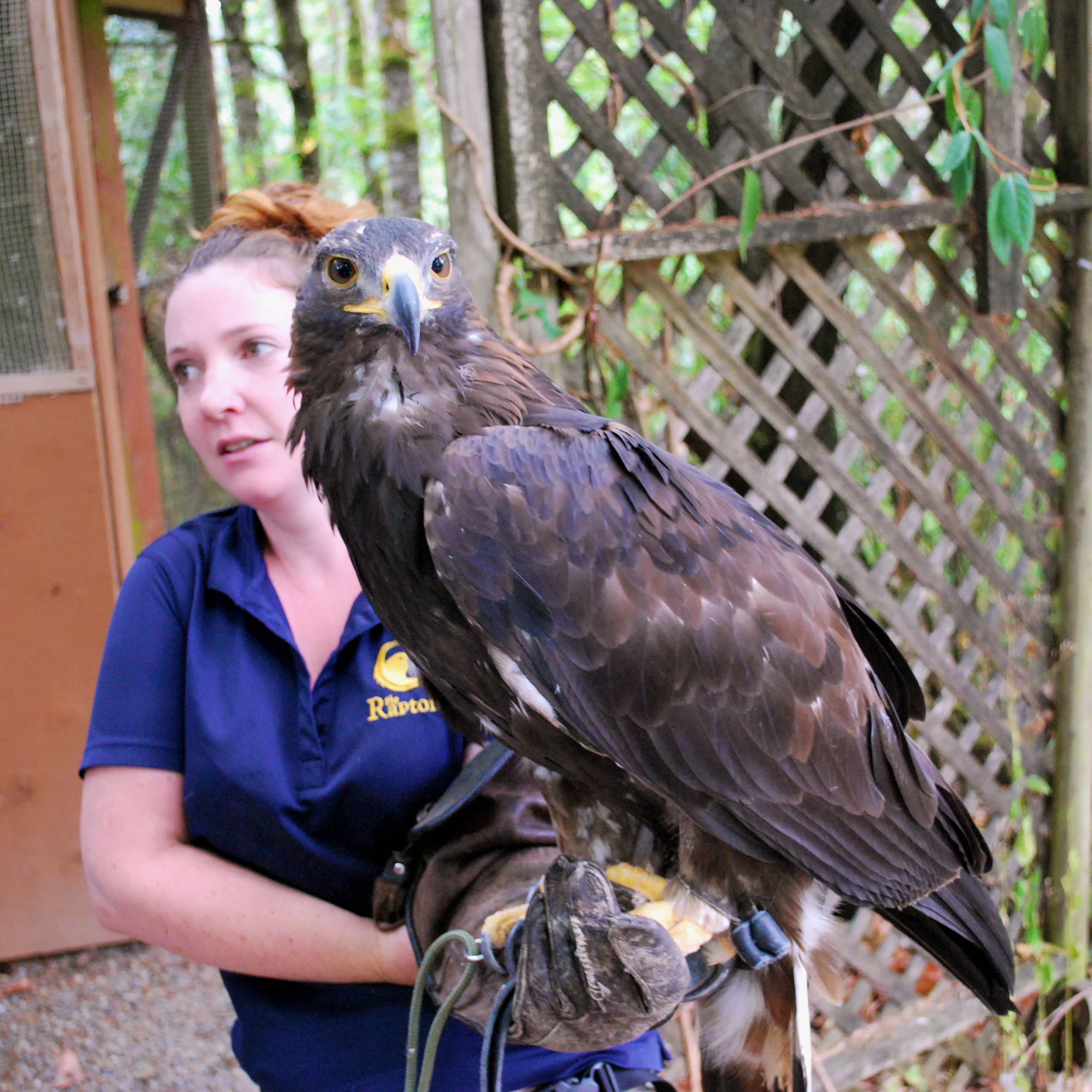
Annie with Hera, a mature female bald eagle. Here she is tying Hera’s leash to her weathering station

I learned that Harris hawks are one of the only raptors to hunt in packs, and that turkey vultures can be among the most dangerous birds to handle. I learned how to make jesses, which are leather straps that tie into anklets on the birds legs and allow you to secure the bird in your glove, and also that weight is very important and the birds are weighed every day in order to find out if they are ‘keen’ enough to be flown.

DSC_0059

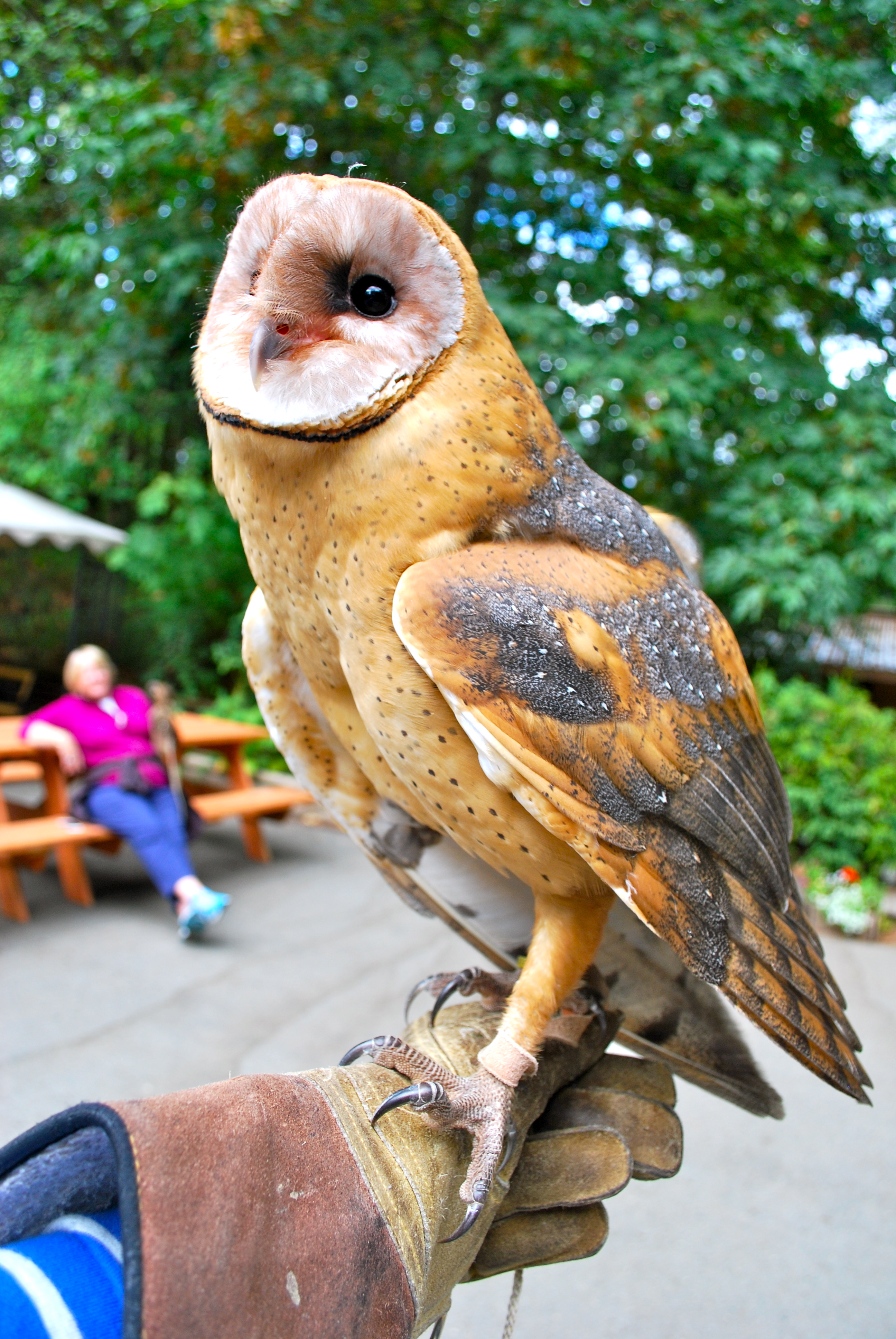
One of the young barn owls who later went AWOL

I learned about how things can sometimes go wrong, as while I was there a couple of young barn owls were taken out for flight training and were lost in the nearby trees for multiple days before they could be recovered. I also learned that feeding birds day old chicks on the glove can be messy business when they rip into the yolk sac and then spray the contents all over you!

All the mess and danger was worth it though, and it was one of the best experiences of my life. I was bitten once or twice by hawks, and it wasn’t half as bad as I was expecting. I handled a turkey vulture briefly and escaped unharmed. Luckily I was not footed (grabbed by the talons) by anyone which is what can cause real damage. Most of the birds are very well-trained and the staff are excellent educators. I really can’t recommend the experience enough.

DSC_0070

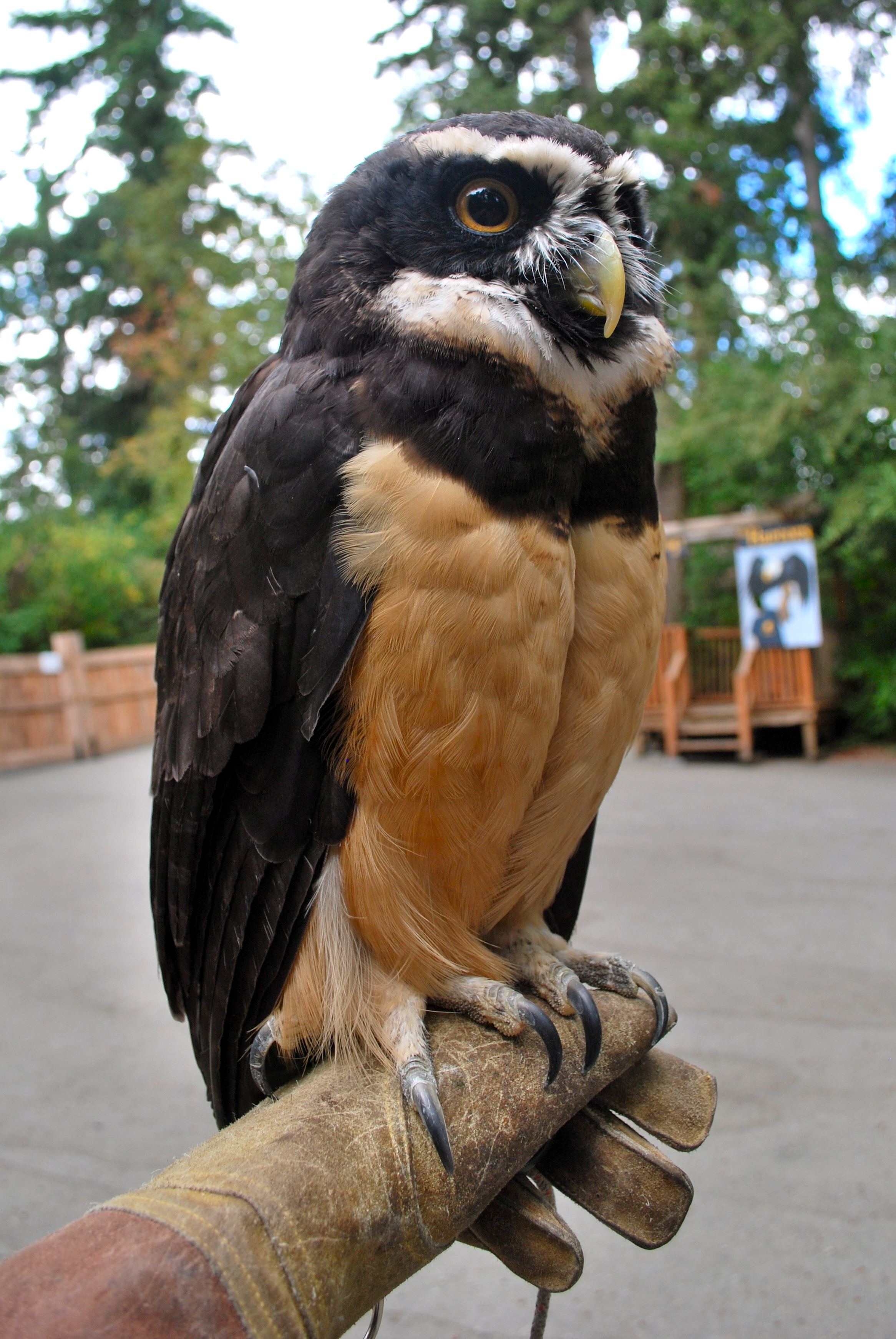
Elton, a spectacled owl and crowd favorite

I had such a rewarding time there that I’m planning to begin volunteering on a regular basis. Since I already have the apprenticeship course under my belt, I can be much more useful, although I do expect to spend a lot of time hosing down aviaries, cutting raw quail and rabbits into tiny bits and making jesses. For me it’s worth it to get to be around such magnificent predators.

DSC_0089

Gaston the Maribou stork performing in the flight show

My ultimate goal is to obtain my own bird and take up falconry. In British Columbia the only thing legal requirement is a suitable aviary or mews which has been inspected by the relevant authorities. My choice would be a Harris hawk which is also a very good beginner bird. Hopefully I can move towards this goal as I gain more experience at the center and see if it’s a good fit for my lifestyle. I basically already run a raptor feed supply company with all the quail, rabbits and pigeons I breed!

DSC_0035

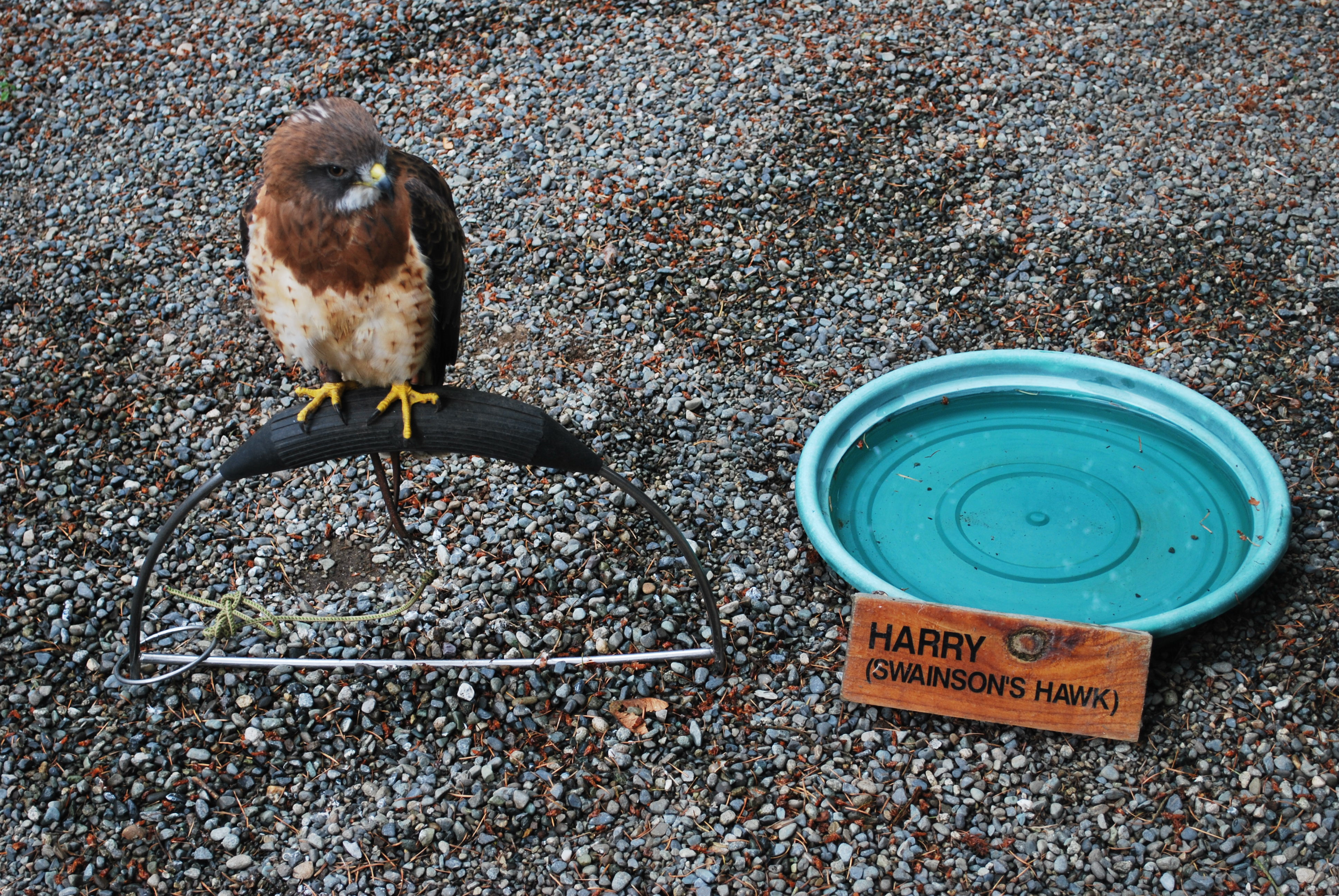
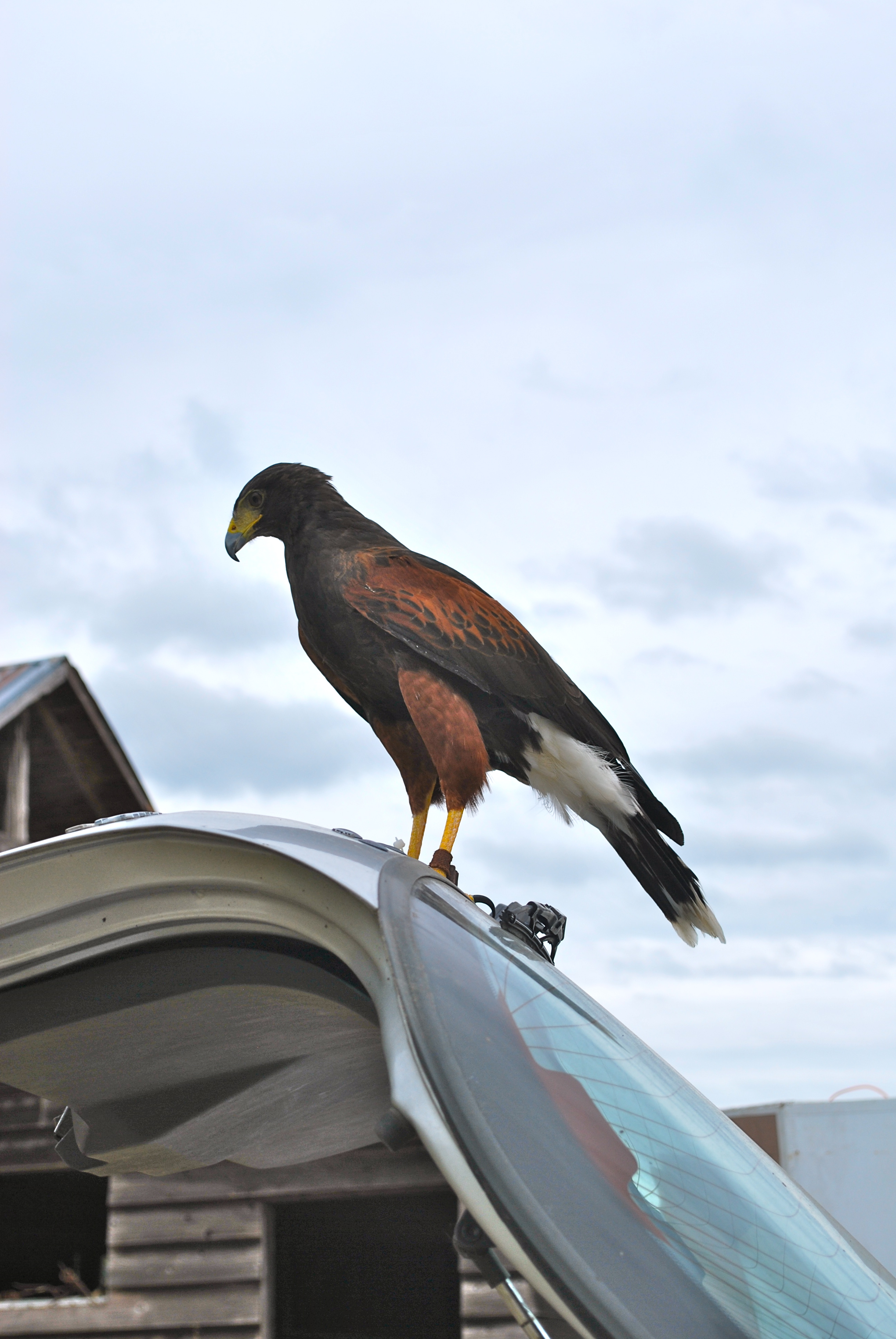
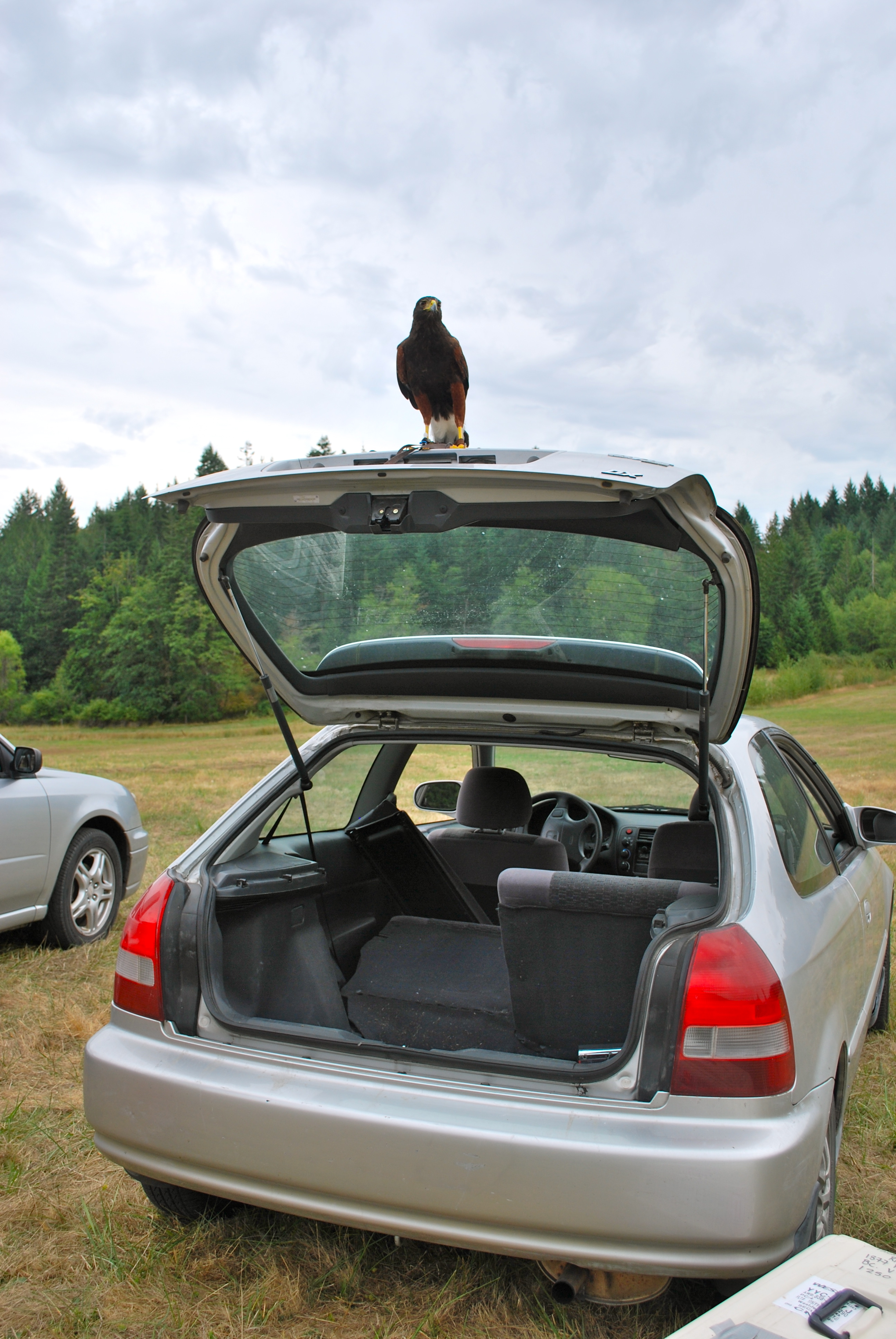
This is Duck, a male Harris hawk resting on my car after some impressive flying exercises

Button Quail Hatching Eggs & Fixing Broken Eggs

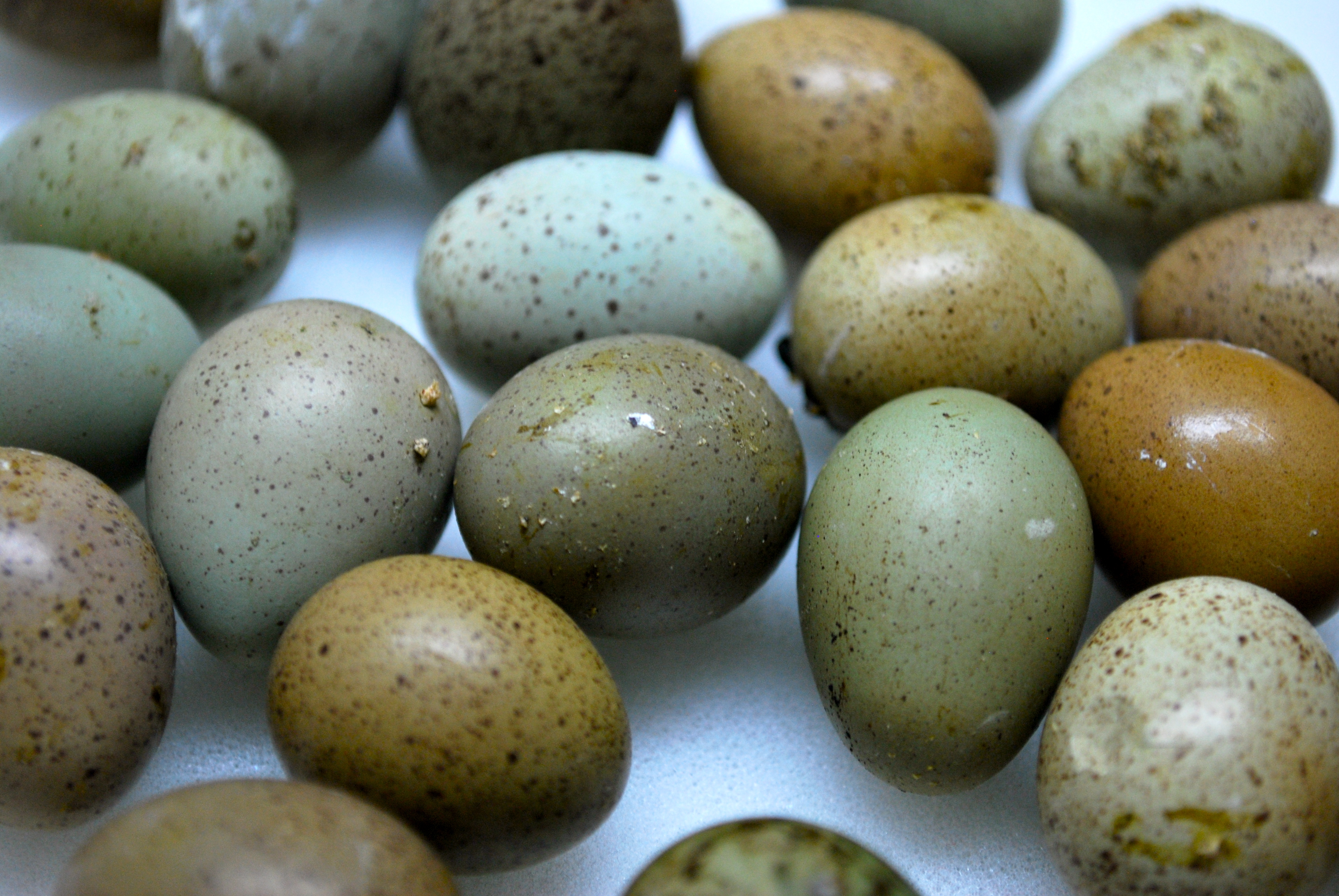
DSC_0010Not to count my eggs before they hatch, but I have just put 36 Button Quail eggs into the incubator. These cute and tiny little eggs were shipped to me from P & L Gamebirds, along with three dozen Coturnix Quail eggs, which are to hopefully refresh the genetics in my line. I used to think Coturnix eggs were small, but Buttons are about the size of Cadbury Mini Eggs. I can just imagine how adorable the newborn chicks will be.

DSC_0011

Button Quail eggs compared to Coturnix Quail egg

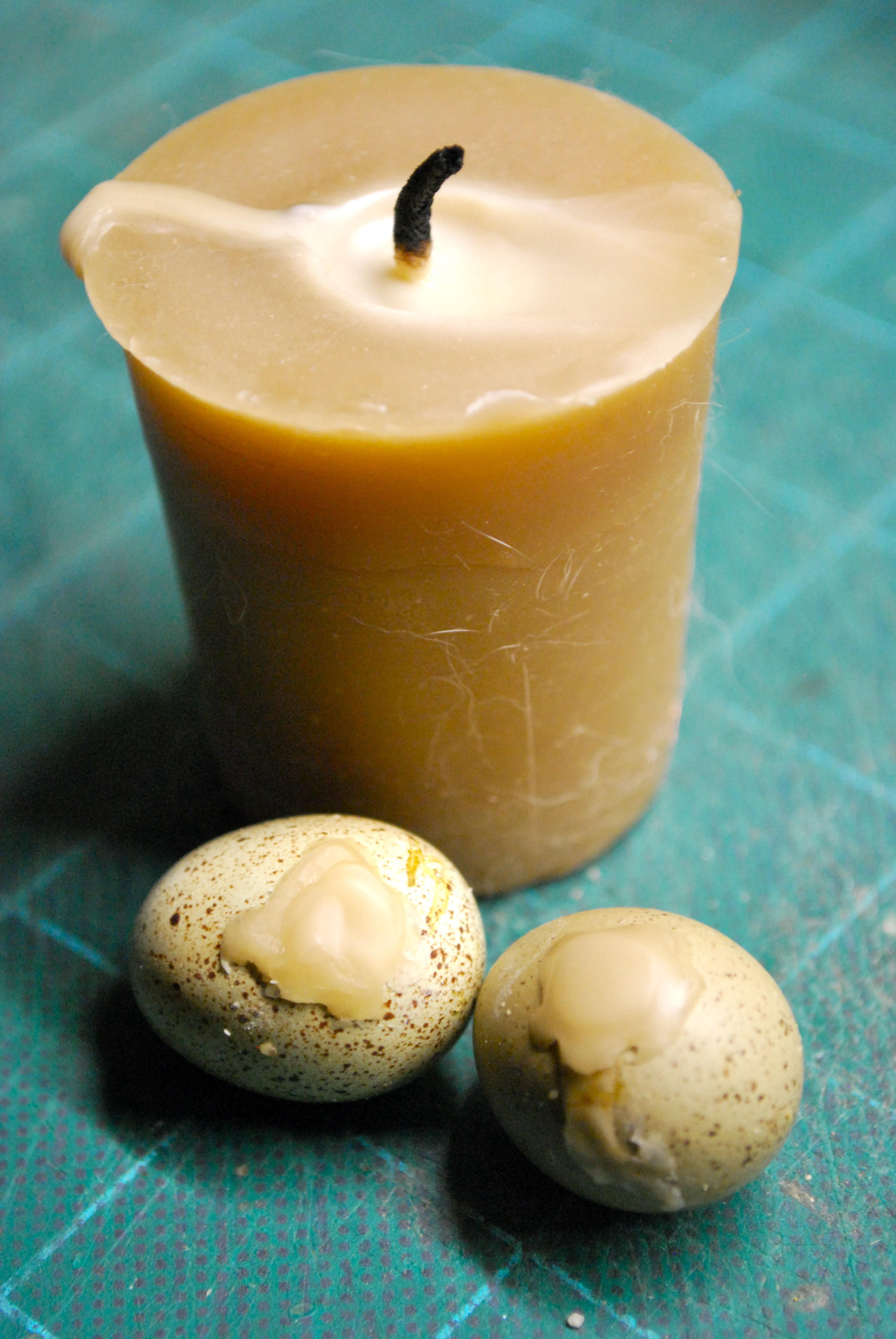
It’s always a toss-up with shipped eggs, you never know what kind of hatch to expect, so I’ll be happy if any hatch at all. A 50% hatch rate would be considered excellent, but 25% or less is more likely. Two of the Button eggs were broken on arrival, you can see the broken spot on one of them in the top photo, bottom right corner. I was going to toss them to the dog, as I would normally do with broken eggs, but since I have nothing to lose I decided to try to fix them. I took a beeswax candle and dripped a small amount of wax just so it covered the broken areas completely. We’ll find out the results in about 16 days!

DSC_0016

Repaired eggs

DSC_0012Since I was incubating anyway, I filled up all the leftover slots with Coturnix quail eggs from my own birds. These cute little guys sell out so fast I figured I might as well. It was nice to see that my own eggs were consistently larger than the ones I received in the mail. Must be doing something right!

Rex/Creme Hybrid Kits 10 Week Weigh-In

DSC_0004You’ll know from my past posts about hybrid kits that they consistently outperform my purebred kits as far as grow-out speed. Well, this litter of Creme d’Argent/Standard Rex kits are the biggest bunnies yet.

I wondered out loud not long ago if there was anyone achieving 5lb live weight rabbit fryers at 10 weeks of age. Back then, this seemed like an impossibility and all my kits needed at least 12-16 weeks to get anywhere near that. Well, today I’ve seen that it can be done.

The hybrid kits are one day shy of ten weeks old today. Two of the does have been sold but the two I have left are HUGE. The boys are also large but I have never seen does this big before. I weighed them today and they came in at 2063g and 2226g. That means the heaviest doe is already 4.9lbs. That is mind boggling.

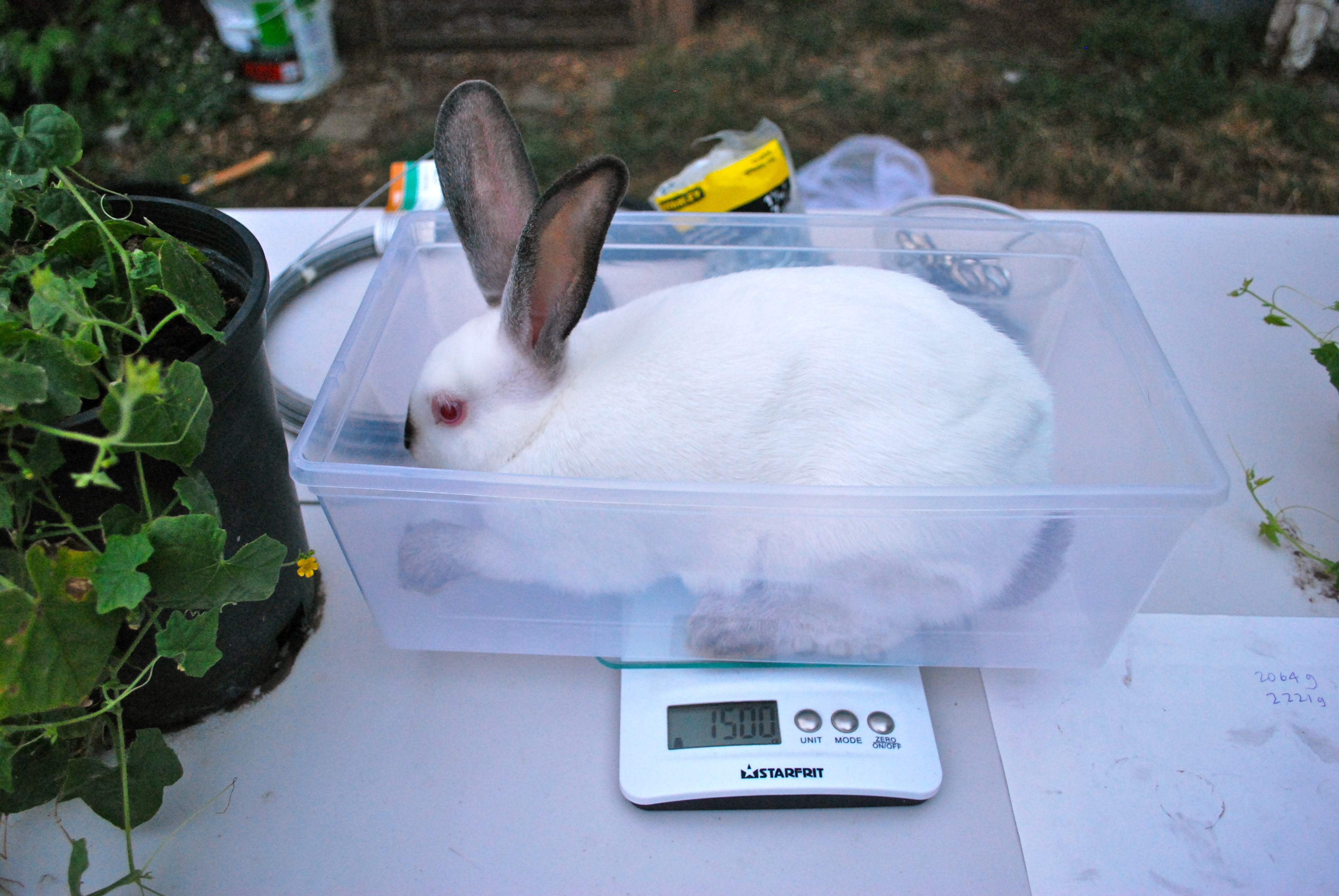
DSC_0001I also weighed the largest of my purebred Californian does, who are one day older than the hybrid kits. She weighed in at a measly 1500g. Tell me how Californians were specially bred as meat rabbits again??

DSC_0006I think I’m going to have to hang on to the largest agouti doe as a breeder. Her and her sister are the sweetest rabbits, so easy to handle and loving. The other day they were giving me kisses for almost an hour. I’d love to find a good home for the one I can’t keep, it would be a shame to have to butcher her. She’d make an awesome breeding doe for someone’s meat program.

Better, Cheaper Rabbit Pellets

DSC_0004There’s just one thing I like better than finding cheaper alternatives to necessary purchases, and that’s finding BETTER quality products for cheaper!

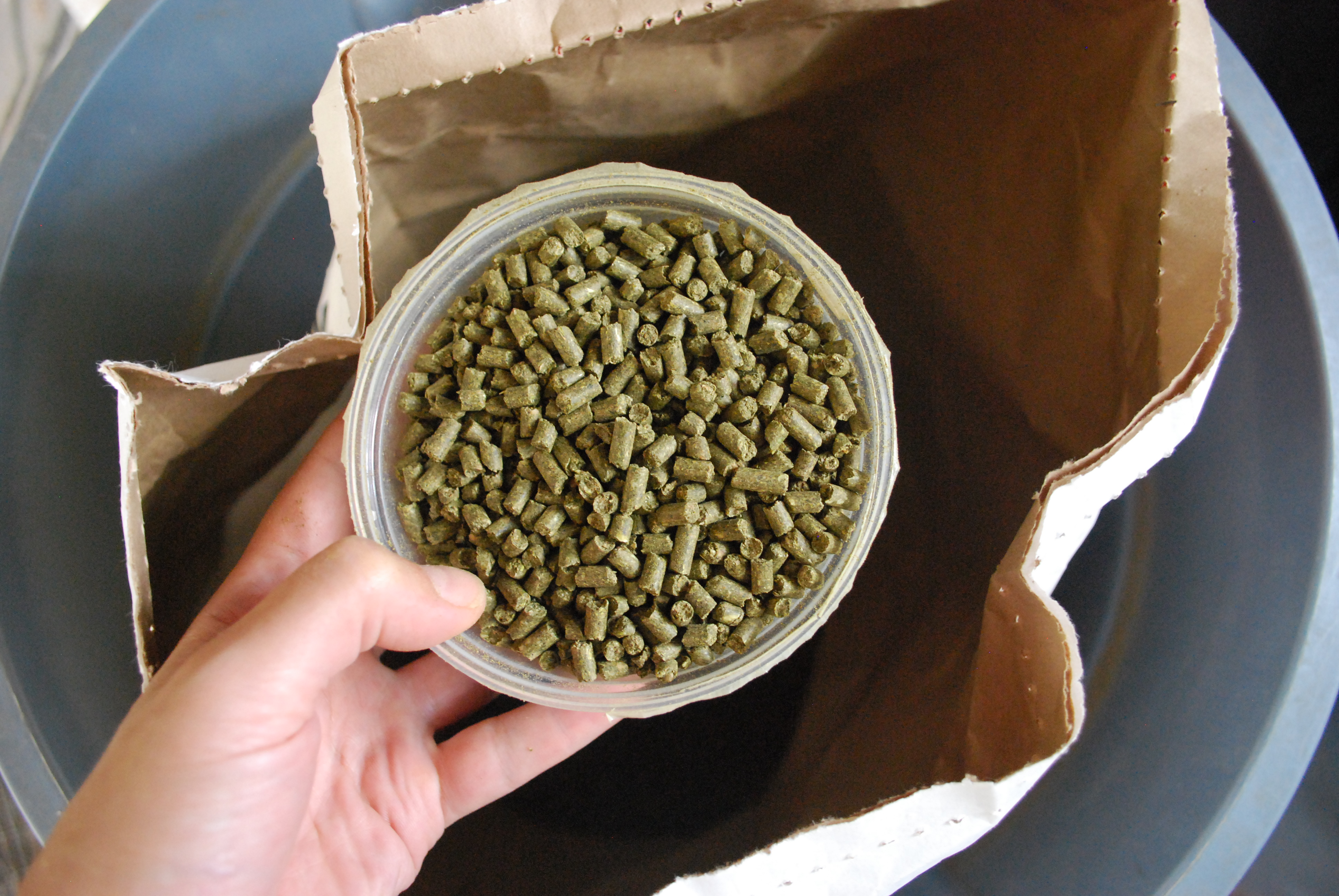
While picking up little MR16 last week, the topic of rabbit pellets came up and I was informed of a source of locally-made pellets that were non-gmo, animal product free, 1% higher in protein than my current brand, and $2 cheaper per 20kg bag. The breeder told me that her rabbit herd had made a dramatic change when she switched to these pellets; they were having larger litters, growing out faster and had better immunity. I was sold.

Today I checked it out. This magical place is Top Shelf Feeds in Duncan BC. Boy, what a fantastic store! It might be a 40 minute drive away, but this is definitely where I’m going to be buying all my livestock feed from now on. I was told they work closely with rabbit breeders to formulate their rabbit pellets, and almost everything they sell is a little, if not a lot cheaper than in Nanaimo.

For instance, for Coturnix Quail rations I normally buy 26% Gamebird Starter from Share-Kare, a shop near me, for $22.50 a bag. Compare that to 26% Quail Diet from Top Shelf at $14.50 a bag! Just one bag pretty much pays for the whole trip. I can also buy their original non-gmo layer pellets for about $0.75 more per bag, which is a very good deal. I may even switch to their organic layer pellets since I’ll be saving so much money on everything else.

They also have cool, real farmer stuff like replacement tattoo clamp numbers, stethoscopes (I bought one), scalpels, bulk bins of milk replacement powder, 20kg bags of baking soda, vials of medication that say for veterinary use only… As well as blocks of exotic frozen raw pet foods.

And when available they sell heritage, sexed chicks for a reasonable $3 or so instead of $10-15 at my local Buckerfield’s. I also bought a 50 foot roll of 3′ wide, 1/4″ hardware cloth for about $30 cheaper than I could find anywhere else. This will be used for my new pigeon loft/aviary. A bale of straw is currently about $12.50 there, but it’s $20 in Nanaimo. These are fairly significant discrepancies, especially if you buy in quantity.

To top it all off, you get to pull into a covered loading area and they pack all your feed into your vehicle for you. Love it!

New Ducks

DSC_0028

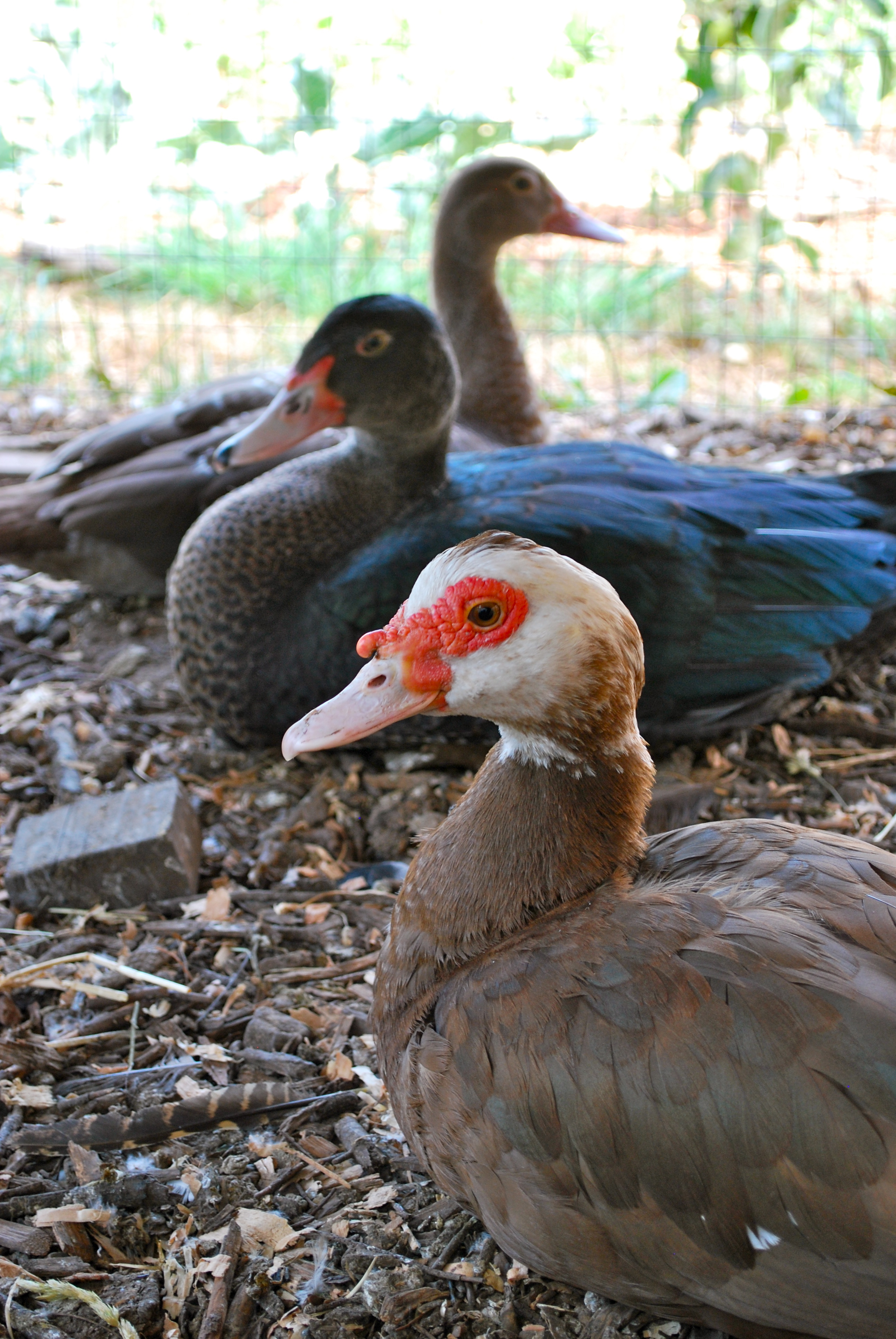
One-eyed brown duck in the foreground

My lonely, one-eyed brown duck now has a nice little family! Recently I traded a rabbit for this nice young pair, a black barred drake and a brown barred duck. Research says that once they mature the barring will probably only be visible on their chests. I think it’s a nice feature that gives them a wild look.

Once these little friends arrived I invested in a large livestock tank for everyone to swim in, since I know they came from a home with a pond and I didn’t want them to be too disappointed in their new digs. The tank doubles as a mosquito hatchery which the ducks harvest daily.

These new ducks are very well-behaved, but all Muscovies are nice when young. It’s when the hormones kick in that the real personality comes out. My last drake needed to be culled because he became incredibly aggressive with my chickens, he was obsessed with trying to rape them and I was afraid he’d kill one before long. (He was also not the first Muscovy drake I’ve had who thought chickens were fair game.) Once he was removed, my Black Copper Maran head hen decided to get her revenge by poking out one of brown duck’s eyes. Thankfully she healed up ok and there have been no further incidents, but I think it’s absolutely time to get the ducks and chickens separated.

So, I’m in the beginning stages of figuring out where the new duck pen will go. Now that I have a very tall security fence around my property I am considering having an open top pen with 5 foot high fencing. The only thing I can imagine getting in would be a raccoon, but with six cats and two dogs on the property I doubt any raccoon would be foolish enough to try. I’d also like to set up their new tank under a downspout so they can enjoy fresh rainwater from time to time. You know, if it ever rains again, ever.

Introducing My New Rex Herd Sire

DSC_0003Up until now my Standard Rex herd sire has been Timmy. I got Timmy a year or so ago from a couple that had him as a pet rabbit and couldn’t care for him anymore. He didn’t like being handled and they wanted to concentrate on their friendlier bunnies. While he is a very nice rabbit, type-wise he is terrible. He also has no pedigree and no tattoo. Since there are only a few Rex breeders on the Island, and most of their stock came from the USA, I think it’s safe to assume that Timmy was someone’s cull and it’s easy to see why.

It was time for me to get a proper Rex herd sire. After one debacle with a disreputable local rabbit breeder (who has since had all her rabbits seized by the SPCA), I located a breeder who seemed to be doing everything right. She was extremely kind and helpful and has a herd of the most beautiful and happy rabbits.

Yesterday I drove to her little farm and picked up the most gorgeous 13 week old Broken Castor buck: Moonstruck’s MR16. Once we get to know each other a little better I’ll give him a proper name. A big thank you to Jody Mitchell and Moonstruck Meadows!

DSC_0005This little guy is just the most handsome little buck I have ever seen. He has beautiful fur and body type and a full pedigree. This means that with Tuna’s full pedigree, I am on my way to producing fully pedigreed Rexes. Since he is a broken, this also means that I can start producing broken kits, which is a very fun prospect. Timmy will be retired and probably Bluefin will be also, as she is Timmy’s daughter and not very easy to work with. Unfortunately with limited space and cages I have to trim my herd aggressively.

DSC_0007Just look at that cute little face!