First Big Chicken Hatch – Day 1

DSC_0001

Last year I incubated a dozen blue-green eggs I bought from the poultry swap. I had to turn them manually because my turner couldn’t accommodate both quail and chicken egg sized racks at the same time (boo!). Only three hatched, two were roos, and I was left with a single Ameraucana hen who is now the White Chicken.

This time we are doing things properly and using the egg turner. Somehow, I have coordinated three types of fertile eggs for this hatch, and we have a completely full tray of 42 eggs.

First I have black Old English Game bantams which are the small white eggs. There are ten of these and they were from the same person who I got Tiny Chicken from. They were free, but there will be trades happening in return for them later on. Considering the size of the birds these eggs came from, they’re pretty big! We all know how much I love Tiny Chicken and I wouldn’t mind a couple more like her. She is small enough to be allowed to free range without damaging plants,  and she has an awesome personality.

Then we have the light brown eggs, which are from a mixed flock of Cochin and Light Brahma that I met at the farm I was getting my new Standard Rex breeders from. They were $10 per dozen and I’m only setting 20 of them because of space constraints. They are a beautiful mix of colors and should be interesting birds. Cochins are the large breed from China that spurred “Hen Fever”, the chicken fad that swept across America and Britain in the 1850’s, inspired by Queen Victoria’s own aviaries.

The gorgeous dark brown eggs in the middle are Welsummer or Welsumer eggs. They were purchased from a nearby breeder and cost $30 per dozen. Yes I know. The eggs are rather small and from young birds, so that may be an issue. When I was picking them up the seller also mentioned that her birds are quite small, and I’m not sure if that’s standard for the breed. The Welsummers that I had last year seemed around the same size as my other large fowl, so we’ll see how it turns out. I do like those dark brown eggs!

Of course, there’s no way I can keep all these chickens. My plan is to sell or trade off almost all of them and only keep a few of the nicest hens to refresh my stock. The Welsummers can be sexed by color and I’m hoping to successfully feather sex the Cochins at hatch. The females should have longer wing and tail feathers than the males. This may work with the bantams too, I’m not sure. I’m also not sure what I’ll do with all the males. I’ll have to keep some for at least a little while to know if my feather-sexing technique has worked. Nobody will want to buy them, that’s for sure. And if they start to crow, they have to go.

I did try to find more Ameraucana hatching eggs, but the only person who responded to my ad was selling them for $40 per dozen. For that, I can buy a pair of ready to lay Ameraucana pullets at the poultry swap. No thanks.


Controlling Rats in the Chicken Coop with a Weasel Box

DSC_0007

Eventually, unless your chicken pen/coop is built like a fortress, you will have rats. Especially in an urban setting like mine, where rats already exist due to human presence, the lure of eggs, chicken feed and sometimes even young chicks is too much for them to resist. A desperate rat will even munch on feathers and chicken poop.

The best rat control of course is always a good cat or dog, but some rats are too tough for the average farm cat or too wily for the average dog. My cat Parsley is usually the RCO around here (Rat Control Officer), but she will often come home very beat up from a rat fight, with scratches on her little face, neck and ears from the battle.

My dog will kill a rat if she can catch one, but she comes inside at night and that’s when they’re most active. Between them we’ve kept our minor rat issue under control until now, but now we have a special rat who refuses to be caught.

This extra intelligent rodent has decided to dig a maze of burrows underneath my chicken pen. It knows that the cat and dog can’t get at it if it comes out only inside the chicken pen at night, which is fully enclosed but does not have a wire mesh floor. It stays cozy and snug in its burrow by day, and raids the chicken and duck feed at night. The area around the pen looks like swiss cheese, and I never know when the ground beneath my boot will sink into a rat hole. Parsley has come home more than once with torn ears from battling this menace.

Now this particular rat has also developed the audacity to begin stealing eggs. Even though there is always an abundance of feed and grain inside the coop, this rat has cultivated more refined tastes. I have a basket hanging on the outside of my coop that I use to collect quail eggs. I usually bring them inside but some nights I forget. Just the other day, I noticed two quail egg shells laying on the ground that looked peculiarly like they had been nibbled open. He had climbed up, stolen two eggs out of the basket and eaten them at his leisure. Time to get serious!

The issue with catching rats inside a coop full of birds or in a yard with a lot of small pets around, is that you don’t want one of your cats or chickens getting injured by mistake. Rat traps are serious business and they could easily crush a delicate paw or feathered neck. I won’t even get into using poisons, as that can be even more dangerous for pets or wildlife who may later consume a poisoned mouse or rat. No, I want to use a good old fashioned Victor rat trap, but it needs to be used safely.

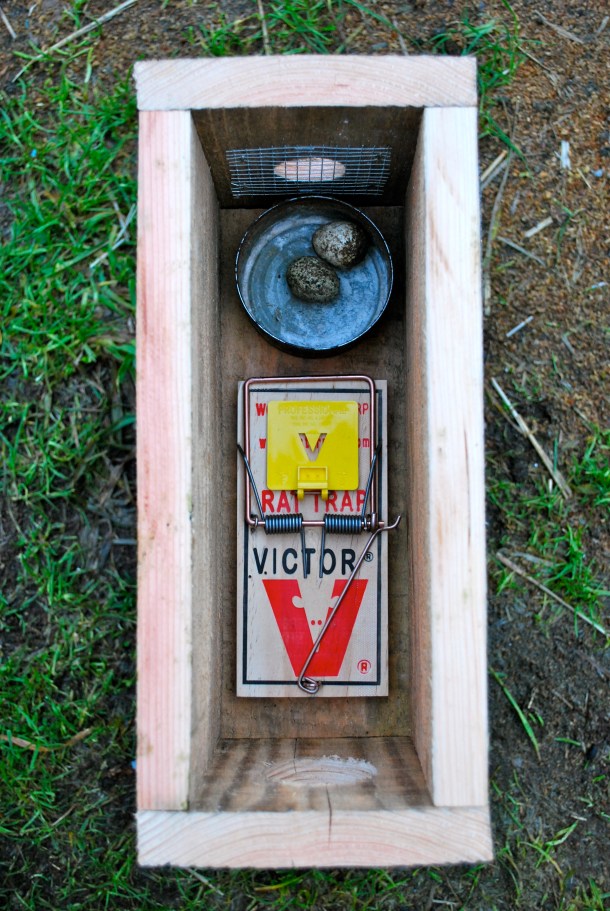
After doing a little research I came across the idea of the weasel box. A weasel box is a little wooden box about the size of a large birdhouse, that is used with bait and a trap inside to catch weasels. It has a hole at one end for the weasel to enter, and a smaller hole at the back covered with wire mesh, so air can flow through the trap, wafting the scent of the bait out and also reassuring the weasel that there is an escape route.


Now I’m lucky enough to not to have weasels where I am, but one day I plan to get a larger and more rural piece of property where they will no doubt be an issue. Until then, this seemed like a perfect solution for my rat problem. I built it in one evening, purchased my rat trap and set it up near the base of the coop, baited with two fresh quail eggs.

DSC_0003

I made mine with scraps left over from my fence construction, but you can easily build one with a single 1″ by 6″ wide , 6 foot long cedar fence board. Simply cut 3, 12″ pieces for the bottom and sides, one 17″ piece for the lid, and two 6.25″ pieces for the front and back. (Mine needed to be 7″ as my lumber was actually a full inch thick and 6″ wide instead of 3/4″ by 5.5″ like most dimensional lumber.)

The front piece should have a 2″ hole drilled slightly above center, and the back should have a 1.5″ hole drilled in the center, and covered with a square of 1/4″ wire mesh. I attached mine with a heavy duty staple gun.

It’s the perfect size to fit one of the large Victor rat traps. Put your bait next the mesh end of the box, and set your trap so the yellow or copper bait pad is next to it. This is so the rat doesn’t jump over the pad when entering the box, and also to keep the dangerous part of the trap as far away as possible from curious cat paws. If you have the kind of cats who like to stick their hands into hidey holes, you may have to attach an extender to the front entrance hole so they can’t injure themselves.


The rear of the lid should be attached with hinges, and the front can be fastened with a hook and loop type closure. I don’t have these parts ready yet, so for now my lid is held closed with a bungee cord. The trap is set up tonight for the first time, and hopefully I’ll be able to report its success very soon.

DSC_0005

First Raised Bed Complete

DSC_0001

I had to take time off after the last time I worked on this bed, since it got cold and the ground froze. Now it’s nicely thawed again and I spent a little while before farm chores today to finish it off.

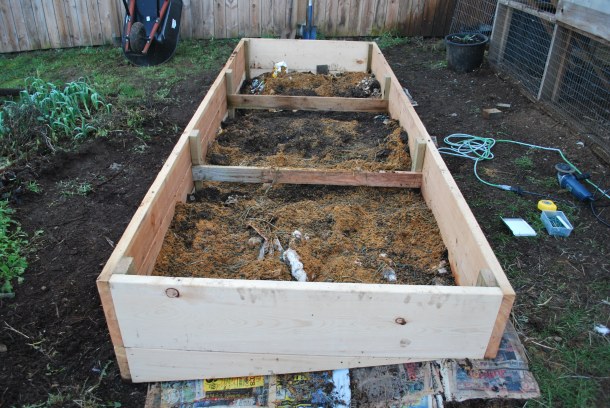
It now has both its ends completed, two cross bars in the middle to keep it from bowing out, and I have ground down the tips of a few screws that pushed through the wood into the inside. The tips were barely visible, but I did not wish to be reminded of them later on while gardening.

DSC_0002

If you’re wondering how the thin ends of the triangular side pieces are attached, there is a block of wood inside securing them to the top piece.

DSC_0004

The bed is already almost half filled with rabbit manure, chicken manure, kitchen scraps and kitty manure. It will be good to get bed number two started soon, since I don’t want to overload them with fresh manure. They have only a few months before spring planting to mellow out, and I don’t want my plants to burn.

DSC_0003

Raised Beds Day 2

DSC_0002Technically it hasn’t taken me two full days to get this far along, I’ve only worked a total of about 6 hours and that includes driving to pick up materials. I need more daylight hours!
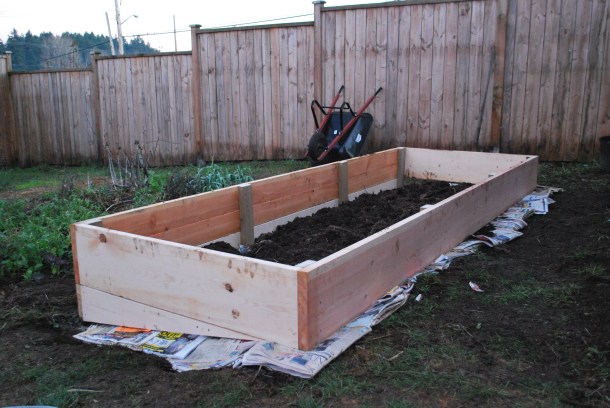
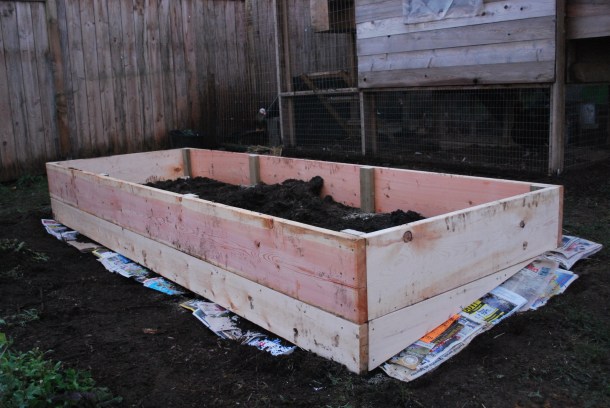
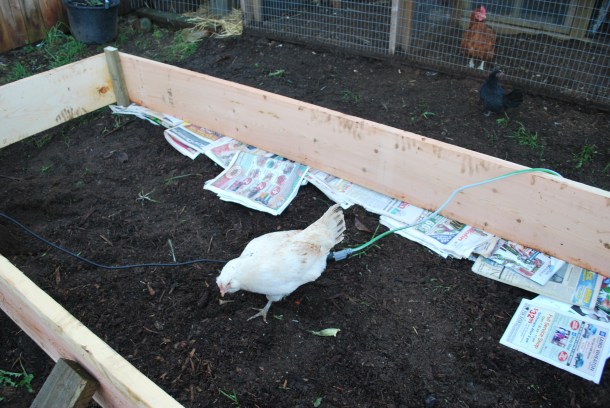
The first bed is nearly complete, it just needs the triangular bottom board on the far side put in and a couple of bracing boards installed to keep the sides from bowing out. I’ve decided on 2 foot wide pathways between the beds instead of 3.

I have been discovering renegade potatoes as I excavate, as well as a lot of grubs and cutworms, which are quickly dispatched by my two-chicken clean-up crew. I even managed to get 3 or 4 wheelbarrow loads worth of chicken pen flooring dumped in, just the spots that were soggiest and had compacted down. I’m leaving the nice, dry and crumbly earth for a top dressing.

DSC_0009

Next I’ll start emptying my overflowing compost pile and dump in most of the fresh stuff consisting mostly of rabbit manure, urine-soaked sawdust and cat litter (I use chick crumble for kitty litter) so it will rest deep on the bottom and continue to break down with the help of the worms.

I’m not concerned about putting cat waste into the bottoms of the raised beds since my cats are parasite free and they’ll most likely use the gardens as a litter box anyway. Heck, the chickens think the clumps of cat pee/chick crumble are special treats.

DSC_0010

Raised Beds at Last

DSC_0007

“I am helping”

I’ve been here three years now, and come a long way in the gardening department considering there was nothing when I started.

This garden plot was dug the very first spring, and it comprised many hours of backbreaking work, only to succumb to an influx of weeds that were impossible to control. The soil, which looked great at first, turned into a hard-packed hydrophobic carapace, and my harvests were pitiful.

The next year I smartened up and used a thick layer of woodchip mulch which resisted most of the weeds and protected the soil from drying out. However, there is still a pronounced slope to the yard here which causes constant erosion and is vulnerable to chicken, duck and dog attacks. I don’t allow much free ranging of birds precisely because of this issue. A single hen can cause a lot of damage in a very short time.

The whole area needed cleaning and tidying up and I thought the best way to do this would be to convert it to raised beds. I had the best garden of my life when I was using a raised bed in Vancouver. They look nice and neat, are higher up so easier to tend, they are level, you can fill them with whatever you want, and it keeps the lawn from creeping into your plots. It also creates a sturdy foundation for all kinds of cool projects, like trellises, hoop houses, chicken tillers and quail pens.

My first raised bed project after completion of the bed itself is to build a large segmented quail pen with a living roof to sit partially on top. There will be a metal mesh insert buried about 6″ under the earth and screwed into the sides of the bed to prevent rodents from getting inside. This will give the quail more space, an earth floor (which I know will make them lose their tiny minds with happiness) and access to vegetation, rain and added sunlight. (Rain? My experience at the raptor centre has taught me that sometimes birds just like to sit in the rain…) The earth floors will also keep their feet and feathers healthy and I will have space to add more natural hiding areas. I’m hoping this will help cut down on bullying. The pen will be segmented down the middle to make two separate living areas so I can keep certain individuals apart.

Here’s what the area looked like this morning:DSC_0002

And here’s what I accomplished today:

DSC_0008

First the little apple tree had to come out. It had barely any root ball, just one giant long taproot that ran horizontally about 20 feet. Should be fun replanting it later…

I was able to get the first bed aligned, level and square. The beds are 12 feet by 4 feet and the top row of boards are 2″ by 12″ fir. The ends are spruce because they were out of fir. We’ll see how that turns out.

The next step will be to add an 8″ by 12′ board on the bottom of the low side to bring it to the ground. This is an easy method for building raised beds on a slope. The side pieces will be long triangles that will give the appearance that the bed is half buried.

You can see that I’m also placing a thick layer of newspapers under the edges of the bed. This is just to keep weeds down in these areas. I will not cover the insides of the beds, but I will put down a layer over the paths and cover the paper either with straw or wood chips. I’ve been saving paper for awhile now and I’m glad to finally convert it to worm food.

DSC_0005

I’m planning three beds in total, with 2 or 3 foot wide pathways between them. The supplies for this project (wood and 3 inch deck screws) cost me just about $250 CAD.

Of course, now that I look at this first bed, it seems it will be almost impossible to fill. It will be almost 20 inches high on the downhill side! Luckily, it’s time to dig out the chicken pen floor and replace it again with woodchips. It’s taken a year or so, but the chickens and worms have transformed the chunks of wood into beautiful, rich black earth. It’s gorgeous stuff and I know it’s going to grow me some amazing produce.


Broken Rex Kits at 7 Weeks

Okay these kits are just beautiful! DSC_0008

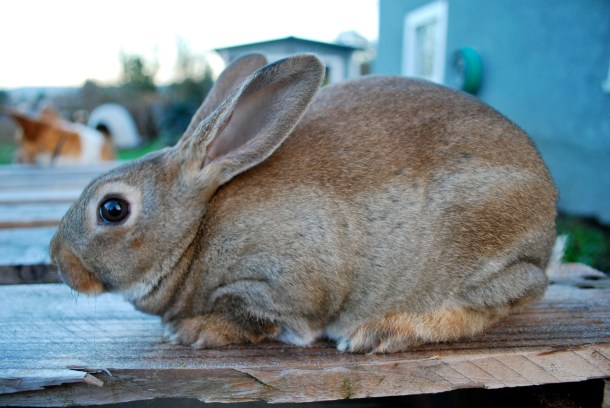
This first photo is of the one solid castor Rex kit who has turned out to be a doe, and will be staying at the rabbitry as a new breeder. Isn’t she lovely? Look at those little fat rolls already developing!

DSC_0007

There is also a darling broken castor doe, a broken black otter doe, and an opal doe. Pictured below:

Of course there are also boys!  A nice broken blue otter buck, a broken opal buck, a broken black otter buck, as well as some false opals and some mismarked black otters. I don’t have photos of these guys because my camera ran out of juice! Rest assured they are as cute as the buns pictured.

A Little Trip to Seattle

I recently went to visit my new nephew for the first time in Issaquah, and was lucky enough to take the Victoria clipper ferry over with my mom for company. I like the clipper ferry, it’s kind of like a plane ride with way more legroom and way more relaxed border security.

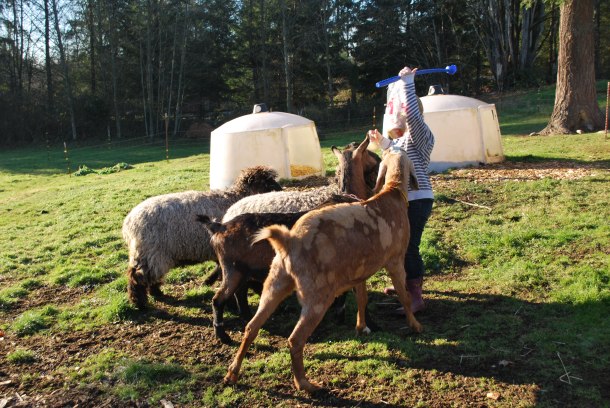
One of the days in Washington was spent in Duvall, for Thanksgiving dinner at the home of my nephew’s grandma on his dad’s side. It was great to finally get a look at the setup she has going, I had been hearing loads of stories about all the dogs, goats and sheep running the place. Truly, it was a dog paradise. There were five (six?) assorted dogs and most of them had cozy sweaters on. They had their own dog door leading into the expansive backyard and dog beds in every corner.

DSC_0008

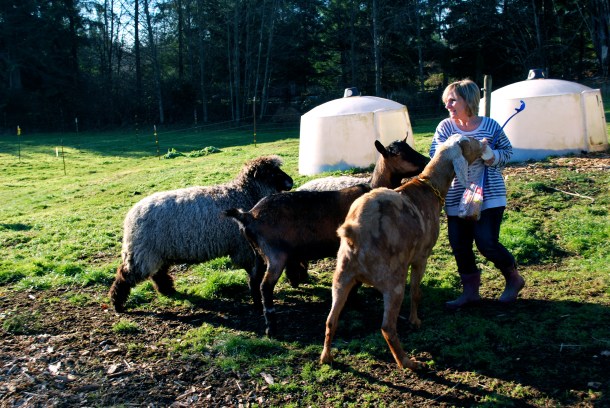
I was also introduced to the goats and sheep, The goats were huge, since I guess I’m used to seeing Nigerian Dwarf goats around here. Basically you could almost ride the goats, they were that big. I was informed that one of the grandkids actually has ridden the goats and I was jealous.

DSC_0009

There were also a pair of sheep, who were completely adorable and also looked fun to ride. I think she said they were Cotswolds. Apparently I can have their fleeces when it comes time to shear them! Very excited about that.

DSC_0020

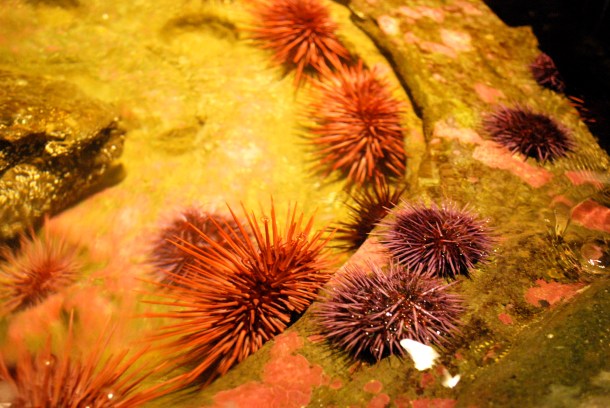
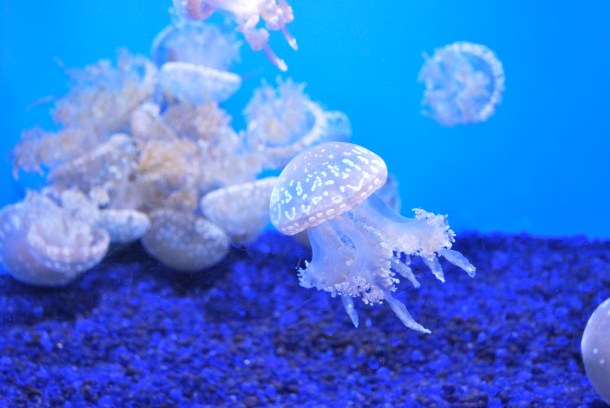
My birthday happened while I was there, and I was taken to the aquarium for the day to celebrate. Despite how bright and vivid all the displays were, somehow I didn’t get very many good photos. It was still fun, I always enjoy any aquarium I visit.

DSC_0022DSC_0038DSC_0054DSC_0062DSC_0045

Unfortunately I must have had too much fun and brought back with me an exotic American cold. I haven’t been sick in a few years, so I kind of forgot how to do it. I was doing okay until the Raptors Centre Christmas party, where I obviously talked too much bird talk and lost my voice. A week later, the voice is still gone but I feel the cold is finally almost on its way out.

And of course the whole reason for the trip is this little cutie pie right here. Great to finally meet you little buddy!

DSC_0024


Standard Rex Bunnies at 3 Weeks

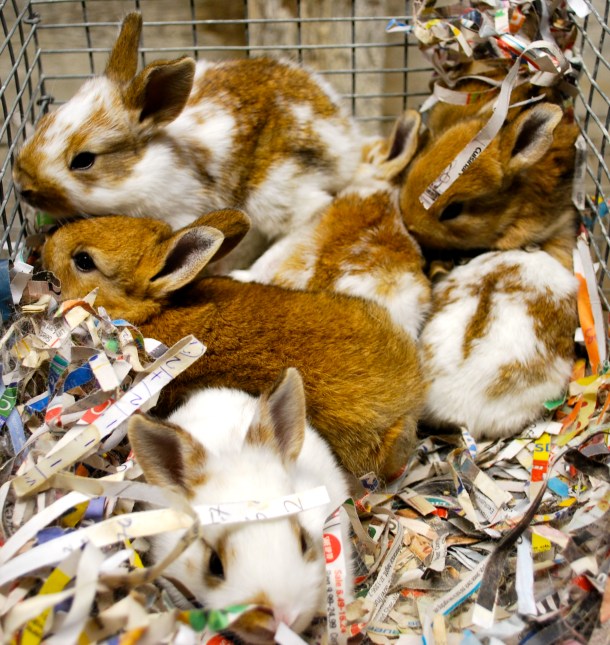
DSC_0018These bunnies are just about three weeks old now, and very cute. They’re starting to nibble on hay and are adept at jumping out of the nestbox to pester their mothers.

Ironically it seems that my opal doe gave me blues and my blue doe gave me opals.

You can see in the above photo two solid opal kits as well as a broken blue. The opals have the tan undercoat that peeks through the blue while the broken blue does not. There are also two black otter kits, a broken castor and a broken opal pictured above. These are Bluefin’s babies.

DSC_0014This is Opal’s litter. The solid castor kit seems to be a doe, which basically means I have to keep her. The Rex castor coat is just to die for. Also pictured are two broken blues, two broken black otters and a broken castor. Such cute!