Bluefin’s First Litter, and I Got to Watch

DSC_0027

Minutes before kindling

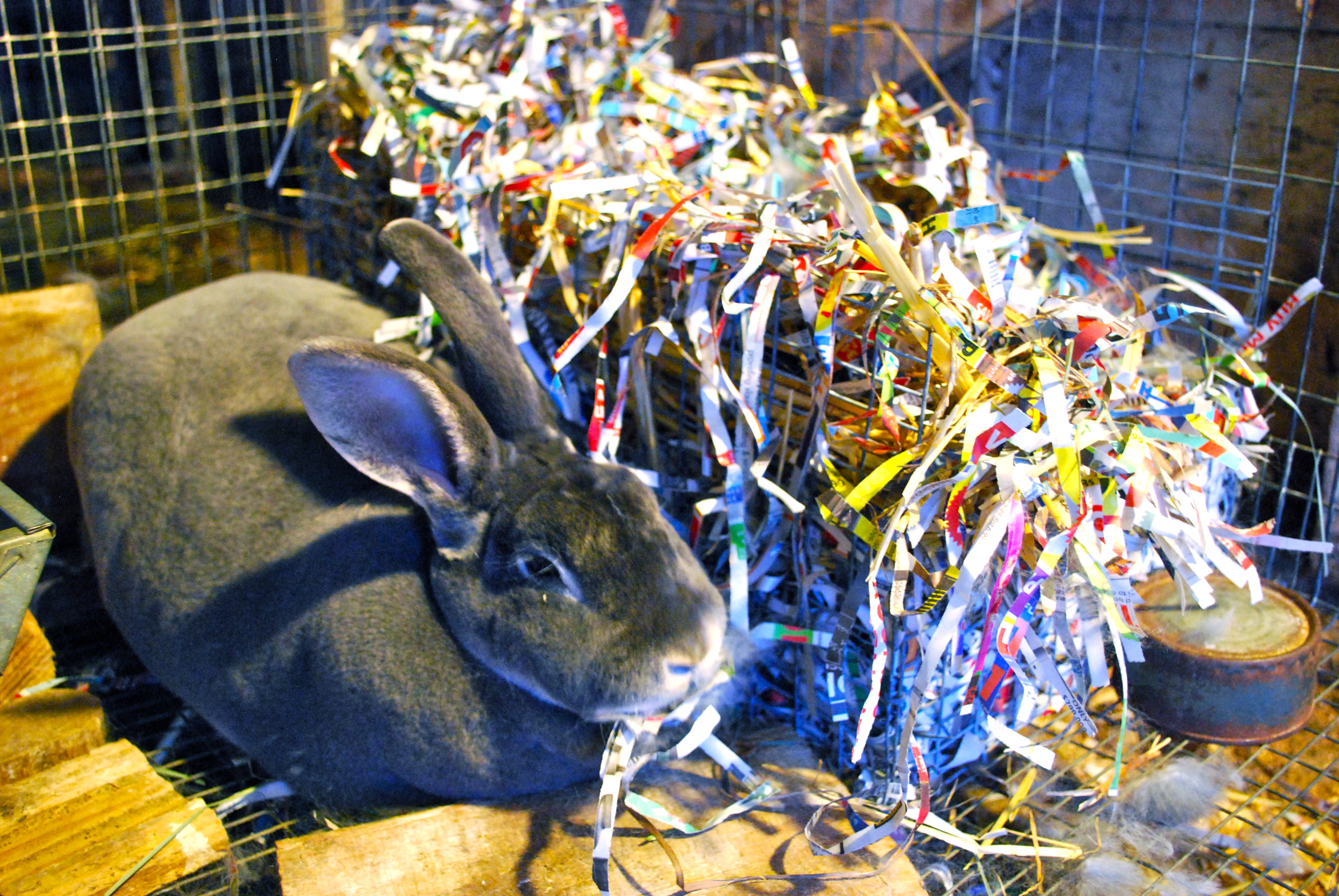
I had some excellent luck today and was able to witness the birth of Bluefin’s very first litter. I had checked on her a couple of times earlier this morning and afternoon, since that’s when my does usually kindle. No fur, nothing. Was she going to be a day late? Not kindle at all maybe?

DSC_0031

Here she is in the middle of giving birth

As I went into the barn at about 7pm to do my chores before it got dark, I noticed she had scattered some random fur around and had some bedding in her mouth. She was looking frantic. I straightened up her nest a bit for her and about five minutes later, in she went and began whining and having contractions. I was very pleased that since this was her first time kindling, I could be there to take care of any problems that might arise.

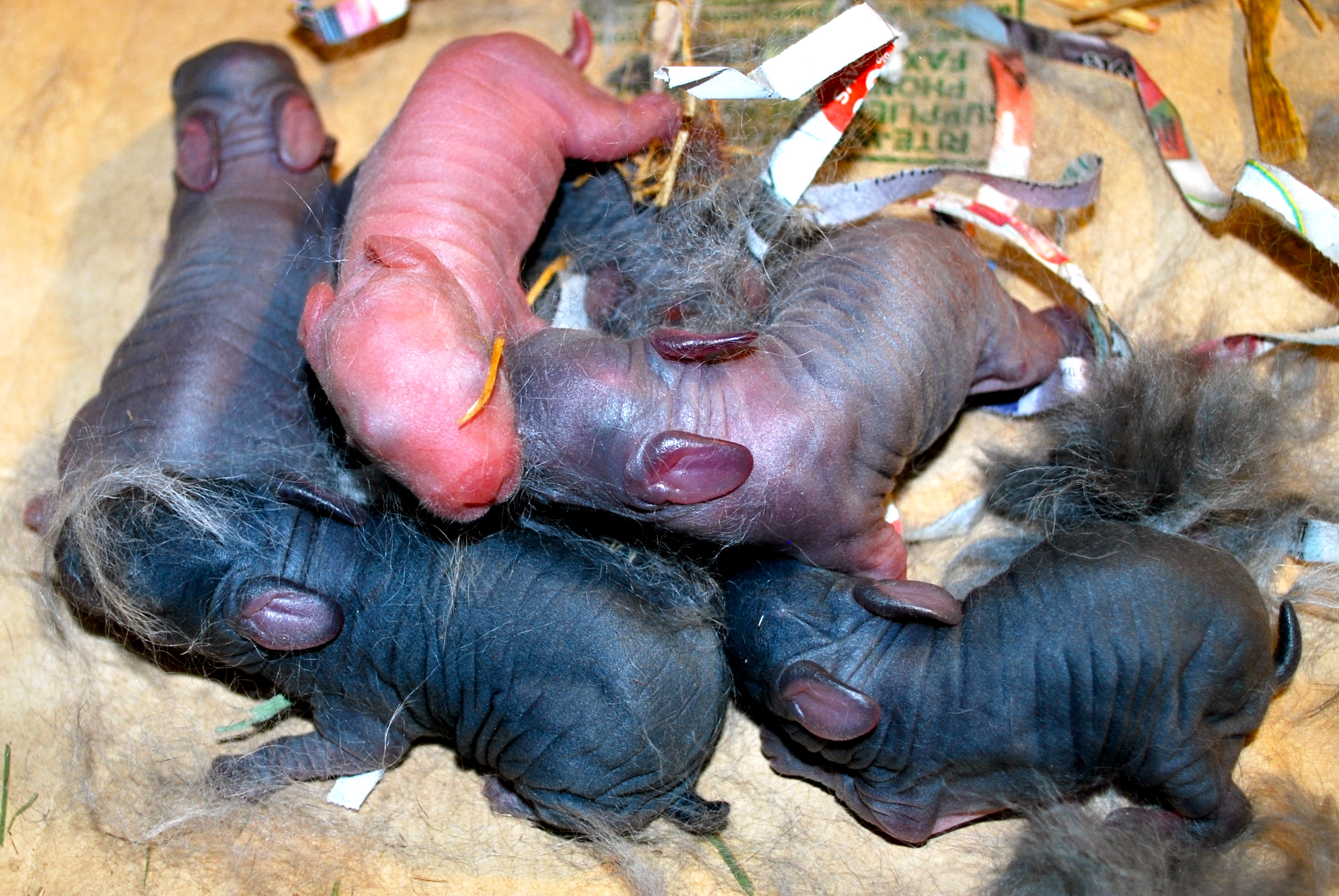
Turns out she didn’t need my help at all and about ten minutes of unhappy twitching and squeaking later, she had delivered seven healthy and clean kits. Fantastic!

I’m always amazed at how chill my rabbits are even with two big dogs and a bunch of cats perpetually wandering around their cages. We were all there watching and she didn’t care at all, just got down to business. When I gave her a big dandelion plant as a treat after she was done she pounced on it like a lion.

DSC_0047So here are some rare shots of Standard Rex kits only minutes after being born. It looks like we have three black otter, three blue/blue otter and one self white! I’m not sure if the white kit will turn out to be albino or what, but I am super excited to have a new color turn up in a litter. Hopefully Bluefin takes good care of them… I know I’ll be monitoring their progress closely.

DSC_0044Thanks for reading!

Hybrid Kit Update

DSC_0080I couldn’t leave these little guys out. Although they are the same age as the Californian kits, these little buns have decided to hang out in the nestbox longer. They also appear to be a bit bigger than their purebred half-siblings, but that’s no longer a surprise.

DSC_0073We have two agouti kits and the rest are black with varying degrees of lighter brown ticking. So far this has been the standard for these crossbreeds. I just love the agouti-colored rabbits with their little black ear tips and black eyelashes. I think I’ve always liked brown birds and animals, not sure why.

Californian Kits are so Cute

DSC_0058

Of course while I was shooting the Rexes, I had to get some shots of the fluffy white puffball, three week old Cal kits. These bunnies are just so tiny and sweet. I’m going back on the barley fodder system now, and I think that will make for even healthier and happier rabbits. I’d say the new nesting material is a big winner, based on how fat, healthy and issue-free both these litters of kits turned out.

DSC_0066For at least the past week, these kits have refused to go into the nestbox at all, instead mom uses it to escape from them when required. I’ll be taking it out soon.

DSC_0081

Photos of the New Rex Litter

DSC_0050I have some requests from potential buyers for pics of this litter, so I figured I might as well share them with everyone.

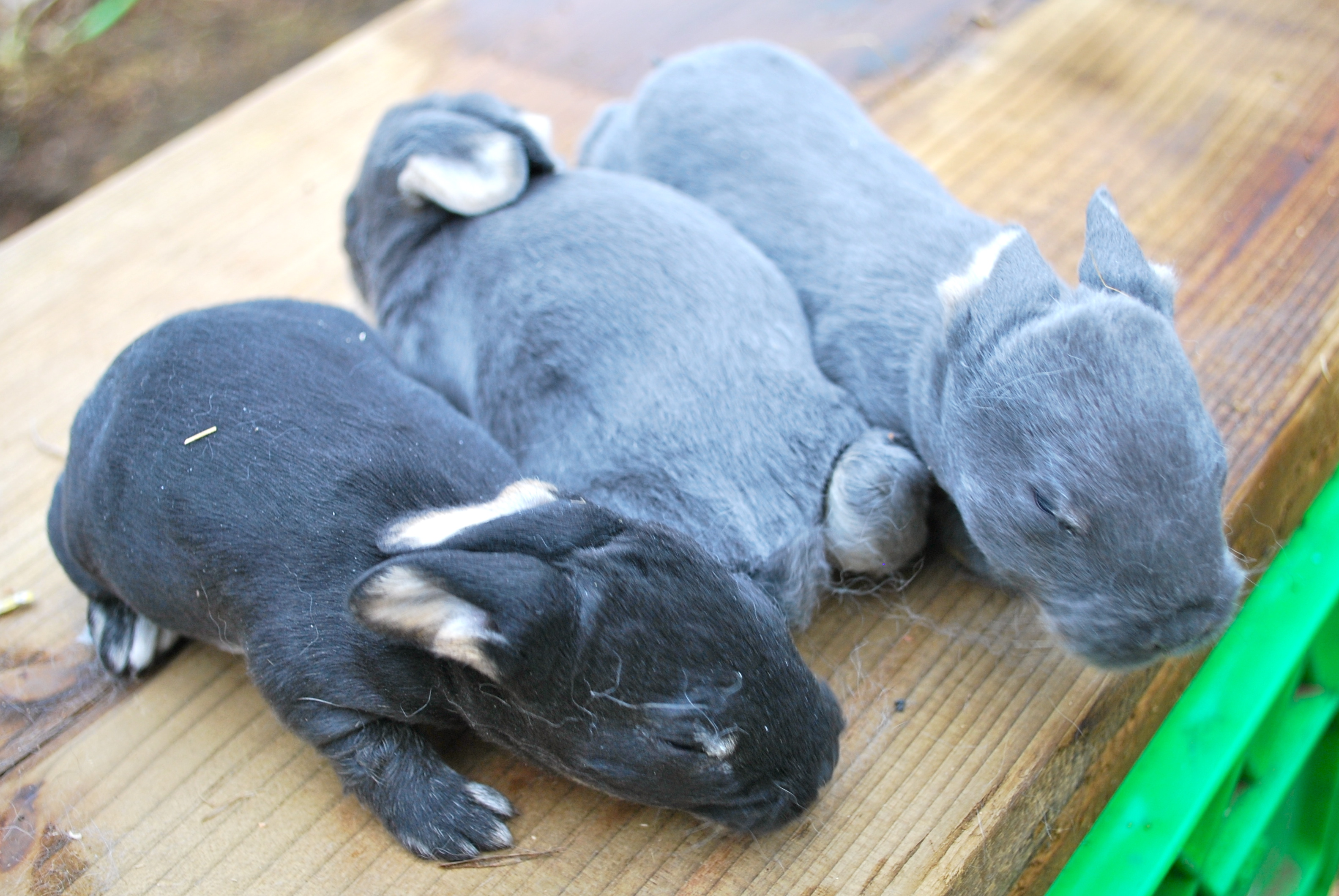
DSC_0054These kits are now twelve days old. As it turns out, there are two black otters, two blue otters and two solid self-blacks. One of the black otters has funny little bent over crumpled ears. I’m sure they’ll straighten out in time.

DSC_0042I think the reason I thought they were all blue at first is that the Rex black is much lighter when they’re born than in some of the other breeds I have. I’ll have to remember that.

DSC_0044My other Standard Rex Bluefin is due to kindle her very first litter on the 23rd. I gave her a nestbox today and she kind of exploded it.

DSC_0037

Yes, there is actually a nest and a rabbit underneath all that


Standard Rex Kits are Here

DSC_0014

Blue otter kit from last year

On schedule, Tuna kindled seven kits this morning. This is her second litter, and I was expecting mostly black otters with maybe a couple of blues, since Tuna and Timmy are both black otter. That’s what happened the first time around. This time however, she gave me all blue/grey kits. They all look healthy and I expect them to do very well. Now I’m extra curious to see what Bluefin kindles at the end of the month since she’s a blue otter too. Will there be blacks? Brokens? To those who don’t know, broken is a mottled coat pattern.

DSC_0020

Black otter kit from last year


Baby Rabbit Update – Week 1

DSC_0035

Californian X Creme d’Argent agouti kit

The kits are a little over a week old, and I’m happy to say that my new DIY nest bedding method is working very well. Everyone has been warm and happy with no issues at all. I’m so pleased to have finally figured out the nest box situation here.

DSC_0032

Californian X Creme d’Argent black steel kit

Tuna my Standard Rex is due to kindle tomorrow morning. Her nest is well trampled and she hasn’t pooped in it, so I fully expect a nice little litter when I wake up on Saturday. Her daughter Bluefin is due on the 23rd. It will be Blue’s first litter so anything could happen. It will be nice to have some more Rex litters in the barn, they’re so soft and exotic even though they often have a lot of attitude.

DSC_0045

Californian kit, 1 week

DSC_0037

Californian kits in the nest

I actually also really like that the shredded paper adds great color! So cute.


Californian Kits are Here

DSC_0002On schedule, Samphire kindled seven kits this morning, one unfortunately was stillborn. I’ll have to monitor the nestbox closely from now on to make sure my new bedding experiment is doing the trick. I may add a piece of cardboard flooring if I find the kits burrowing down too much. It’s not that cold out right now but the kits need to stay extra warm for the first couple of weeks in order to develop well.

Help! My Meat Rabbits Won’t Breed

DSC_0009

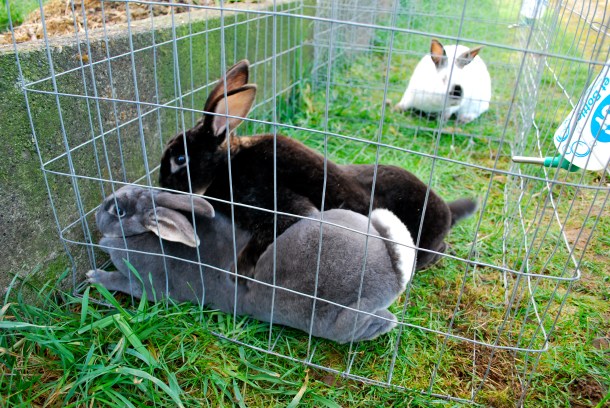
One of my Standard Rex pairs getting ready to breed as the jealous Californian buck looks on

Are you having problems getting your rabbits to do what they’re supposedly so famous for? They’re just sitting there in your barn, lying around in the lap of luxury, eating bag after bag of expensive food and your freezer is empty? So frustrating! Here are a few tips and tricks that have proven useful to me over the past four years running my rabbitry in getting more bang from my bucks. Get it?

First, we all know to bring the doe to the buck’s cage and not the other way around. This is because if you bring the buck to the doe, often he’ll be too interested in sniffing out the new territory than sex. If bringing her to him doesn’t work, you can also try putting them both in a neutral area. I’ve noticed if I put my pair in a tractor/cage together outside on the grass, often they’ll get in the mood. You can also try putting them in a larger than usual enclosure and this added freedom and fresh air may inspire them. Of course, there is also the rare recalcitrant doe who must have the buck brought to her in order to get the deed done. Some people also swear by taking an unwilling doe for a car ride. It’s unknown whether this works by jumpstarting the survival instinct or simply the vibration.

Some does also require that the buck puts some effort into breeding and will refuse him if he doesn’t give her a good chase. If you have a lazy buck who just wants to mount and not chase, try your doe with another more energetic buck and see if she acquiesces so you know what’s up. You’ll also have usually better luck breeding a young doe, say between 6 months to a year old, as opposed to an older doe who has never been bred and may become permanently uninterested.

Light plays an important role in rabbit receptivity. Nature has built that into them so that there are less babies born in the harsher winter months when there is less food and more predation. If your rabbits get no artificial light, they might be reluctant to breed in the darker months. Adding a single lightbulb on for a few hours a day either before or after the sun rises or sets, will often make a big difference. You may also want to try breeding around dawn or dusk, when rabbits are naturally more active.

Temperature too can make rabbits unwilling to breed if it’s either too hot or too cold. Rabbits can even become temporarily sterile if temperatures are too high for extended periods.

Not her time of the month maybe? Nope, rabbits are induced ovulators that drop their eggs whenever successful mating occurs. This also means that you will have better luck conceiving if you always breed your pair twice. I usually wait for the buck to fall off once or twice, then separate them, then put them together again in a few hours. If you’re not sure what it means for the buck to ‘fall off’, don’t worry, you’ll know it when you see it. Some bucks even scream when they do. I’ve heard different accounts of how much time is best to wait between breedings, from 1 hour to 8 hours. I generally wait between one to four hours or so. It’s also important to make sure the male’s equipment is in good shape. An injured or sore-looking penis or testicles may inhibit fertility or willingness.

Doe rabbits are more inclined to lift during certain periods and you can tell how receptive they are by checking the color of the vulva. A darker pink/purplish color is best for breeding, while very light pinkish-white is generally a no-go. I personally never bother doing this. If my does refuse to breed, I just keep putting them back in every day until they do. You will often also have better luck breeding a doe if she still has kits with her. A quick way to test receptability is to stroke your doe along her back and see if she lifts her hind end and tail for you. A doe who does this will almost surely lift for the buck.

Food. One trick I’ve learned is to wait to feed your rabbits until after a breeding has occurred. If she refuses, she refuses, and of course still gets fed, but if she accepts then they sort of start viewing the food as a reward. I also think they have more energy when they’re hungry and will sometimes just sit there like lazy bums if they’ve already eaten. Another important aspect to consider is that if your bucks are fat, they’ll be too lazy to breed. You want to keep them slim and trim. This goes double for does, who will sometimes have trouble conceiving if they’re too fat.

Something I use a lot here on my little farm is apple cider vinegar. One use is to put about a teaspoon in the doe’s water (32 oz) for a few days if she’s refusing to lift. I don’t know if it’s actually the vinegar helping or just coincidence, but I’ve seemingly had success with it in the past. You can also try giving your doe more fresh food. A very safe treat that I like to offer is blackberry bramble.

Cleanliness. I’ve noticed that if the barn is a bit stinky or I’ve been neglecting my chores, the rabbits get a bit depressed. I know I wouldn’t feel too frisky if I was living in dirty conditions, so I can’t blame them. Try giving your hutches or barn a good thorough cleaning and you may find your rabbits more willing.

Good luck!
DSC_0008

DIY Rabbit Nesting Boxes – Trial and Error

DSC_0027

Esther with a moustache of the new bedding we’re trying. I think she approves

When I started researching meat rabbits, way before I ever had any, I wondered what I would use for nesting boxes. The traditional sheet metal boxes that I see used most often are hard to find where I live and very expensive when located. There’s one on a shelf at the local feed store that I think is around $40 and looks from the thick coat of dust on it like it’s been sitting unsold for many years. I wonder why…

I’ve also seen many wooden nesting boxes used. To me, that seems like a lot of work for a heavy nesting box that will absorb urine and is difficult to disinfect. I know the importance of disinfecting nesting boxes after each use as I had to deal with a couple of cases of mastitis last year. My rabbit recovered both times but it’s not something I’d like to repeat.

A nice solution would be if there was something cheap and plastic I could buy at a hardware store that would fit the bill, sort of like a squat planter box maybe. Something like that may exist, but I haven’t found it yet. I have wondered if a plastic dishpan might work, but I have yet to try this out.

So my solution was to follow guidelines in the Storey’s Guide to Raising Rabbits and build wire mesh nestboxes. I had already built all my rabbit cages, so I already had the mesh and tools. Despite the popularity of the book, I don’t think I’ve ever seen anyone else ever use a box like this, for whatever reason. I know once I posted a Youtube video which showed the box in use, a local rabbit breeder I know commented to me that she noticed I was using wire boxes and to not be surprised if I lost most of my kits. That scared me a bit. I asked her why, and she said the kits would either get too cold or the mother would flip the lightweight nest over. Well, I wasn’t going to let either of those things happen.

At first I would cut out a fresh cardboard liner for each new litter, then fill the box with woodchips and straw. The cardboard had to be in one single piece or the does would pull out each side and toss them. Well, turns out you actually go through a lot of cardboard that way and measuring out and cutting the liners is tedious. I hated it. I also need my used cardboard to make packaging for my other business and there’s no way I’m going to go and buy new cardboard. Do you know how expensive it is?

I experimented once without the liner and all the woodchips fell out through the mesh in just a few days. Thankfully the kits survived but I needed to add new bedding each day and they were obviously struggling to stay warm in the depleted nest.

Now I think I’ve found a better solution. I don’t know why I didn’t think of it before, but this time I shoved a whole bunch of shredded newspapers into the bottom of the nests and topped them off with the straw. The problem with straw is that my rabbits like to eat it. Generally though enough is left in the nest for it to work. They won’t be eating the paper I bet. So far, it looks like the shreds make a nice soft and yet solid base to the nest, and it doesn’t seem to want to fall out the holes. The rabbits seem happy with it and it’s absorbent, practically free and should insulate well. I keep the does from moving or flipping over their nests by attaching the back to the cage wall with a dog leash clip.

These wire mesh nests are nice and light when removing them to inspect kits, they can be very easily sanitized in a container with some bleach and water, they were cheap and easy to make, and they’ll last a very long time. I worried a bit about the sharp front corners at first, but I smoothed everything off well with a grinder when I made them and the rabbits seem to have no problems. I’ve seen enough wild rabbits deep in bramble bushes to know that they know how to avoid being impaled on sharp objects.

DSC_0005

Very pregnant Creme d’Argent doe and nest box

My nestboxes are made of 1/2 inch by 1 inch rabbit cage flooring wire, and measure 18 inches long by 10 inches wide by 8 inches tall with a 5 inch tall front lip. They are held together with hog rings or c-clips.