Fred is Sick, and Vets are Misinformed About What to Feed Cats

DSC_0002

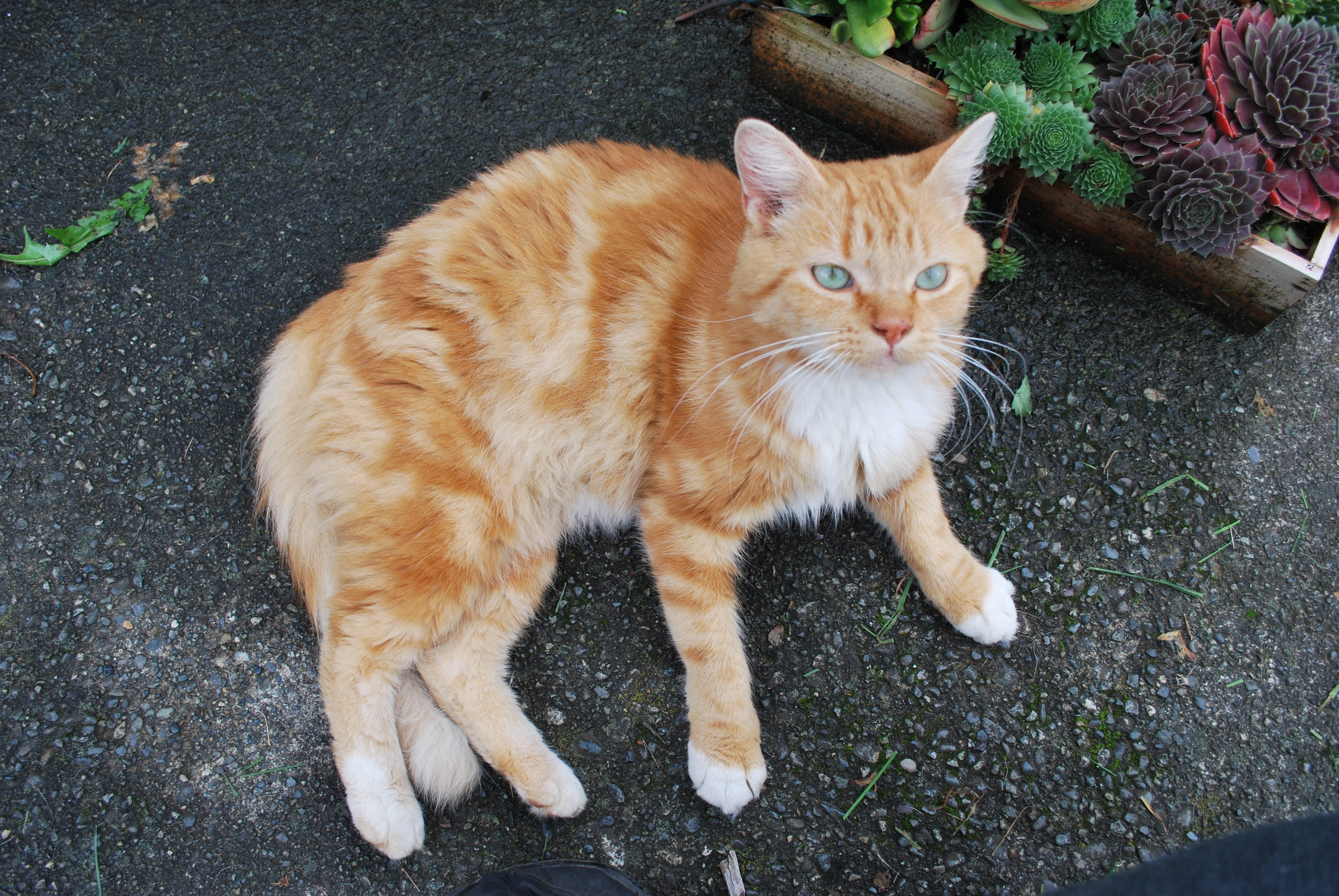
Fluffy Freddy boy

Some of you may remember Fred, the stray cat who showed up here a few months ago in rough shape. Well yesterday Fred was doing the litterbox shuffle, going from one box to the other, only able to urinate a dribble each time. He still seemed frisky and cheerful so I decided to give it a day. He was back at it today so I scheduled an appointment with my vet.

I brought him in and after a urinalysis, he was diagnosed with a raging bladder infection and pee chock full of struvite crystals. Poor Fred. He was given a shot of strong antibiotics and I was told that he needed to go on a special diet. Uh oh, here we go.

Ironically, as I had been waiting for the results of the test, I had been noticing that all the posters and infographics in the vet office had been sponsored by pet food companies. If you’ve been reading my blog, you may know that I try to feed my cats raw food predominantly. Of course lately I’ve been lazy and have been passing out low-carb kibbles and canned. My bad.

When the vet said I needed to change his diet I knew what was coming. She said he needed to go on a special, very expensive canned diet that could only be purchased from a vet. I asked her if there was a natural alternative to this food and she said very sternly, “NO”. So obviously then I asked if whatever was in the special diet was not natural? To that she had no response.

Of course, once back at home, about one minute of online research later, I discovered that these special foods basically just have lowered ash and magnesium content, something which has actually been proven to have no effect on urinary crystals. The only thing proven to help with struvite crystals in the urine is increased water consumption. What a shocker. Why is there ash in cat food to begin with? And of course the best way to keep his urine acidified so it can properly dissolve the crystals is simply to feed a high-moisture content, zero-carb, raw diet. What a coincidence.

I remember when I started feeding homemade raw, I felt a bit guilty. Was I being a bad cat owner? The vets seemed to think so. After having my three cats on raw for about a year, one hot summer my cat Parsley started drinking water. Normally she never drank water as she got plenty of moisture from the raw food. I was worried. I brought her in to the vet for full blood work. Of course he asked about her diet. I told him I made her a homemade raw diet and he looked at me like I was a poor deluded idiot. “What spices do you add to this diet?” he asked. Spices? I don’t add any spices. I make a species-appropriate prey-model diet based on what a cat would eat in the wild. Did he think I was serving them raw chicken with Italian dressing? He was unimpressed. When he came back out with blood test results in hand he said, “This is one of the healthiest cats I have ever seen.” The next thing out of his mouth was “I still think you should switch her over to a commercially prepared diet.” Huh?

And so this is how it has been with nearly every vet I have ever visited. A homemade raw diet is evil, you’re killing your cats, you are a bad owner, you should be ashamed. And yet I’m just not buying it. A feral cat would be eating a raw diet, and I myself don’t eat a “perfectly balanced” meal each day and somehow, I survive.

I’ve heard anecdotally that vets get a few hours of training total regarding nutritional health of pets and that this “training” is highly influenced by pet food corporations. I myself have found that most vets are sorely misinformed when it comes to what kinds of foods are best for cats and dogs. They espouse high-carb kibbles and canned foods that probably ensure their patients will be returning for expensive treatments again and again. I’m sure most don’t do this knowingly, but that’s no excuse.

Anyway. Around $200 later, I have a paper bag of very expensive tiny cans of cat food which list their first ingredient as water. I think I’ll just stop being so lazy and get everyone back on the raw food feeding regime. All I want are healthy cats, and I don’t mind a little extra work and expense to achieve that. I’m tired of being shamed, looked down upon and made to feel horrible for providing my pets with a fresh, raw diet that I know is good for them.
DSC_0045

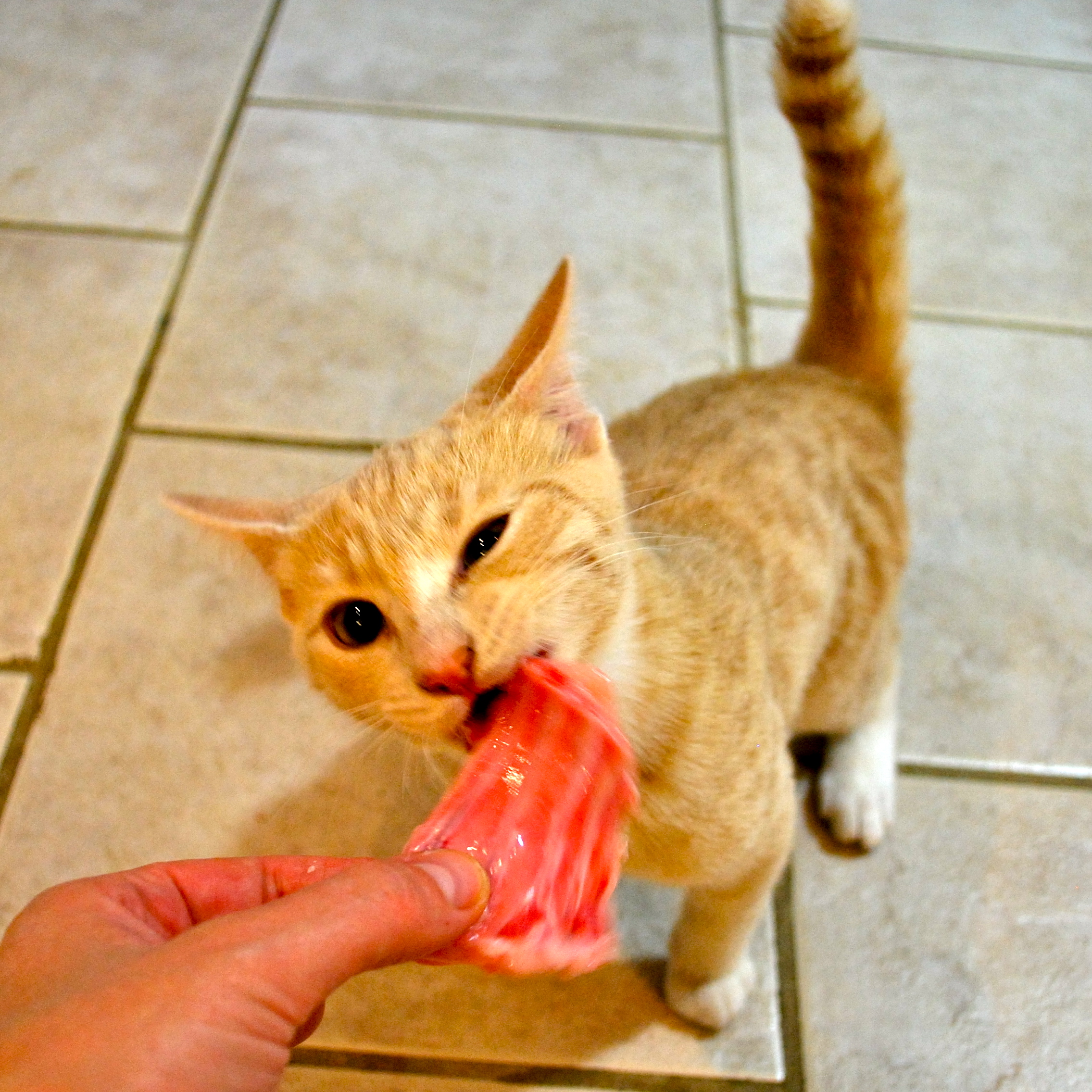
Jeffie enjoying a rack of raw rabbit ribs


How I save over 90% on Topical Flea Control for my Multiple Cat Household

tumblr_nffaggUBUK1sm7czpo6_1280

Jeffie in the garden, one of the rescued kittens

I don’t like using topical flea meds, but when you have two dogs and ten cats sometimes diatomaceous earth just isn’t enough. When I took in an abandoned cat and her litter a few months ago, they came with fleas. Despite my best efforts dusting with DE, washing bedding and vacuuming; after a couple months everyone had fleas.

Since I was rehoming Mama and most of the kittens once they were ready, I had to make sure they didn’t bring an infestation to their new homes. The only problem: A six dose package of Advantage for cats under nine pounds from my local vet costs $82.94 plus tax. This works out to about $14.50 per cat. A single dose works for about four weeks if you’re lucky. So, for ten cats, I was looking at $145 a month for flea control. NO WAY.

I decided to do a little bit of research. It turns out that the Advantage cat and dog formulation is the exact same thing. The active ingredient in both is imidacloprid 9.1%.

In other words, buy the package for small cats and get a total of 2.4ml of medication, good for 6 cat treatments. Buy the package for extra large dogs and get ten times that amount, a whopping 24ml of the exact same medication, enough for 60 small cat treatments!

The kicker is that the package for extra large dogs costs only a little bit more than the one for cats. At my vet, it’s about $100, dropping our cost per cat dose down to $1.60. That’s much better!

However, you really don’t have to pay $100 either. Since I’m in Canada, I discovered I can take “advantage” of the low price of Advantage in Australia by ordering online. (This particular product is not available to the USA). A bit more research later and I had found by recommendation what looked like a nice little online shop: Pets Megastore. A 6 pack of Advantage for extra large dogs there is $55.91 CAD and shipping is about $6.  I placed my order and they shipped that same day. My order arrived in good shape with no duty owing about two weeks later.

DSC_0013So now I have managed to drop the price per small cat dose down to $1.03. That’s a savings of almost 93 percent!

All you need to do is get a small glass vial and a syringe with no needle designed to squirt medicine into your cat’s mouth. (Note, you WILL NOT be squirting Advantage into anyone’s mouth! It is applied externally between the shoulder blades directly onto the fur.) Simply empty your extra large dog dose into your glass vial, and use the syringe to get the correct dosage out for your cat (or smaller dog). Here is a handy weight to dosage chart that applies to both cats and dogs:

0-10 lbs = 0.4ml
11-20 lbs = 0.8ml
21-30 lbs = 1.2ml
31-40 lbs = 1.6ml
41-50 lbs = 2.0ml
51-60 lbs = 2.4ml
61-70 lbs = 2.8ml
71-80 lbs = 3.2ml
81-90 lbs = 3.6ml
91-100 lbs = 4.0ml

An added benefit here is that you can tailor your dosages more precisely to your pet’s actual weight. This can save you even more money and is healthier for your pet. Keep your unused medicine well-marked and tightly sealed in a safe place that is also cool, dark and dry. Shake it up well before using again as the active ingredients may settle. It won’t lose potency until the expiration date, so mark this down as well. Be careful not to get this medicine on your skin, or wear latex gloves if you’re worried. Wash your syringe out very well with soapy water before storing. Do not use on kittens or puppies under 8 weeks of age.

If you have a multi-cat household, this tip has the potential to save you a lot of money which you can then spend on your lovely, flea-free friends. Consider a home with three small cats who get treated every month. The yearly cost of buying the small cat sized vials from the vet would add up to $522. The cost of ordering the extra large dog vials online would be $37.08. Throw in the cost of the syringe and vial and let’s say $40. You’ve just saved $482. That’s enough to feed those three cats a high quality grain-free canned food (let’s say $3 per can, one can a day) for over 5 whole months.

(I’d like to add that I haven’t been paid or reimbursed by any of the companies mentioned above. Just had a good experience shopping online and wanted to share. Also note, this information applies to Advantage and Advantage II products only. Do not use the newer, K-9 Advantix or Advantage Multi for Dogs products on cats.)

Down to Nine

DSC_0021Well, the lone sweet girl kitten was escorted to her new home today, a day shy of 14 weeks old.

This was hard for me, since I have become attached to all of the kittens, but the little girl especially so. She was the first one to begin following me around dutifully at about three weeks old, much sooner than her brothers could even really walk. Whenever I would talk to the kittens, she would come running, thinking I must be talking to her. She was my little shadow who liked to lick drips of water from my fingers. She was the smallest of all the kittens and her voice was but a squeak.

I am heartened by the fact that she will be living a life much better than I could give her. She now resides in a big, beautiful home on a very quiet street with a huge property backing on to a bird sanctuary. She will grow up with three very calm and gentle kids, another young rescue cat, and two dogs. One of which is reported to enjoy cuddling kittens. She will get to know chickens and ducks and be with her children all day since they are homeschooled. She seemed very pleased to be there and I’m sure they’ll take excellent care of her.

I really am so glad I decided to have all the kittens fixed before bringing them to their new homes. It was expensive, but they have all healed so incredibly quickly and well that I would not hesitate to do it again. They were done at about 13 weeks old and all were over three pounds. It gives me such peace of mind knowing for sure that the cycle of kittens has stopped here. There are so many deserving homeless cats already.

Two of the boy kittens are scheduled for a trip to their prospective new homes in Victoria on Saturday. I’m hoping these homes will be just as good as the first one and I can leave them knowing I’ve done the best I could to get them started in their new lives. I know that they’ll bring a lot of joy to their new families.

Disciplining Kittens

Disciplining kittens is a touchy subject, but the reality is that kittens need to be properly introduced to gentle discipline in order to live safe happy lives while respecting their owners’ homes. Allowing your kitten to run wild without check is potentially asking for trouble later when he grows into a cat. It makes it much harder to introduce the whole concept of “no”, which will inevitably come up at one point or another.

DSC_0012Kittens are naturally very active, curious and adventurous. This is all part of learning to survive in the world as a full-blown cat. They will climb, chew, get into things, knock things over and scratch things. It may seem impossible to teach that flying bundle of fluff which things in the home should be left alone, but with a few techniques used consistently, they will eventually learn. You’ll never be able to keep a kitten or cat away from something he really wants to do, but at least he’ll understand it’s not an activity you accept and he’s a naughty cat when he does it.

First off, you must provide your kitten with things he is allowed to scratch, climb, chew and get into. A large, stable scratching post is an excellent investment in your cat’s happiness, and in turn yours. He will soon figure out that it offers height, exercise and entertainment, and that getting in trouble over scratching your furniture just isn’t as worth it. Toys can be as simple as cardboard boxes with holes cut into them, crumpled balls of paper or foil or paper or plastic bags.

DSC_0073Scratching furniture or climbing to forbidden areas

If your kitten has climbed to an area he should not be, or is scratching an object he should not, tell him “no” firmly or make a “shht” sound, then promptly go and pick him up and place him as far away as possible in another room on top of an object he must descend or escape from. My favorite, the very top level of their six-foot scratching post. You could also place him on the floor and cover him with a small blanket or put him in a little cardboard box. I like to tell them at this point that they have now been placed in the “punishment spot”.

The kitten will then be forced to tackle this obstacle and make his way back in order to try the naughty activity again, and this will often dissuade him after a few attempts. If your kitten is still quite small, you can scruff him gently when you remove him and always be sure to place him in a location where he cannot get hurt making his way back, no matter what his age. Scruffing them kind of drives the point home that you aren’t pleased, but when they get too big it becomes too uncomfortable for them. I have found that kittens get the point very quickly with this method.

Always be gentle with your kitten in order to avoid scaring them, but be swift with your motions. Be sure your kitten is getting enough attention and playtime from you or they may learn to be naughty on purpose just to get some interaction.

DSC_0036Whining and crying

If your kitten is crying, something may be wrong. Always be sure to check on your kitten if in doubt. Otherwise, you don’t want to run to soothe your kitten every time they begin to cry. Allow them to take a break and then go to see them once they’ve quieted a bit. This gives them a chance to calm down and soothe themselves, which will make for a less neurotic adult cat. It also cuts down on being verbally bossed around by your cat later on, which can sometimes be hard to live with.

A final tip

A cat’s world is comprised primarily of odors. Your new kitten will be adjusting to the strange new smells of your home and family as well as being suddenly away from his mother and siblings. If possible, bring something from his old home that has his mother’s scent on it, like a small blanket or piece of fabric that the mother has been allowed to sleep on. Put this in the kitten’s new bed and it will help to comfort them through the transition.

If you want a truly well-socialized kitten with the lowest level of stress upon transitioning to your home, adopt one that has been with its mother for 12 weeks or more. In a good environment, a kitten matures and gains a lot of confidence around this time and is much more ready to go and begin a new life with you with minimal issues.

Raw Feeding Kittens and Cats

Ever since I got my three sister cats as tiny, supposedly 8 week old kittens about five years ago, I have tried to feed them raw as much as I can.

Long story short, their much-loved kitty predecessor died at the young age of six from undiagnosed diabetes and acute renal failure and I strongly suspected her commercial, “high-quality” dry kibble diet. I wanted to make changes to fresher foods with my new girls, like I was doing in my own life with good results.

No, I do not spend a fortune each day feeding pre-prepared raw. I make my own!

DSC_0009I’d like to emphasize that you have to do your research with homemade raw cat food diets. They don’t have to be perfect, just as your own or your children’s diets are not perfectly balanced at every meal, but they absolutely must provide certain key elements.

I bought an electric meat grinder, found a great site online with a great recipe, and I’ve adapted it over the years to fit my cats and my budget. I’ve found that a homemade raw diet can be slightly cheaper than a good-quality, grain-free commercial canned food diet, although preparation time is a factor. I do still offer store bought canned food sometimes, and I do get lazy and give them a kibble meal sometimes, but I strive to keep cat kibbles strictly in the treat zone, where they belong. Even the most expensive “doom pellets” make excellent, low cost treats!

Well, of course I couldn’t resist starting this hard-luck litter of kittens on raw food right from the start. At this point in my life I don’t think I could bring myself to offer kibble to a small kitten. It would be like offering McDonalds to a baby.

Let’s be clear here: High quality commercially produced dry cat food is made from meat and byproducts (both generally fine), vegetables and (often) grains, all cooked at very high temperatures and coated with fat to make them palatable. Cooked food may taste good but it isn’t a natural primary diet for a cat.

Think about how convenient dry foods are. They require no refrigeration, no preparation. It’s the cat equivalent of a meal replacement bar. How would you feel about eating a big bowl of the same room-temperature, dry, possibly rancid, super-processed nuggets every day? These are completely dead foods that include significant proportions of things like vegetables and grains that cats cannot digest. They might as well be adding sawdust. Some probably do… Cellulose, right?

Cats are true carnivores and only need to eat meat. In the wild they catch and eat small animals, a diet very high in moisture. Cats evolved in the desert, and naturally have a very low thirst drive since they are accustomed to getting most of their moisture from their food. A healthy cat on a healthy diet never drinks much water at all.

Ok so, I’ve had these kittens since they were three days old. I was a little nervous about offering them my humble homemade cat food. Would they hate it? I had already been feeding the mother cat raw from nearly the start. She arrived with a bad case of diarrhea and did not produce a solid stool until I did so. Luckily she was totally into it and now has well-formed, firm stools. She’s a real wild girl who knows what’s good for her.

Benefits to Raw Feeding:

-Improved overall health, energy and longevity, shiny coat
-Vastly improved tooth and gum health, more natural eating motions, less bad breath
-Improved and reduced stool formation. Small and dry crumbly stools with no odor
-Improved mental stimulation when eating, each meal is different and fun to eat
-Sufficient hydration is maintained
-Wash glass jars instead of tossing cans

I noticed a couple of the kittens sampling the mama’s raw food at about week three. They were keenly interested in it. I had been adding water to make it soupy for them, but I don’t go out of my way to serve it warm. One kitten was gumming a piece of bone-in rabbit ribs for a good ten minutes while I watched. With no teeth yet it was a futile endeavor, but I was pleased with his enthusiasm.

At some point as kittens grow you may begin to worry that perhaps you should just leave out a bowl of kibble. Let me tell you, I’ve had this feeling. What if the babies get hungry between meals? The truth is, if you care about your cats then you’ll feed them regular meals and they will never go hungry for long. Cats were not made to eat all day long. They are made to catch a meal, eat that meal, and then let the gut clean itself out until the next meal. I would never go back to the All-Day-Kitty-Buffet. And it sounds funny, but it’s actually not funny at all, because my kitty died from it. Every cat out there is “doing fine” on their kibble diet until they’re not.

At week four, four of five kittens were eating the raw food meals and enjoying them very much. Now they all love it and much prefer it to all else, especially the batches made with fresh home-grown rabbit.

I feed about 3 to 4 big meals a day, (about 1.5 cups for 5 kittens and one momma) for the first four or five weeks, then reduce to two meals a day with fresh water always available. Use your own best judgement and keep in mind that kittens need to eat more frequently than adults. The momma cat is very helpful, she lets me know very clearly if it’s been a little too long between feedings.

The new chicken, rabbit and turkey formula seems to be a big hit. It’s very satisfying to be able to use my own rabbits and eggs to feed my precious cats. I love knowing exactly where the food has come from, down to the last detail. Today many bunny spines and other bones were ground up for them.

We do not waste a single bit of our rabbits. Literally, nothing is thrown away or even makes it as far as the compost, other than boiled bones. Everything is consumed by either human, dog or cat.

I’ll provide my catinfo.org inspired recipe in an upcoming post.

And One More Makes Ten

DSC_0007Yes, I am now caring for ten cats. My three cats, the five kittens who are almost ready to be rehomed as soon as I can get them fixed, the momma cat, and this little guy who showed up about a week ago.

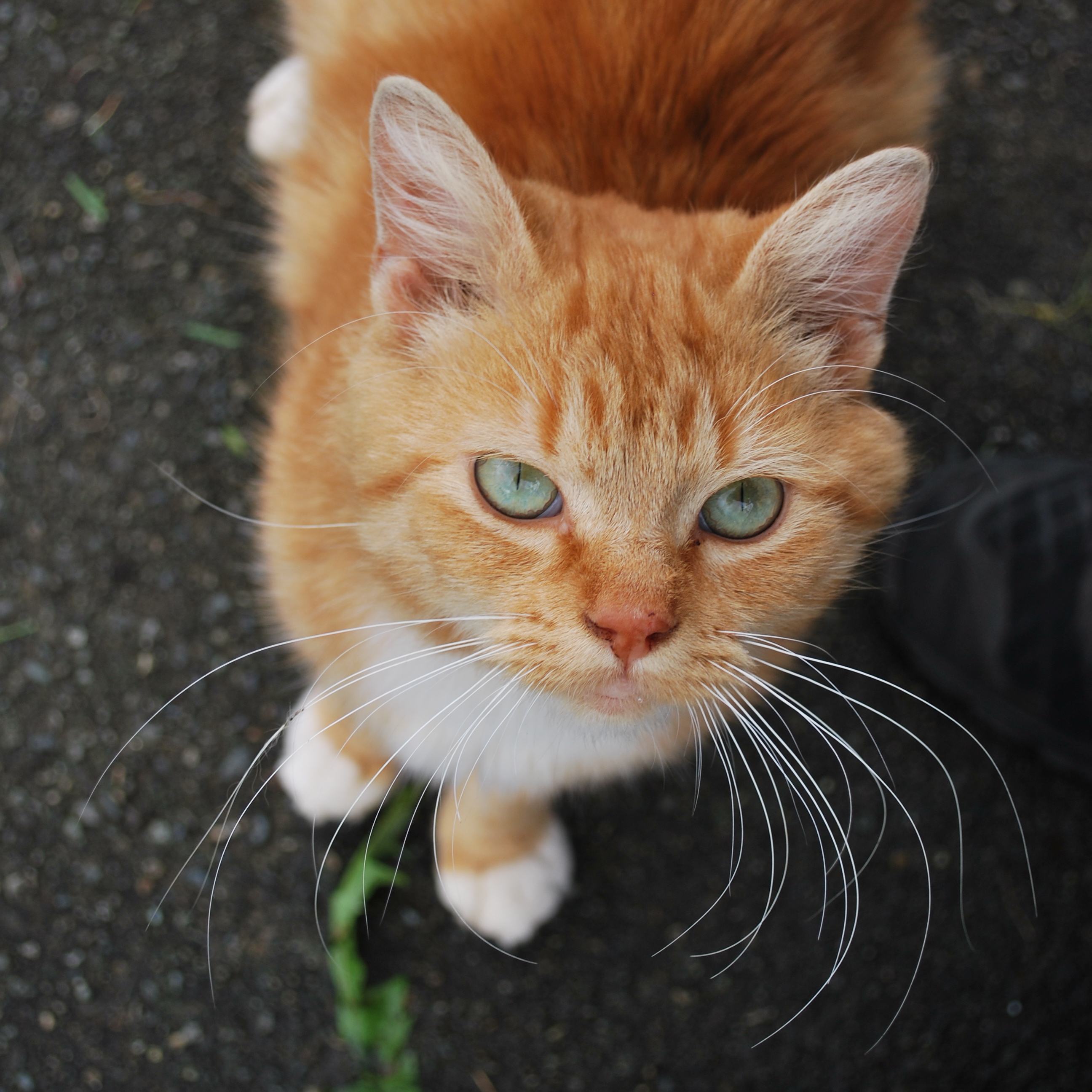
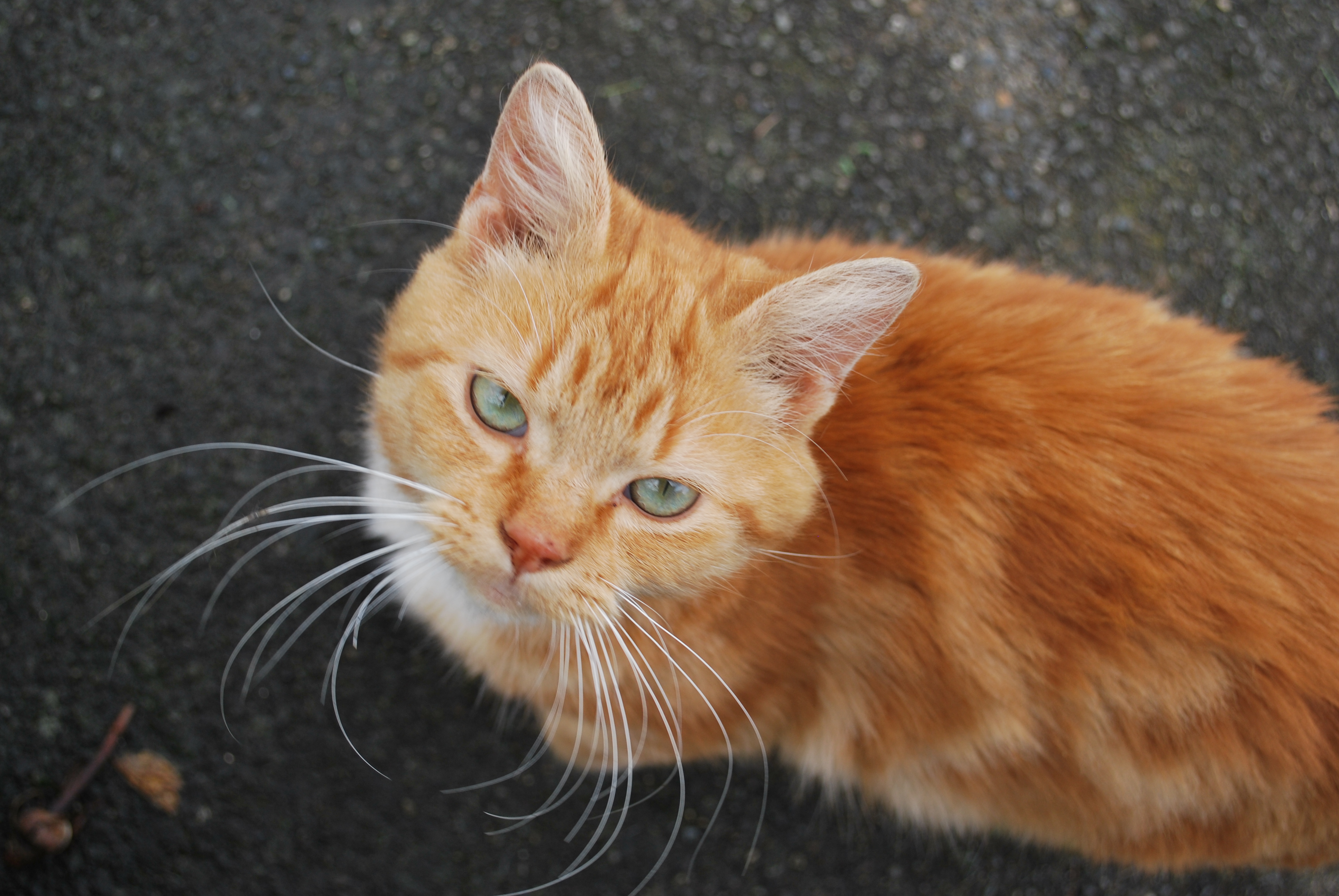
Meet Fred. Or Fritter as I’ve been calling him today. I noticed him for the first time in the neighborhood about three or four weeks ago. He was running around looking very panicked and confused. I’ve seen him here and there since then, always looking very scared. Then about a week ago as I was doing my farm chores, he decided to make friends with me. He was very timid at first but he was hungry and lonely and once he figured out I wasn’t going to hurt him, he couldn’t get enough petting. He was obviously someone’s pet at one time and I assume he was dumped here. Sadly, this neighborhood is pretty notorious for abandoned cats.

DSC_0009His orange fur was absolutely chock full of black flea dirt and fleas and his coat was ragged, with something like bits of adhesive stuck under his chin that won’t come off. I went inside and got him the last Advantage flea treatment I had on hand as well as a bowl of food. He wolfed down the food and proceeded to follow me absolutely everywhere around the property while I completed my chores. He kept trying to talk to me but his little voice is so faint you can barely hear it. I can’t tell his age, but he seems to be intact so he’ll be coming along for the ferry ride to be fixed along with the kittens.

Right now he’s set up comfortably with access to my cold room off the house so he can get out of the rain and the wind and into a dry bed. He has made this his new home base. He cleaned himself thoroughly of all flea dirt after I treated him and he shows his unending gratitude by following my boyfriend and I absolutely everywhere when we’re outside. He even makes a point of going to greet my cats politely when they come by, even though they mostly just hiss and swat at him.

Who could have abandoned such a sweet boy? You can tell by his demeanor that he’s been traumatized and smacked around. Why does he have adhesive residue stuck under his chin? I shudder to think.

I may not like everything about the neighborhood I live in, but I do feel good knowing that I can help a few stray cats that would otherwise be out of luck.

DSC_0021

The Myth of the Routine in Dogs

IMG_4735

Enjoying the water? Not the routine!

When most people research dogs, they read that dogs love routine. While this is certainly true, it doesn’t mean you have to become a slave to your dog. You need to make your dog’s love for routine work for you, like any good employer!

Dogs live to work. Whether it’s guarding your home, playing with your kids or making you laugh.

I’m an entrepreneur so I have a very variable work week. I could be up until 7am or up until 10pm. I don’t have a typical schedule at all compared to someone who works a consistent 9 to 5. I also have two large dogs and three cats (well currently nine). I used to worry about my pets adjusting to my ever changing schedule, but I soon realized that if I could adjust, then they could too. And it’s a lot less painful that you may think.

What people don’t realize that is that your dog loves any routine you can offer them, and everyone has a routine.

Even the most erratic schedule can become the “routine” for a dog. A dog does not need a routine schedule in the formal sense at all, and I even think it can be beneficial to avoid a set schedule with certain activities like feeding. If you feed your dog every day at the same time, you know what happens. Your dog knows exactly what time it is, they begin to salivate and remind you that mealtime is approaching… I find this annoying. I never really deal with this anymore after implementing my “chaos” training but I know what it’s like. Dogs can become very demanding in situations like these because they know they will be fed no matter what. Because it’s the schedule.

Try feeding your dog on a wholly erratic basis. Some days you should not feed your dog at all. This has the added benefit of not having your dog freak out and have a heart attack if they have to miss a meal for some reason. I often feed my large wolf mix a whole chicken carcass, feathers and everything. I will then usually not feed him the next day. As long as you monitor your dog’s weight closely, you should really only feed when your instincts and your dog tell you the dog looks thin and the dog seems hungry. Dogs and cats (like humans) do not benefit at all from being overfed.

So relax about worrying your new dog will not fit into your routine. It’s possible they truly may not, but if you do your due diligence as a responsible pet owner, it’s more likely your furry friend will adapt to your schedule like a furry chameleon.

Kitten Update

The kittens are now almost six weeks old. It’s hard to imagine that some people adopt out kittens at this age. Sure they’re eating solid food but they’re definitely still nursing. Looking at them, I’m pretty sure my current three adult cats were also six weeks old when I got them even though they were listed at eight weeks. They have a few problems which I think must result from being removed so young even though they’re awesome.

So far these kittens have been fed exclusively on a homemade raw diet, and they love it. The momma cat came to us with chronic diarrhea which cleared up almost right away after switching to raw, and she loves it too. Especially the rabbit! I’ll be posting my methods and recipe soon.

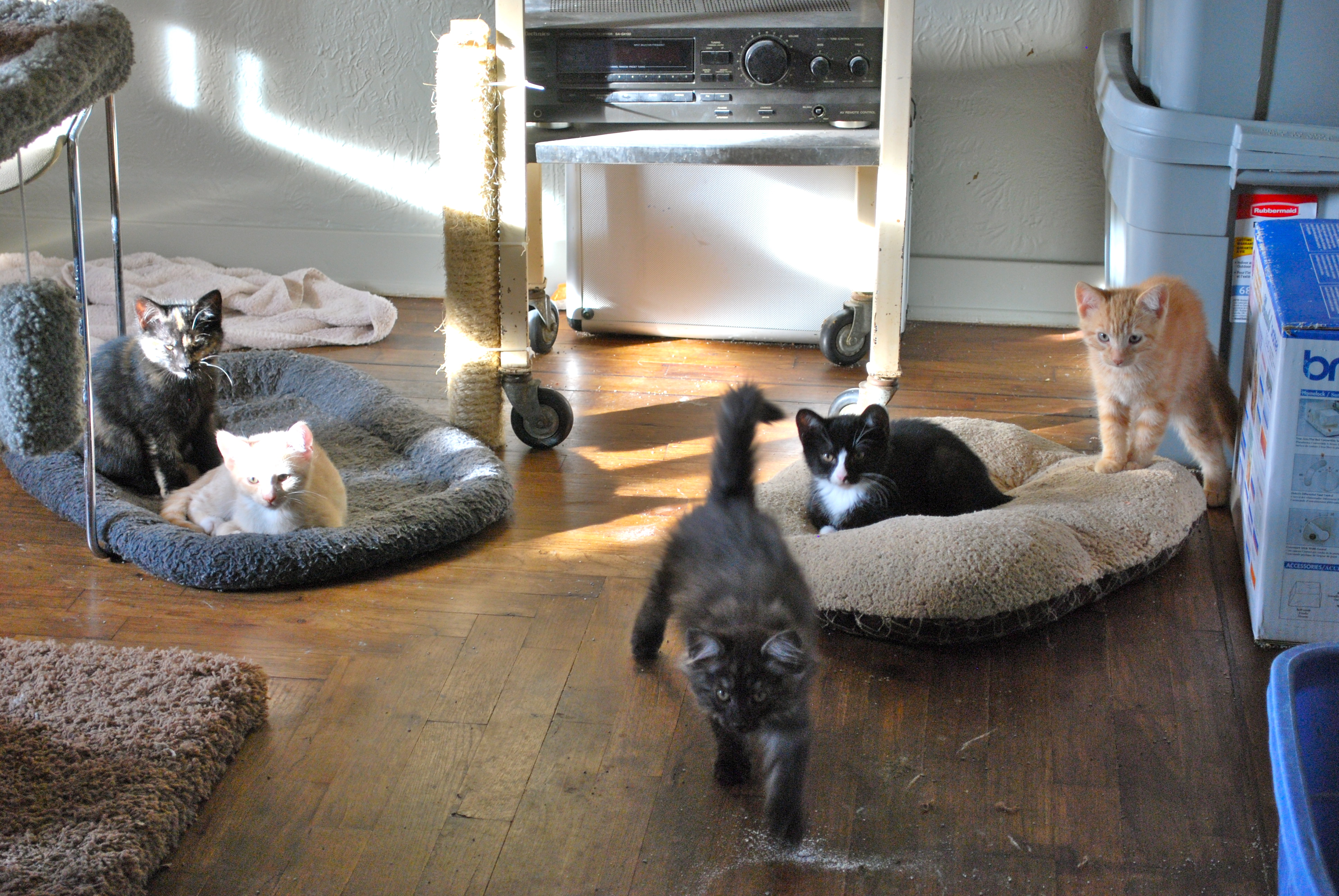
Here are four of the beautiful five. The creamy peach kitten refused to venture into the sunbeam today so he didn’t get his picture taken.

DSC_0001

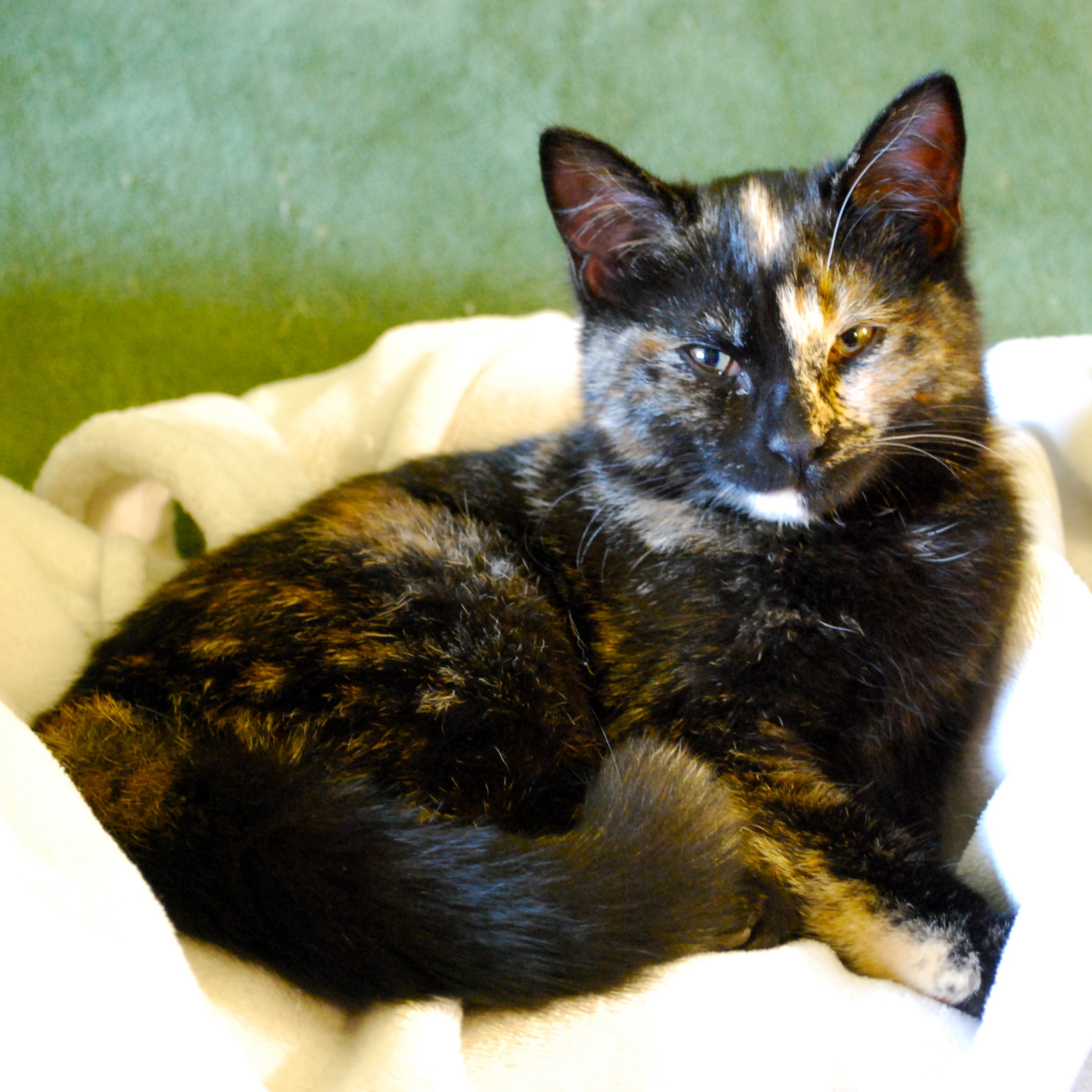
Tortoiseshell girl. This tiny lady has been following me around for weeks now.

DSC_0002

Ginger tabby boy. This is the crybaby of the bunch, I think he was the runt. He is also the one who likes cuddling in laps the best.

DSC_0011

Fluffy boy, tabby mix. This kitten is like a rag doll, he is silly and floppy.

DSC_0027

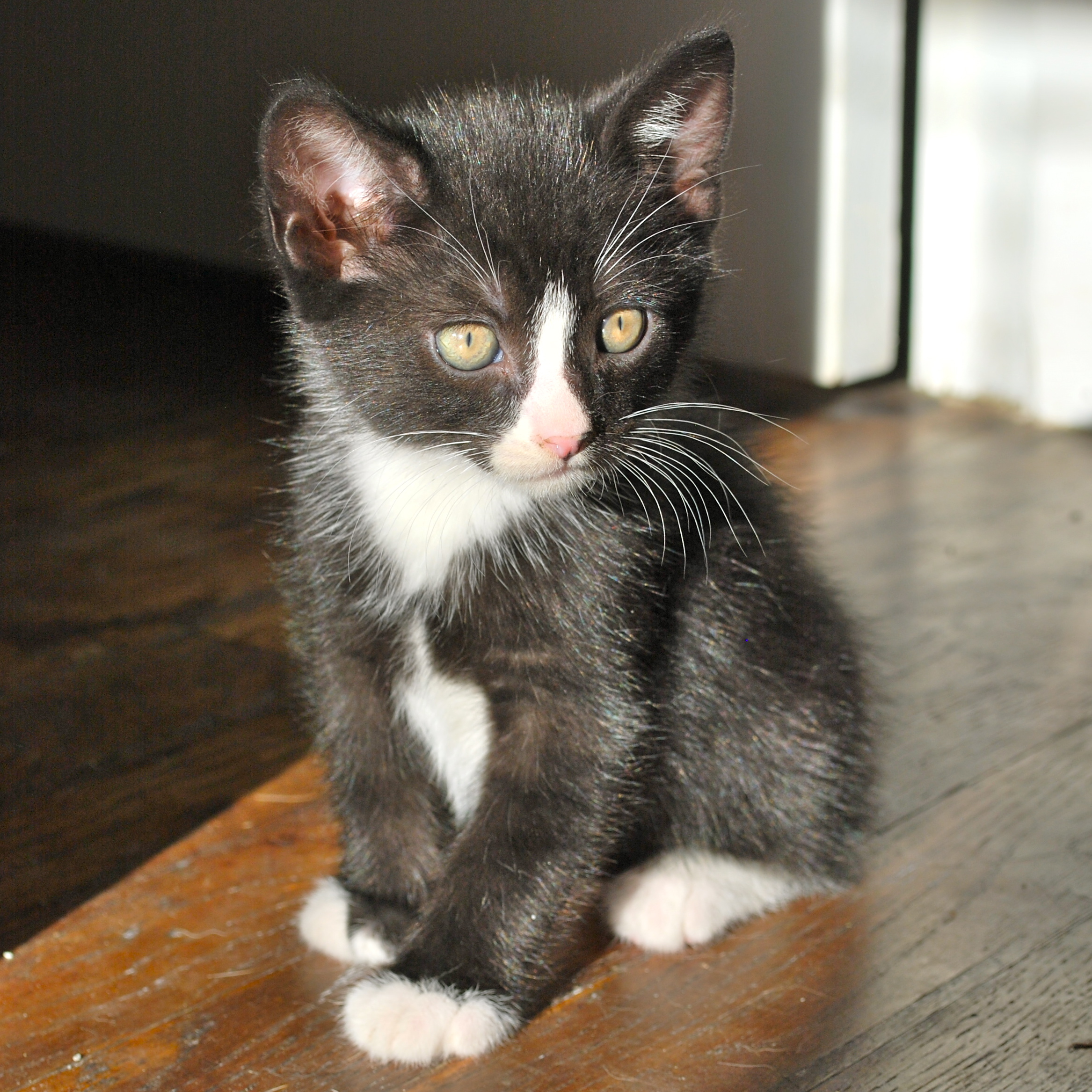
This is Moss, the tuxedo boy with a Manx tail. He’s the chunkiest of the bunch and has some very funny expressions.

I want to keep all the kittens, what should I do?!

Kitten Drama

I’ve had my foster momma cat and her five kittens for a week now, and there have been a few problems.

It turns out the new cats had fleas, and everyone ended up requiring a thorough bath. Thankfully I trimmed the mother cat’s nails before I attempted this. She screamed bloody murder the whole time and even tried climbing up my braids at one point. All in all a pretty decent cat bathing experience, as they go. At least she didn’t try to literally kill me.

She did kind of want to kill me when I was bathing the kittens. One kitten in particular, the orange tabby boy, is a real screamer. As I was carefully trying to bathe him, the momma cat was rhythmically screaming in response to his yelling and would then periodically bite me on the arm. I ended up having to enlist the help of the boyfriend to pet the momma cat for distraction. After a few minutes I could have been doing anything to those kittens and she wouldn’t have noticed. To me she acts a lot like a feral cat that has no fear of humans. She’s very wild.

Another issue is that the previous owner of the cats has been trying to come by to check up on them. I never signed up for that. She also expects to be able to just pick up these kittens once they’re weaned and give them away to all her friends. After seeing the living conditions they were in I don’t think she has the capacity to judge what a good home for a kitten might be. I expressed my displeasure and heard later from a neighbor that she was planning to come and take the kittens back. I don’t even know what that means. You just don’t expect to get sucked up into that kind of drama by taking in a few kittens.

In other weird news I found out today from someone from the newspaper who was picking up a bunch of dumped papers at the property, that the house the kittens came out of was where a friend of her kid’s was killed playing Russian Roulette a couple of years ago. Nice.

Will the city ever actually do anything about this nuisance property?

DSC_0008

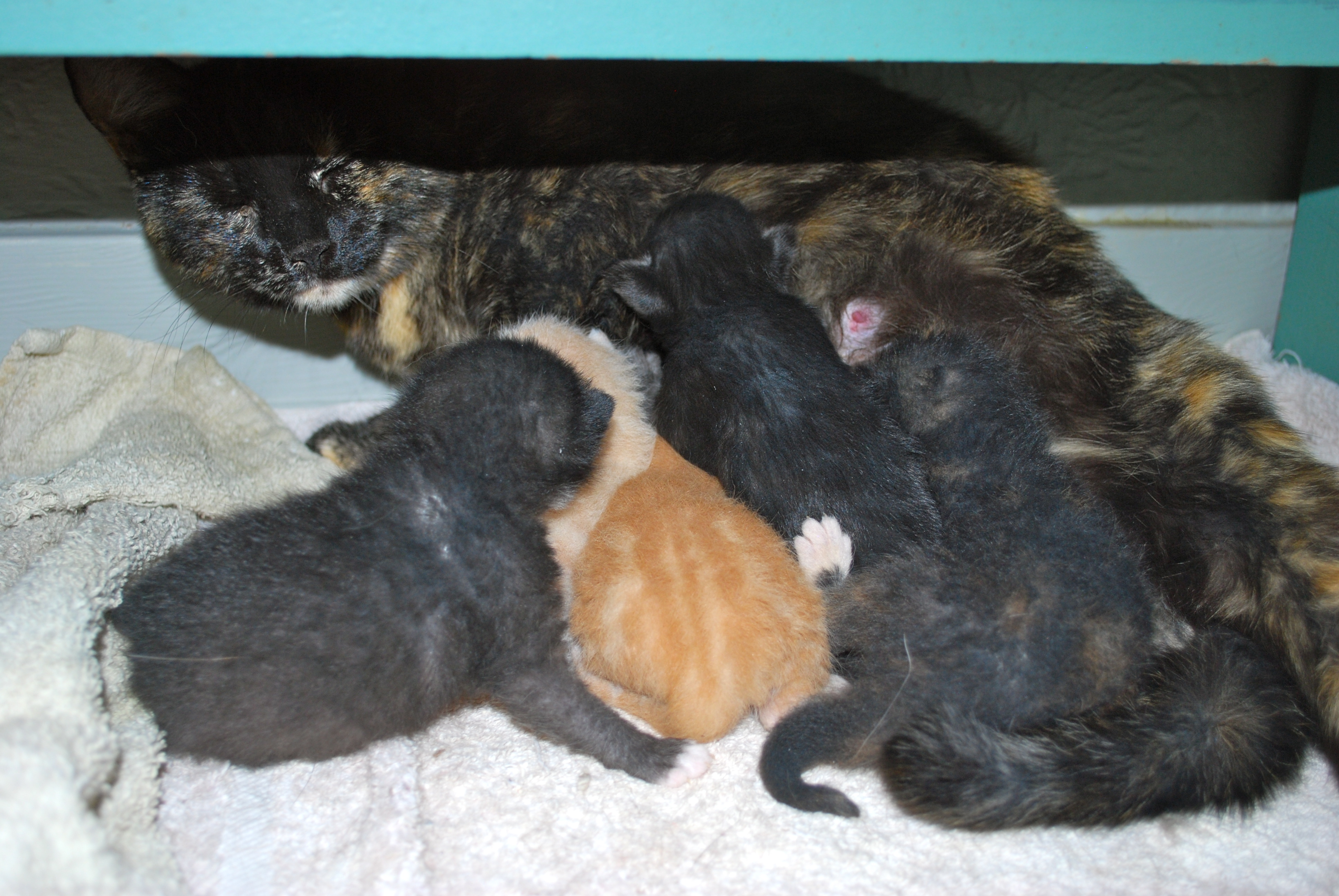
Not a great photo, but momma insists on keeping them under the bookcase

Everyone in the picture looks a bit chalky because I’ve also been treating their fleas with food-grade diatomaceous earth. It’s non-toxic and safe for kittens of all ages but you still want to keep their little noses away from the dust.

And Suddenly I Have Nine Cats

No, none of my three cats has multiplied, they are all missing rather vital parts for that.

The house across the street has been an ongoing issue for me since I moved here almost two years ago. It’s a dilapidated rental property that was used for many months as a drug-dealing slash prostitution slash theft ring. Nice place for kids right? Yes, there were small kids living there during all this.

People would come to buy their crack and crystal meth at all hours of the day and night, it was a constant inflow and outflow of people you don’t want around your property. It was like living across the street from a convenience store.

After countless complaints to police and the city they finally moved out, leaving huge piles of rodent-infested trash everywhere. Then new tenants moved in.

Well, the place was never cleaned up and these tenants are finally leaving as well. The whole house pongs of pet urine and is completely falling apart. A few months back the SPCA came and removed a bunch of emaciated dogs and neglected cats. Now it’s my turn.

Since the vacating tenants could not care for them, I was asked to take in a mother cat and her five newborn kittens. Knowing the conditions they were living in I said yes without any questions asked. They are now safe and cozy in their own room with plenty of clean water, fresh food and a clean litter box. All the cats stink of urine, but are otherwise in decent health. I’m sure momma will clean the kittens up and she can have a bath at some point if she really needs one. Hopefully she’ll be able to clean herself up, I know she’d prefer that to being bathed. A clean environment will definitely help.

So now we are a cat hotel. It’s been many years since I had a litter of kittens to care for and it will be very nice watching them grow up. The mother cat is very friendly and seems very happy and secure in her new location. One little boy kitten has no tail. I wonder how that happened momma?

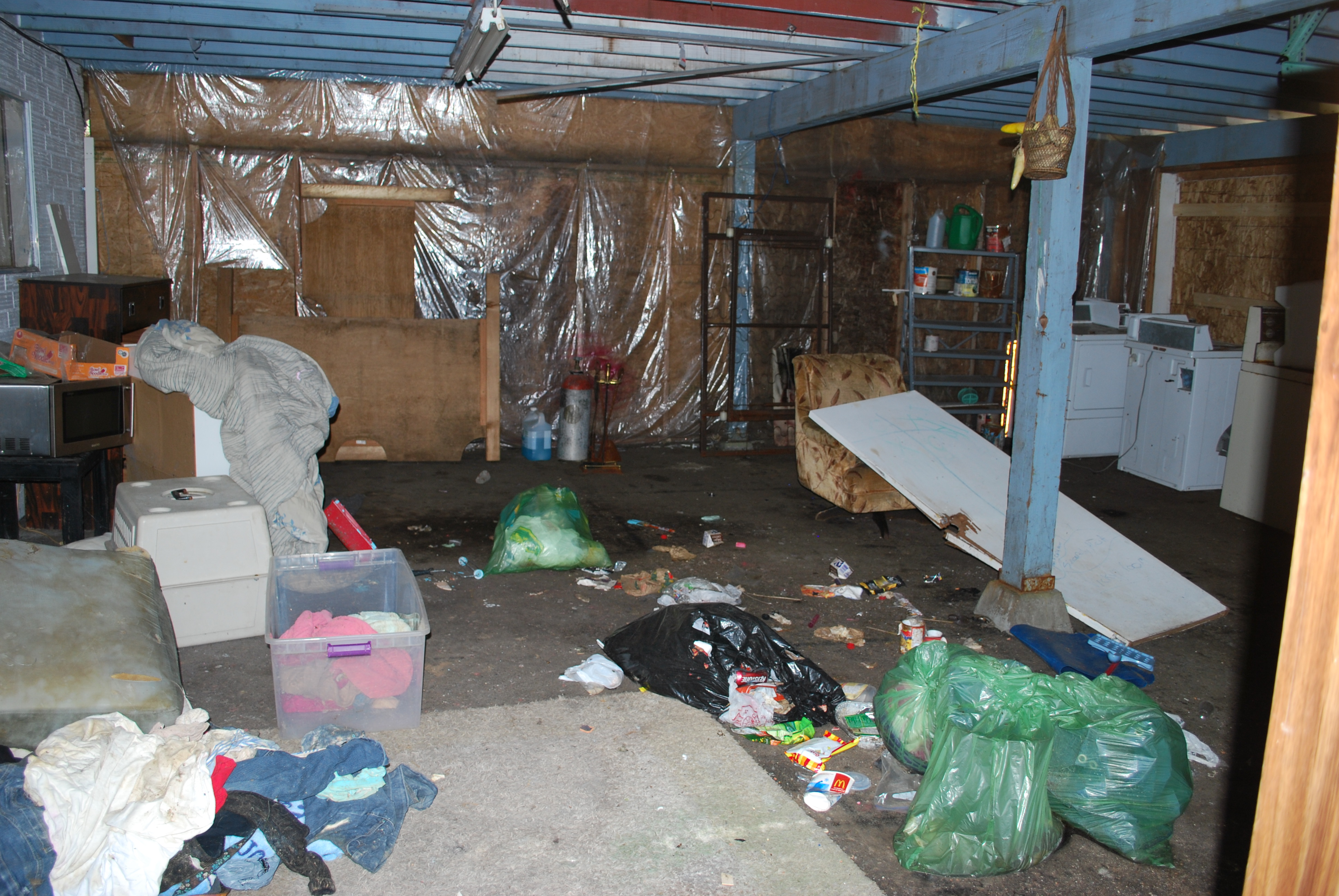
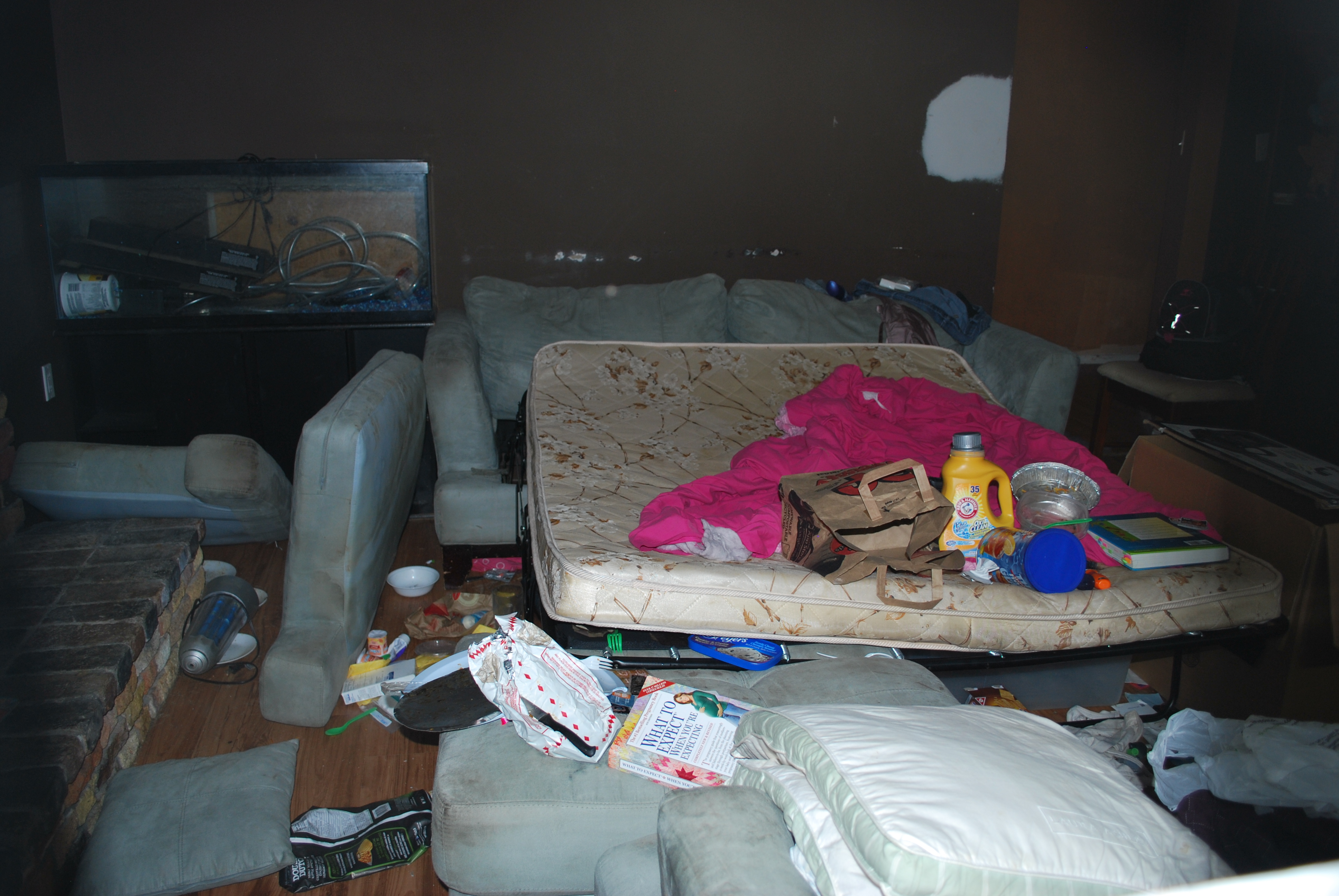
DSC_0001Here’s an idea of the kind of environment these little kittens were born into:

DSC_0004

Ammonia and garbage smell is overpowering

DSC_0001

Knives on the floor, all furniture soaked with urine