Marabou Stork in Action

DSC_0047.JPG

We have recently begun flying our very handsome marabou stork again, and boy is he a crowd pleaser!

DSC_0070.JPG

He’s a 14 year old male with a ten foot wingspan and he loves to perform. He’s also an extremely intelligent bird, probably one of the two smartest at the Centre, along with our little rescue crow. It’s always amazing to see him showing off his natural abilities on the flying field.

DSC_0022.JPG


Splitting My Hive

DSC_0002.JPG

Today I decided to split my large, strong hive into two.

I bought this hive a month ago and it came with three full boxes of bees and a new queen. When I mentioned I wanted to split it to the owner, he asked me to give the queen a few weeks to start laying first, so I gave her a month as per his request.

The bee workshop I attended earlier this May was all about splitting hives. The master beekeeper had about six, young two-box hives going that had been made from packages about a month previous, and he simply checked each box for eggs, pollen and brood, moved the strongest box to a new bottom board, dipped his old drawn frames in sugar syrup and installed them in a medium box above a queen excluder on both hives to collect honey. He explained that the weaker box should stay in the original location because all foraging bees would return there.

You don’t need to find the queen for this method as the queenless hive will hopefully just raise a new queen themselves. That’s why it’s called a “walk away” split.

He also said that while you can split anytime, you probably wouldn’t get much of a honey harvest if you did it much beyond the first couple of weeks in May. Since I never planned on a honey harvest in the first year anyway, it’s ok with me that we’re a couple of weeks late. Who knows, right?

My main interest in splitting my hive is I want at least three colonies going into the first winter. I’m still learning, and if at least one colony survives, I can hopefully use it to make more bees. If all my bees die, I’m looking at another $200 or so unless I get lucky and catch a swarm.

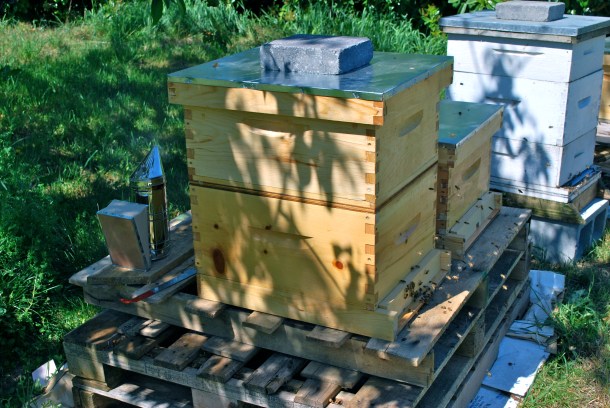
I left the full bottom medium brood box of the original hive where it was, put an empty deep brood box on top, gave them their top honey super that was completely full, and a new empty honey super to get started on. The split off hive (with the striped entrance reducer) got an empty deep brood box on the bottom and the main deep brood box from the original hive totally filled with bees on top of that. On top of that is a half drawn out honey super they’ve been working on for a couple of weeks. I haven’t used any queen excluders since I’ve only been giving them frames with foundation.

Not sure if I’ve given the bees too much room now or what. I tried to do an even split while giving the advantage to the split off hive. I guess I still don’t know for sure which hive the queen is in.

The original hive was still going strong after the split with bees streaming in and out, but the striped hive looks like nobody’s home. As the nurse bees inside turn to foraging bees that will slowly change. Here’s hoping they do a good job of raising themselves a new queen… They have a lot of resources to work with. I also gave them a jar of sugar syrup to get them started and I’ll top it up as needed.

I’m not sure if I’ll wait two weeks to check, or if I’ll wait a month to avoid damaging any queen cells. I’m leaning towards waiting a month. If the split hive fails, I can always recombine it with the original.


Rex Litters at Four Weeks

DSC_0029.JPG

Enjoying bamboo and blackberry today

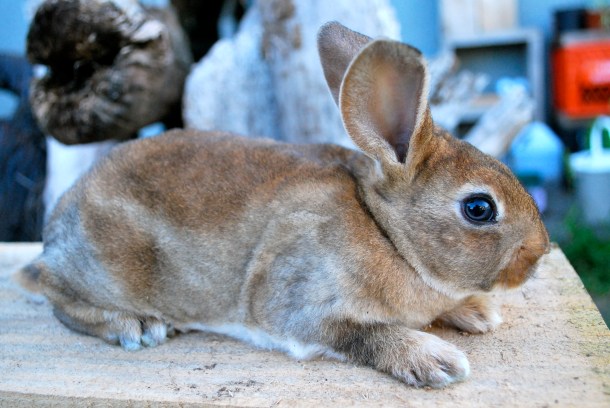
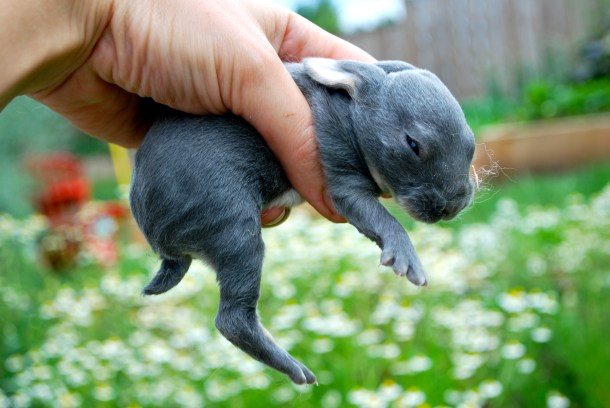
The babies are currently at their cutest stage where they become quite active and look like miniature versions of their parents.

Running around eating everything is their greatest joy so I keep them all well stocked with organic forage from the gardens.

These litters have developed a special fondness for arugula and Red Russian kale, which has self seeded everywhere this year and is in particular abundance right now.

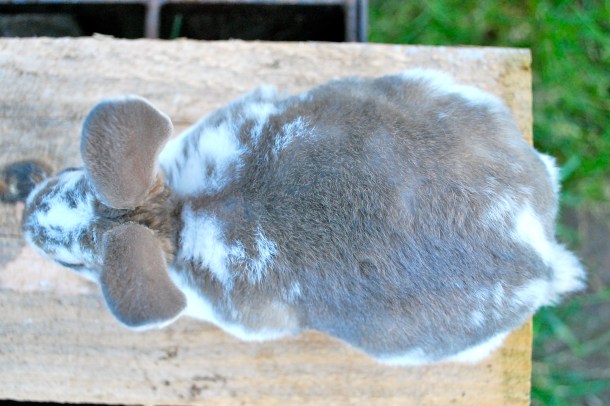
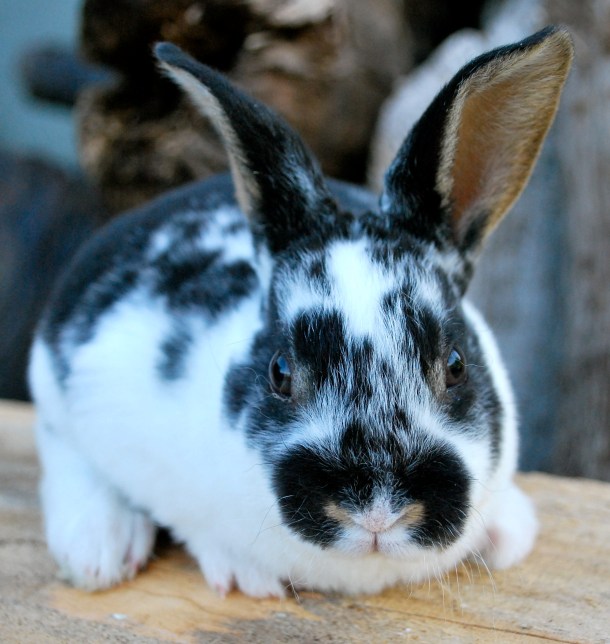
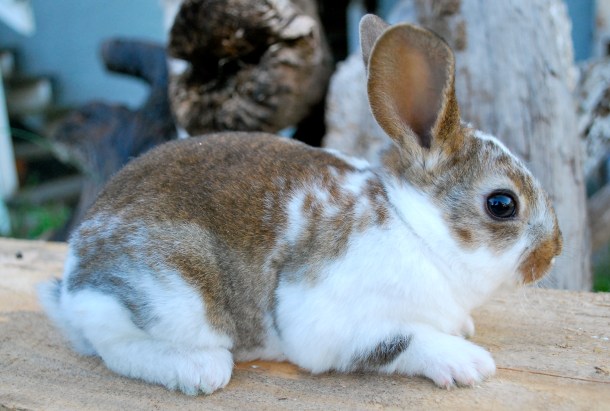
There are three broken opals from Fire Opal’s litter:

DSC_0036.JPGDSC_0038.JPGDSC_0040.JPG

DSC_0042.JPG

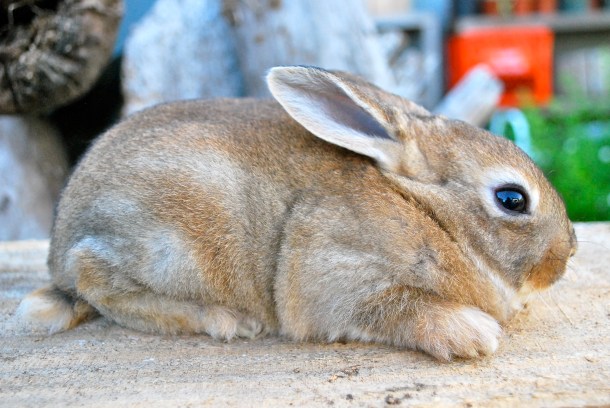
And there is one little broken castor and a solid castor:

DSC_0045.JPGDSC_0046.JPGDSC_0049.JPG

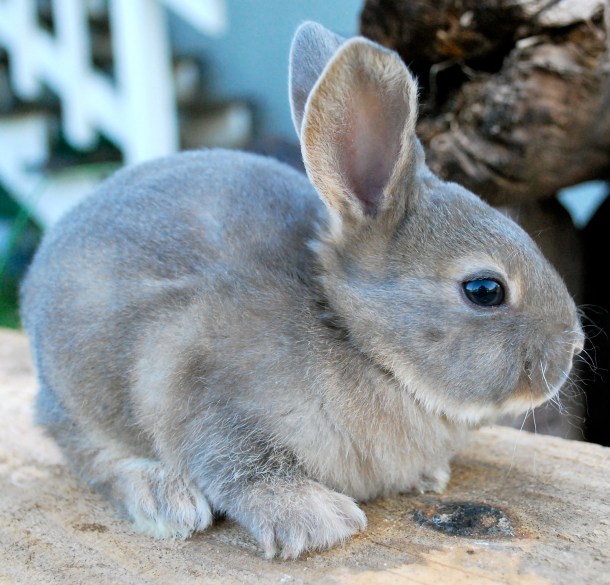
There is also a lovely blue otter with a nice, deep colored coat. This bunny is really blue!:

DSC_0051.JPG

Then we have two solid opals and a broken black otter:

DSC_0054.JPGDSC_0060.JPG

Five Spice’s litter consists of two solid castors, two broken castors and a solid opal. I don’t have individual photos of absolutely everyone but you get the idea!:

DSC_0079.JPGDSC_0080.JPGDSC_0084.JPG

DSC_0077.JPG

Five Spice with her kits

Hybrid Bunnies at 10 Weeks

DSC_0007.JPG

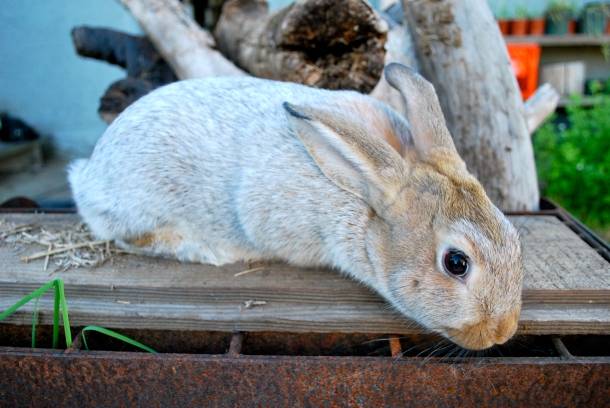
Triple hybrid buck still silvering out

The meat cross bunnies are now a little over ten weeks old. Many have been sold, but I still have chestnut agoutis of both sexes in various stages of silvering.

DSC_0008.JPG

A close up of his color layering

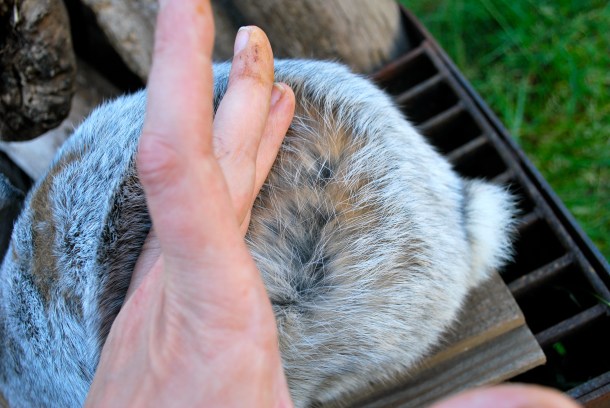
Some have turned really white, mostly the bucks, although there are a couple true agoutis with a few errant white hairs and the triple crosses also have some black guard hairs mixed in with their overall white. Many of them resemble Argente Bruns to me.

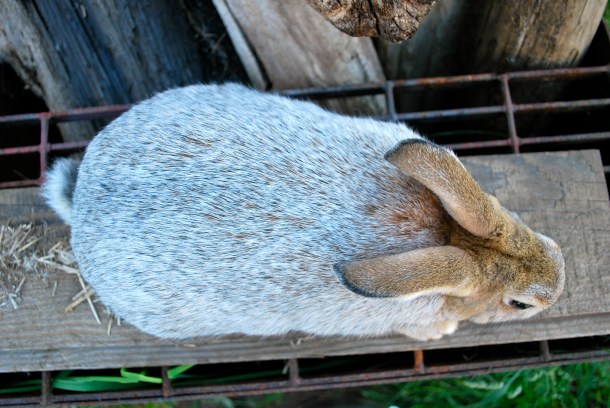
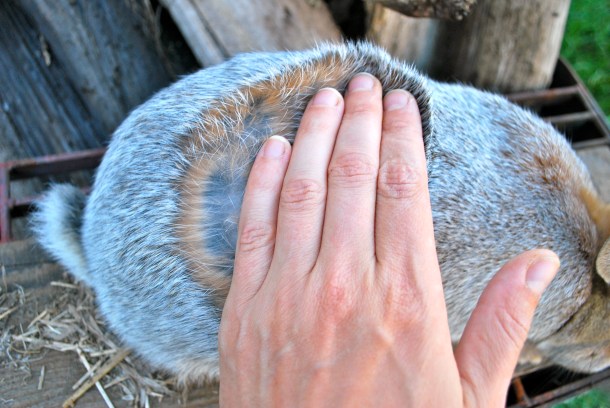
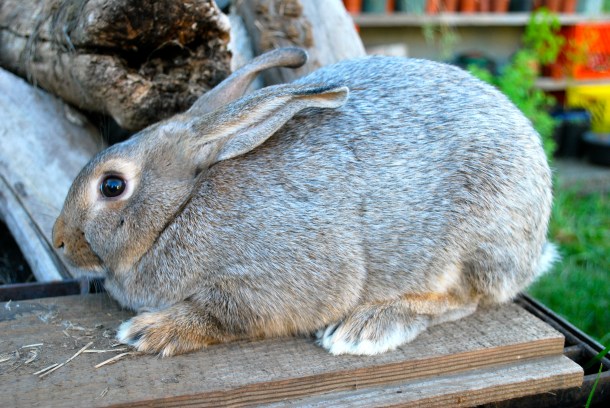
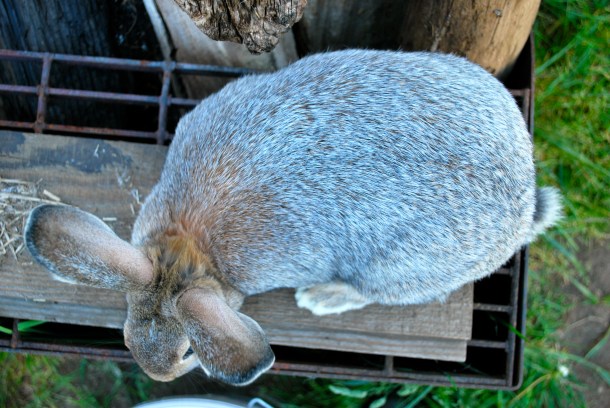
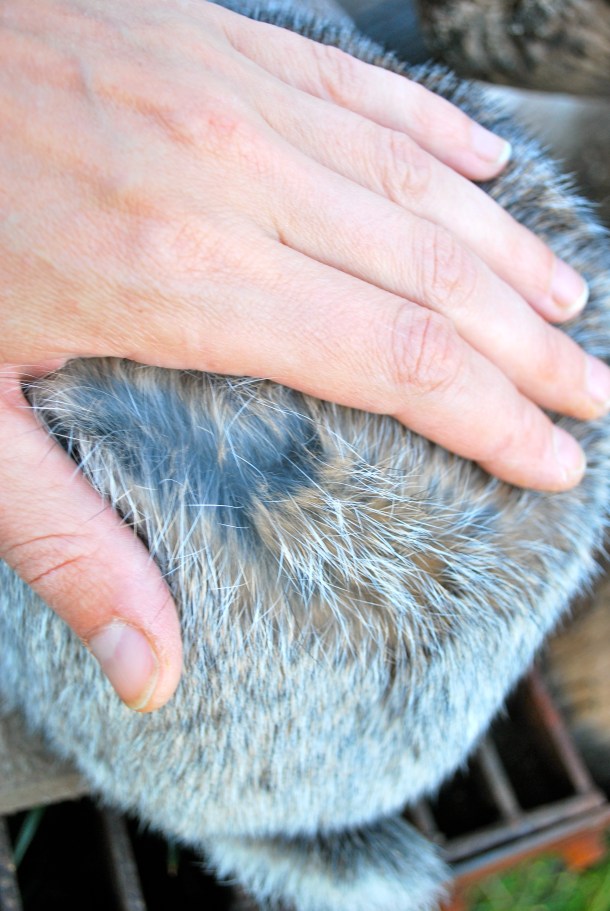
The one double hybrid Creme/Champagne doe left has developed the most amazing silvered pelt with a bright caramel undercoat and no black guard hairs.

DSC_0020.JPG

Creme/Champagne doe

DSC_0021.jpg

Creme/Champagne doe top view

DSC_0022.jpg

Creme/Champagne doe caramel undercoat

As for weigh ins, we have again broken our previous record and these are now the largest meat bunnies we have ever produced here at Abernathy’s! I only weighed two does today, but they came in at 2286g (5.04lbs) and 2543g (5.6lbs).

5.6 pounds at ten weeks! That’s a new record, and I still have at least a dozen more bunnies to put on the scale. Many that appear to be of a similar size or even larger. Not bad!

DSC_0012.JPG

Triple hybrid doe

DSC_0013.JPG

Triple hybrid doe top view

DSC_0014.jpg

You can just barely see some of the black guard hairs if you look closely


Cats and Bees

DSC_0006.JPG

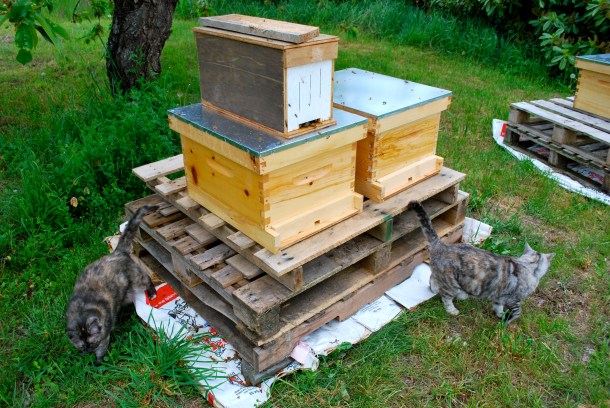
When I got my bees one of the things I wondered was would they get along with my cats? Would they think the kitties were small furry threats and attack them?

DSC_0017.JPG

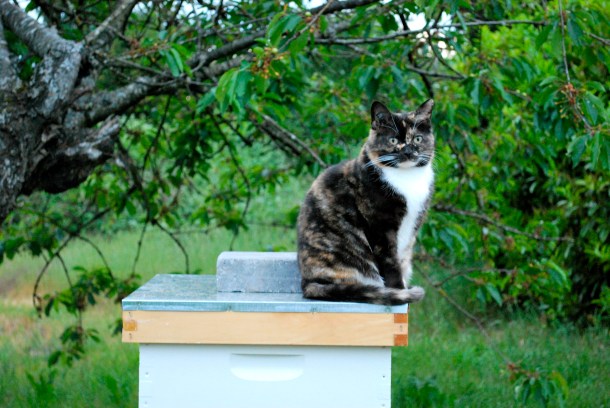
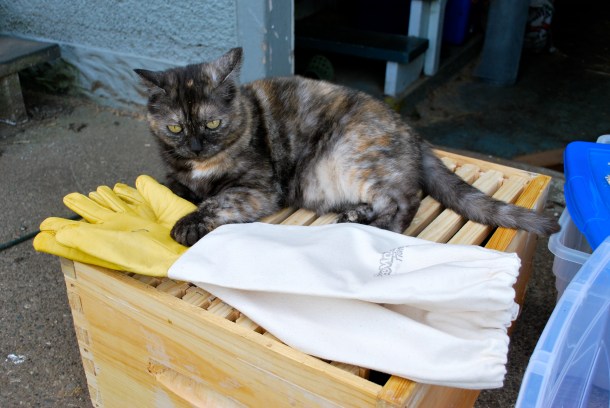
Well, what has happened is that the cats have decided they like the bees very much and I usually have at least one small furry supervisor for each hive inspection.

DSC_0014.JPG

DSC_0017.JPG

DSC_0005.JPG

DSC_0011.JPG

If they’re not lounging on top of empty brood boxes or trying to sharpen their claws on queen excluders, they’re posted on or beside the hives keeping watch. The bees don’t seem to mind one bit.

DSC_0004.jpg


Latest Rex Litters

DSC_0007.JPG

Opal’s litter

We have two new Rex litters that are about a week old now. Opal kindled ten kits, and her daughter Five Spice kindled for the first time, and produced six. All born in the nest on day 32, like mother like daughter.

Five Spice nearly tricked me with her first litter, I was checking nests every day to see if kits had arrived, and on day 32 her nest still looked undisturbed. Unusual for a first timer, usually they make quite a mess. I assumed she had not taken this time… I even put my hand in the nest and felt no warm, squirmy rabbit bodies.

When I went in and stroked her, she flattened out and stuck her hind end in the air, very evidently keen to breed. That was the clincher, I assumed no way would anyone want to breed if they were about to give birth, so I figured I would waste no time and put her back in with the buck.

While they were cavorting, I tidied up her cage and refreshed her food and water. I was removing the nestbox when I saw that there was a tiny bit of fluff in the back corner. Fur in the nest? Sure enough, six perfect little kits were all scrunched up in the far corner.

We have quite a nice color assortment this time, there are many brokens and solids to choose from. Five Spice produced two solid castors, two broken castors and a couple of opals. Five Spice is a solid castor and the sire is a broken castor, so no real surprise there.

DSC_0018.JPG

Five Spice’s litter

DSC_0012.JPG

Broken castor

Opal has a broken black otter, a few broken opals, a broken castor, a solid castor, some solid opals and what looks like a blue otter.

DSC_0010.JPG

Broken black otter

DSC_0014.JPG

Broken opal

DSC_0015.JPG

Solid castor

DSC_0016.JPG

Blue otter

Update on Rabbit Scammer – Desiree Michaels

DSC_0001.jpg

Well, it looks like the lady who scammed me out of rabbit pedigrees a couple of years ago and had all her rabbits seized by the SPCA last spring has now joined the bee club. My bee club.

I attended a bee workshop this morning to observe some packages being split and of course, who shows up but Desiree Michaels.

I suppose when you keep people’s money and never give them what they paid for, you can save up some funds and use it get into a new hobby. I’m sure she has much more free time and money on her hands now as well since the taxpayers have funded the removal, medical care, euthanasia, spaying/neutering and rehoming of at least 50 of her horribly neglected rabbits. The news article and video can be found here:

http://bc.ctvnews.ca/50-rabbits-seized-from-deplorable-conditions-near-nanaimo-1.2339872

It was the largest rabbit cruelty seizure that Nanaimo has ever seen. The SPCA is quoted as saying:

“Animals were living next to deceased animals… horrible conditions. Many of them were underweight. Others had overgrown nails that were curled and coiled and dental issues…”

And:

“Photos taken by staff were so appalling that the public would not want to see them…”

This is the woman who now wants to get involved in beekeeping.

I am at least comforted by the fact that you cannot exactly abuse and neglect bees unless you expect to be abused back and your colonies to die in short order. What concerns me is that she may now try to rip off other local beekeepers who do not know how dishonest and heartless she is.

At least I was able to snap a photo of her today, so bee friends please “bee” warned.


Checking the New Hive

DSC_0001.JPG

Truthfully I’ve been poking around the bees every day since they arrived. Mostly just to do things like check the feeder, replace an old cover, straighten a super, remove the metal strapping (got a nice sting on the nose for that!) And of course, just observe them doing their thing, bringing resources back to the hive.

I like to think that they are getting to know me. I don’t want to disturb them overly, and I know that bees are inevitably crushed each time I pick through the hive, so I forced myself to wait as long as I could. The weather has been gorgeous and sunny, but oh so windy. Too windy? Bees can fly up to 15mph, so anything greater than that is probably a bad idea. So yeah, I opened them up anyway.

DSC_0002.JPG

Hello new hive!

I haven’t used my veil or gloves since the day I installed the nuc. I like the freedom of no gear but I also don’t know my bees all that well yet. If I plan to learn from my hives this year, it means figuring out exactly what makes bees mad. Therefore I have ordered a full bee suit and plan to use it. Except maybe the gloves.

The sting on the nose was a nice tension-breaker, and it truly made tears well up in my eyes! But I had no reaction other than a lingering pain for maybe 30 minutes and a tiny zit right on that spot the next day. I realize now I was stung because I was causing a lot of vibrations with the metal strap against the hive, at dusk, on a recently transplanted colony, with no gear on. Lesson learned.
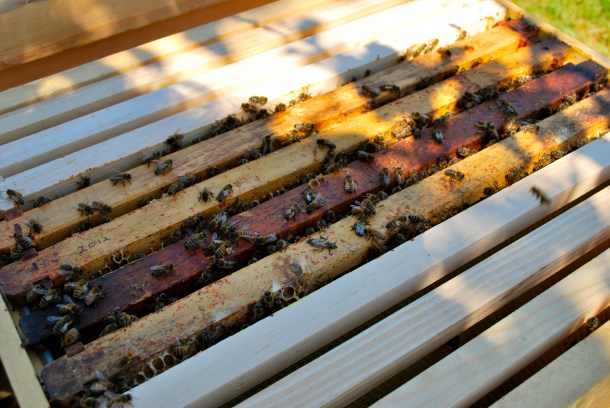
DSC_0003.JPG

Looking good ladies!

Some people say bee venom helps prevent cancer. According to some guy who stung himself all over the body for science – the nose is the most painful spot, so take it from me, the worst pain possible is not really that bad. Kind of like an extra fierce onion fume shoved right up your sinus. Bee venom is acidic, so a paste of baking soda and water should give instant relief when you do get stung.

DSC_0004.JPG

Squashed bees… Do I spot the queen?

So yeah, I’ve opened up both hives briefly and there are a few things I know I need to do.

First I need to get my bee suit in the mail. Then the hives need to come off the pallets, as they are currently too high off the ground to work comfortably once they grow. I’d like to build a narrower custom stand for them to make them easier to work around. I also need to do a thorough check of each hive to identify queens and brood and the overall state of affairs.

The new hive hasn’t touched their sugar water, and I’m hoping that’s because natural resources are plentiful. My inspection today showed capped brood, honey and lots of pollen, but I chickened out before checking all the frames. My recent check of the top box of the more established hive showed pretty much the same thing.

DSC_0006.jpg

The established hive shortly before the metal strapping came off

Projects include fixing the old hive cover, making some ventilated top quilts, building nuc boxes, painting and assembling supers and frames, building screened bottom boards and attending a bee workshop next weekend. Yay bees!