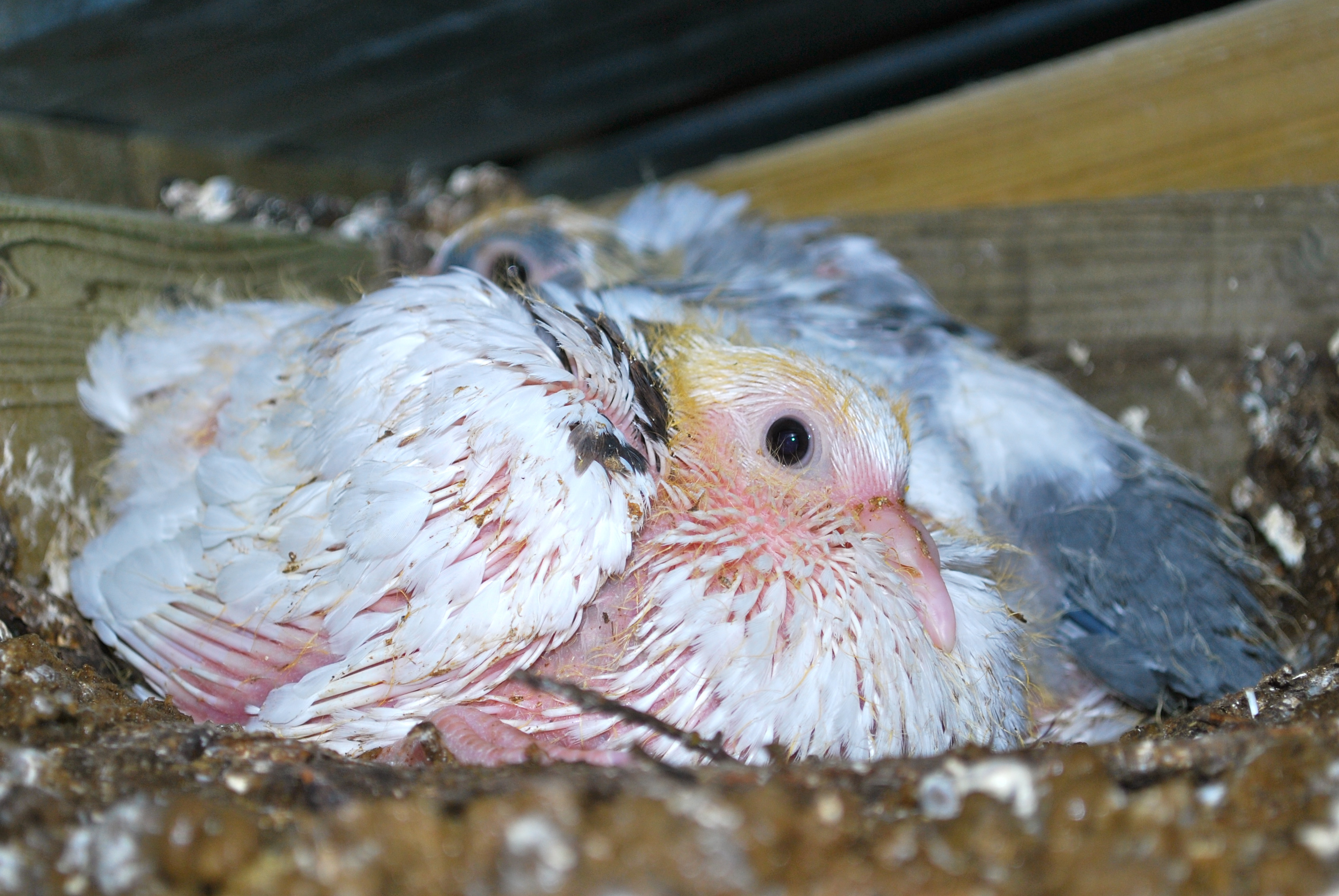
Judging by feather development, these guys are about two weeks old. I think the larger, more developed squab in the back is a male, and the lighter one in front is a female. That’s how it’s supposed to work with pigeons, anyway.
Judging by feather development, these guys are about two weeks old. I think the larger, more developed squab in the back is a male, and the lighter one in front is a female. That’s how it’s supposed to work with pigeons, anyway.

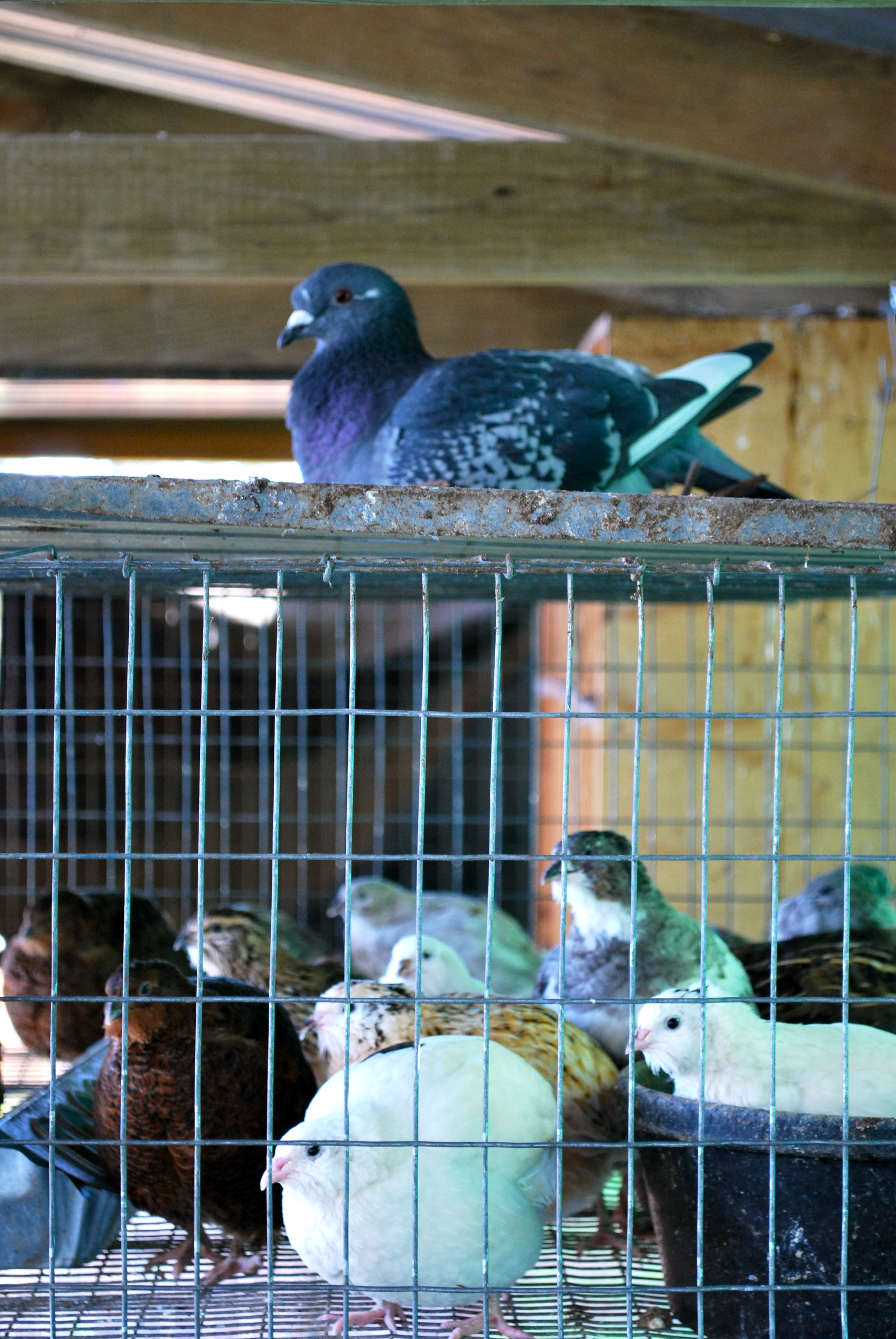
The pigeons are now trying to nest in any spot they can. This hen decided a nice location would be right on top of a piece of metal on the quail cage. I also have a pair taking up a third of my chicken nest boxes. The hen on top of the quail is actually one of the first homers I got, and is one of my favorites because of her little white eye stripe.

Making some adjustments
When I feed and water the quail, she just sits there and looks at me. At least I’ll be able to observe her squabs easily. I had been hoping that the white pigeons would pair up together, but of course every white hen seems to have chosen a blue cock. The first squabs to be born here have a blue mother, but also seem to have a white dad as they are feathering out mostly white with a few grey spots. Oh well.
I have a much greater understanding now of why our ancestors raised pigeons for food, and also why they are so plentiful in the wild. They breed like nuts. When the current squabs are around 20-30 days old, the pair will start a new nest and brood another set of eggs. They do all the work for you, and you harvest the squabs at 30 days.
I don’t much like the idea of butchering pigeons, as I really have a deep connection with these birds, but it now appears that I have no choice. I simply won’t have room for everyone if they continue to breed like this. To be honest, I’m very interested in trying squab.
I think I may cull some of my blue cocks, as there are too many cocks anyways, and eventually pare down my blue bar/check flock to a couple of pairs. Then I’ll separate them from my white homers and have a flock of whites for my dove release business, as well as some blue homers if I want to do some racing. The whites get picked off too easily by predators for that and I do like the wild-type plumage of the blues.
It’s weird that wild-type pigeons are viewed by so many as disgusting, filthy trash birds; while white pigeons are considered almost (literally) godly, and used at sacred ceremonies such as weddings, funerals, etc. White pigeons are just regular pigeons wearing white feathers. Why do we like white things so much? An interesting consideration.
 I was in the coop today passing out corn and wheat and noticed that my first nesting female homer, the blue check, was not on her nest for like the first time ever. Since she’s nesting in a rather hidden spot that’s tough to see, I put my hand up to check what was in there and felt something warm and soft that could only be chicks.
I kind of expected that she might have chicks by now since she’s been on that nest a long time. I’m not sure how old these guys are but they’re fairly huge already. It will be exciting to watch them grow up. Should I kidnap them in a few weeks and hand raise them as pets? Decisions, decisions…
My other nesting pigeon, the white homer, abandoned her first nest and eggs for some reason, then transferred all the nesting material to the box next door and is now sitting again. Here’s hoping for at least a couple of pure white chicks to go with my blue checks.

I’ve had a lot of different baby animals born here: rabbits, ducks, quail, chickens and mice. But one thing I have never had, and am very excited to finally have, are baby pigeons.
I think few people ever see baby pigeons, or squabs. They are naked, fed on a regurgitated “pigeon milk” by their doting parents and stay hidden away until they look mostly like adults.
Anyone lucky enough to get the opportunity to raise a young pigeon by hand, as I have, will know how amazing these birds are. They are so intelligent and loyal. Not to mention beautiful. I’m actually surprised more people don’t keep them as pets.
I have 16 homing pigeons right now. Six of those are pure white while the rest are blue bar and blue check. The white pigeons were given to me for free by a long time breeder who had lost most of his flock to hawks in late fall and couldn’t take it anymore. I’ll likely keep these birds captive and only fly their offspring occasionally in the summer months when it’s safer.
I love the idea of releasing your pigeon/dove and having it fly right back home as fast as it can.
To keep the white birds white I’ll need a separated loft, otherwise in a few generations everyone will revert back to wild type. That will get built this summer, fingers crossed. I have everyone living together in the chicken coop right now but that is proving to be too messy. Once the separate pigeon loft is constructed I’ll also be able to train my pigeons properly, since I can’t really get them hungry enough in the coop with so much extra food lying around. The plan is to get them trained to load into a box in the coop so they can be easily transported to the release site with minimal handling.
Here’s the technique I plan to use. Prepare to be amazed by the video below, this man is the pigeon-whisperer:
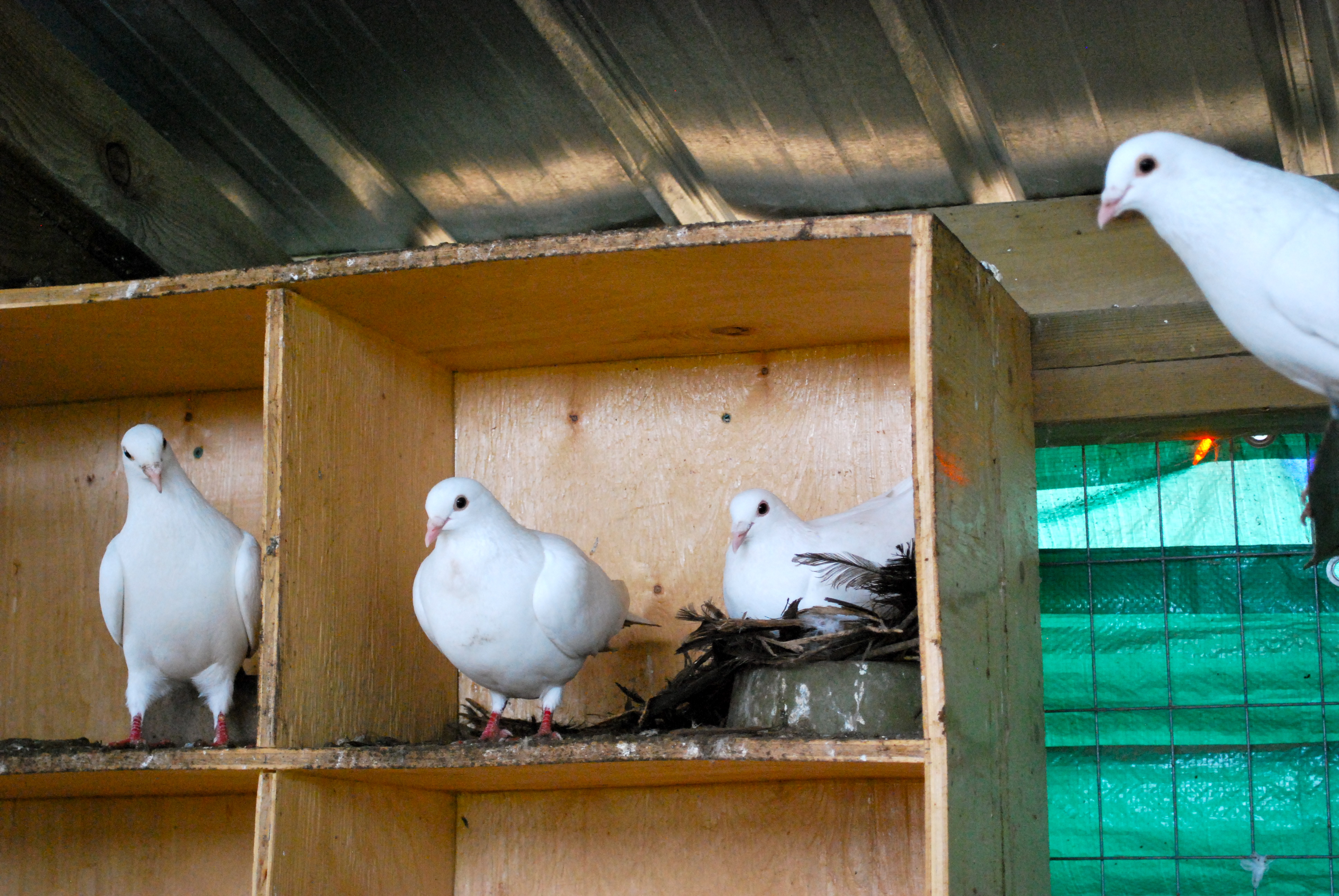
So far I think I have one all white couple who are sitting on eggs, and one blue check couple on another nest. The eggs are white and the size of large quail eggs. Gestation period is 17-19 days. I’ll keep you posted!
Keeping an eye on me
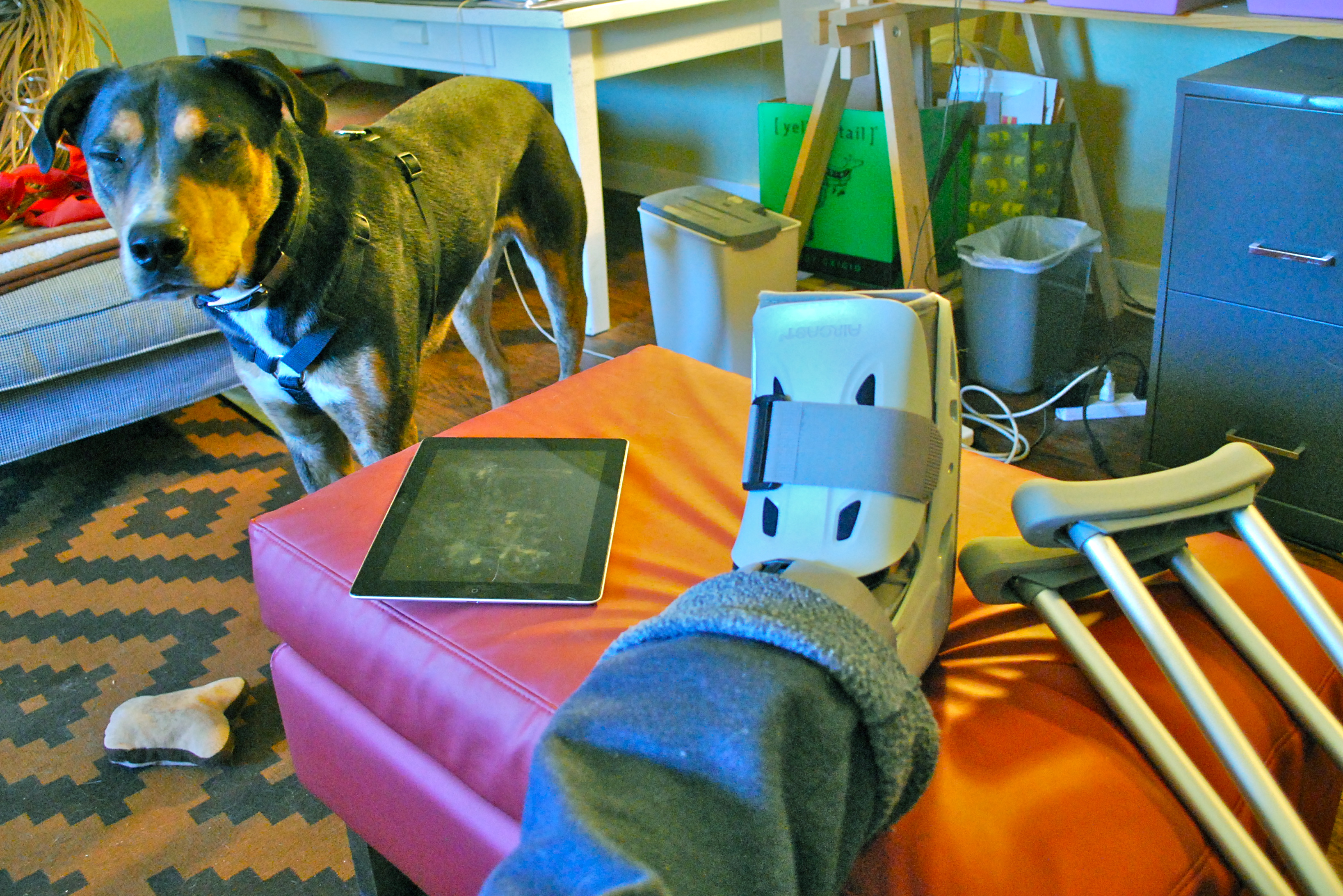
It’s been four days since I broke my foot. In that time period I have hopped, rolled, crawled, balanced, hoisted, scooted and cried from frustration. Let me tell you, a broken foot is not just an major inconvenience, it is a total lifestyle change.
Do crutches look easy to use? They are for the first ten minutes. I learned fast that you are not supposed to bear weight under your armpits and trying to will hurt you and possibly cause nerve damage. This means all of the strength needs to come from your hands, arms, shoulders and chest. Areas of my body that could probably have used a little work. Well they’re getting it.
On day two of my break, the rest of my body hurt way worse than the busted foot, which felt fine other than being very swollen and bruised, even though I was not on painkillers. My good leg was a tight ball of stress, my abs were so wrecked it hurt to cough and I was totally exhausted. Many times I found myself hungry or thirsty but did not have the energy to crutch myself the thirty feet to the kitchen. Not to mention I couldn’t carry anything back to my desk where I was set up anyway. Any eating or drinking had to be done standing at the kitchen counter.
All of this is nothing considering I have a small farm to take care of by myself. Usually my daily chores take about an hour, and consist mainly of feeding and watering the rabbits and poultry and collecting eggs. Outdoor rabbit tractors also need to be moved to fresh grass daily. The first day I managed to get the chores done to my satisfaction, even though the tractors had to stay put. It took me almost two hours and felt like I had just run a marathon. The only way to carry things was to abandon crutches and hop on one foot. This of course also entails hopping back to wherever you left your crutches, trying not to trip and fall on your broken foot. Sigh. Much spillage and panting ensued.
My life before the broken foot was very full, I was busy all day long running back and forth. Did I mention I also have a small business to run in addition to the farm? Well I do. Luckily I can still sit at a desk and stand at a workbench for short periods so I can complete these tasks with some competence.
I am very lucky to have help. This past weekend my lovely boyfriend came over and did absolutely everything for me. He cleaned my entire house, did all my chores, took me out to eat when I was hungry and fetched me whatever I required. He set me up with jugs of water in each room and even left me his iPad so I could play my silly games in bed. But alas, dear boyfriend had to go back Sunday night for a week of working on the Mainland.
Just the thought of getting down the back steps today and tackling the barn chores now tires me out. They’ll have to get done one way or another but I’m not looking forward to it. Yesterday I bought an expensive walking cast and the doctor at the clinic seemed to think I could walk on it right away. “You can do away with those!” he said pointing to my crutches. I was relieved, but also skeptical. Turns out I just can’t put my full weight on it so soon and I don’t want to either. The cast still helps a lot though with keeping the foot rigid and keeping the swelling down.
The doctor at Emergency didn’t really give me any helpful info at all. He said I should get a walking cast when the swelling went down and gave me a Dilaudid. Then he told me I could go home and walked away even though I was sitting in a locked wheelchair in the middle of an empty waiting room. I had to twist around, depress the lock on the handle of the chair and concurrently inch myself backwards back to reception with my good foot where the nurse said “Wow you’re coordinated! Those chairs aren’t designed for patients to move themselves.” I told her I figured that out already. She looked at my bare foot and smiled. “Not broken after all?” I told her yes, it was broken but the doctor sent me home. She looked confused and said “He didn’t even give you a splint, nothing at all?” I said no and asked if she would please call me a cab.
Considering I pay about $85 a month for healthcare and haven’t been to the doctor in maybe 5 years, I was pretty underwhelmed by the service at the hospital. They didn’t even have a pair of crutches to loan me so I could get home.
Is it weird that I’ve been training my wolf mix to pick up household objects and hand them to me for the last few months? Was I anticipating this accident somehow? Too bad he can’t take out the garbage.
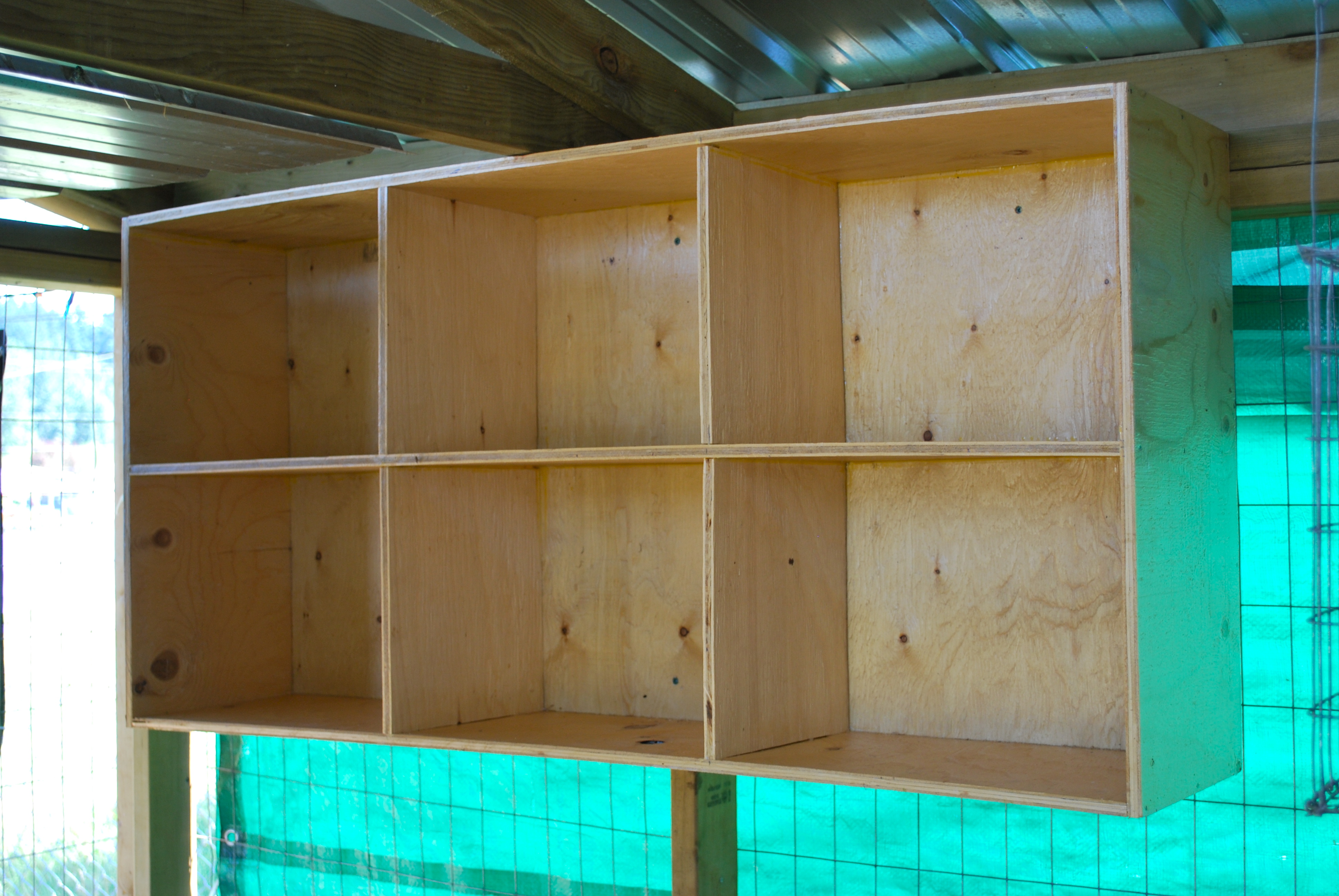 Here’s the nesting box I made for my five, now four, homing pigeons. It’s made from 1/2″ plywood, wood glue and 1″ common nails. The dimensions are 2 feet by 4 feet with a depth of 11 inches. The spaces on top can also be used as nesting spots. I finished with two coats of glossy, clear exterior Varathane. No front lip was added for ease of cleaning.
I realize now that the holes may be pitifully small, but I assume they can just take over an additional space if they want.
It has poop in it so I know they go in there, but it will be a few months yet before anyone is ready to breed. I’ve read they need to be about 8 months old and I think my birds are only 2-3 months.

How do we get in?
Don’t get discouraged.
It’s now seven hours since I let my homers out for their very first flight and they are all at this moment safely back in the coop except for the one older male who has seemingly left for good.
What a day. After kicking myself for letting my birds out prematurely and expecting never to see them again, they began to filter back. First they lined up on my roof, then my back porch railing, then they started landing on the windowsill right next to me. I could tell they wanted back in but they couldn’t remember how.
I knew from research that they needed a landing pad and not just a doorway, and I made sure to install one before letting them free. You can see it to the far left of the photo under their little pigeon door. They still didn’t seem interested in using it despite mounds of food piled there that the sparrows were all too happy to sample for them.
I saw them eyeing their food dish through the window that I had on my kitchen table. Knowing they have excellent eyesight, I decided to place the bowl half sticking out on the landing pad. Success! Ten minutes later two birds were inside. Well one was half inside. I went in the coop to shoo him completely in and he was only too happy to go. The two birds ate their fill and settled in on a perch for a nice nap. Meanwhile the other two birds were still trying to figure out how to get in. At this point it began to gently rain.
Well, that did it. The two remaining pigeons were not happy about being caught in the rain and began to try everything they could to gain access to the coop. They were climbing the walls, pacing the ground, skidding off the metal nest box roof and even flying up to me as if asking for help. I opened the coop door at one point and they landed on it, knowing it was an access point. The chickens started escaping immediately though and I had to close it again. Then one bird finally flew to the pad. Overjoyed, he began stuffing his face and getting settled inside. The last pigeon, my favorite one who has a little white stripe next to her eye, was still stuck outside. You could tell she was starting to freak out. I opened the coop door again, blocked the chickens with a piece of fencing and called the pigeon over. Gratefully, she flew in and landed on the ground in a pile of chickens. Then up into the rafters for a well-deserved meal and rest.
WHEW! So what have I learned? Well, I’ve learned that pigeons really do know where home is and they want to get back there, but maybe not right away. I learned that I need to teach the pigeons where their door is and have them reliably using it before I set them loose again. I will accomplish this by making a cage that will hang in front of the open door. They can exit the door into the cage and look around, then they can go right back in, using the pad. I will also be installing a wire “trap” to the door that will only swing one way, allowing pigeons to go in but not out. I will keep the trap lifted while they explore the cage, and when they are all checking out the cage I will lower the trap door and call them to eat. This will hopefully teach them how to push on the wire to re-enter the coop. The trap will also ensure that any pigeons I release will stay home after returning to the coop without the need for supervision.
How about the pigeon I lost? Well, I emailed the gentleman I bought them from and told him to be on the lookout for him as he was probably flying home. He very kindly wrote that he hadn’t returned yet, but he had a new batch of young pigeons almost ready to go and I could pick up a replacement bird at the next Poultry Swap. I think that’s the best possible outcome I could have hoped for!
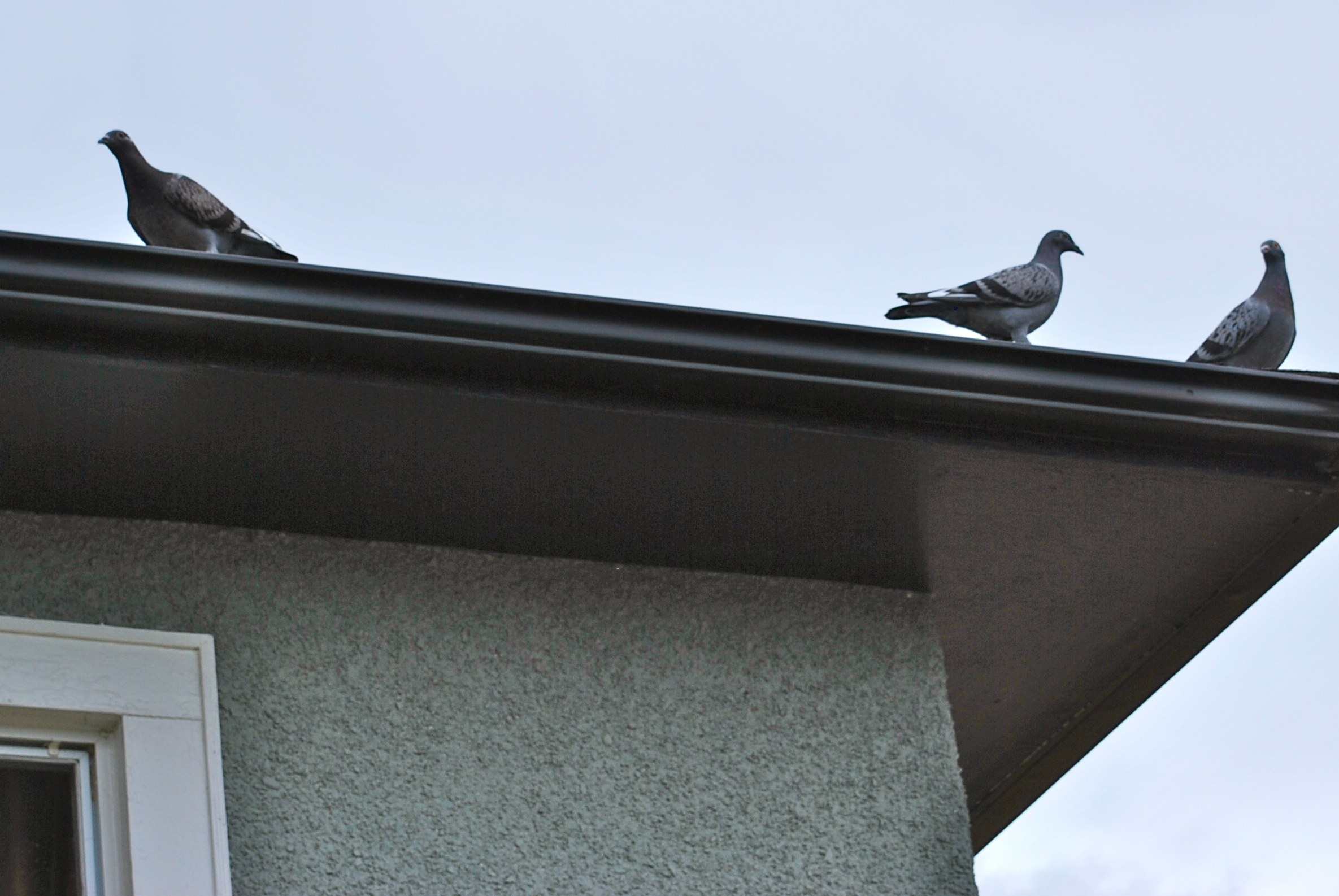
My homers looking at me from my roof
Don’t let them go yet.
It’s been two weeks, otherwise known as a couple of weeks, which is when the seller said I could probably safely let my birds fly. Of course, I’ve been looking forward to this day.
My pigeons had all been doing very well. I had progressed to a couple of them landing on my feed bowl to eat while I was still holding it, and coming to the food when I called. I was feeding them once a day in the mornings and they were sticking to the upper levels of the coop, away from the ducks and chickens on the ground. I’d been researching how to coop train them and today was the day.
I did a few things wrong today. I noticed when I came out this morning that a few pigeons were on the coop floor with the chickens. This likely meant that they had overcome their fears and had come down for some chicken pellets. First mistake: they might not be very hungry. I hadn’t fed them yet and assumed it would still be fine, since I noticed they don’t much care for the pellets and much prefer corn and wheat.
Secondly, even though I’d read to only set them loose on a nice sunny day, I ignored this advice and let them out on a greyish, cloudy day. Not a rainy day by any stretch, but not as nice and sunny as we’ve been having lately.
I opened the pigeon door and they timidly made their way out. Things looked good, they flew around the coop in ever widening circles and finally landed on the roof of my house. My one older bird stayed there and looked at me for awhile. A few minutes later I could only spot four birds, the younger four. The older bird was gone and I’m assuming he flew right back home. Darn it.
I’d also read not to let them out while there were predators around. Well, there weren’t any hawks but I forgot about my cats. They were VERY interested in these birds on the roof and got as close to them as they could. The pigeons weren’t too happy about this despite my efforts to rein the cats in.
After calling them, shaking the food dish, putting food on the landing pad to their doorway and then doing it all over again many times, they still haven’t returned.
They hung out on my roof for a few hours looking a bit perplexed. They flew around and showed me some beautiful aeronautics. Right now they’re on the neighbor’s roof two doors down and it’s been over four hours since they were first released.
Will they come back by nightfall? Will they come back at all? How will I get the door closed behind them without constant vigilance and no trap yet installed?
I suppose I’ll find out.
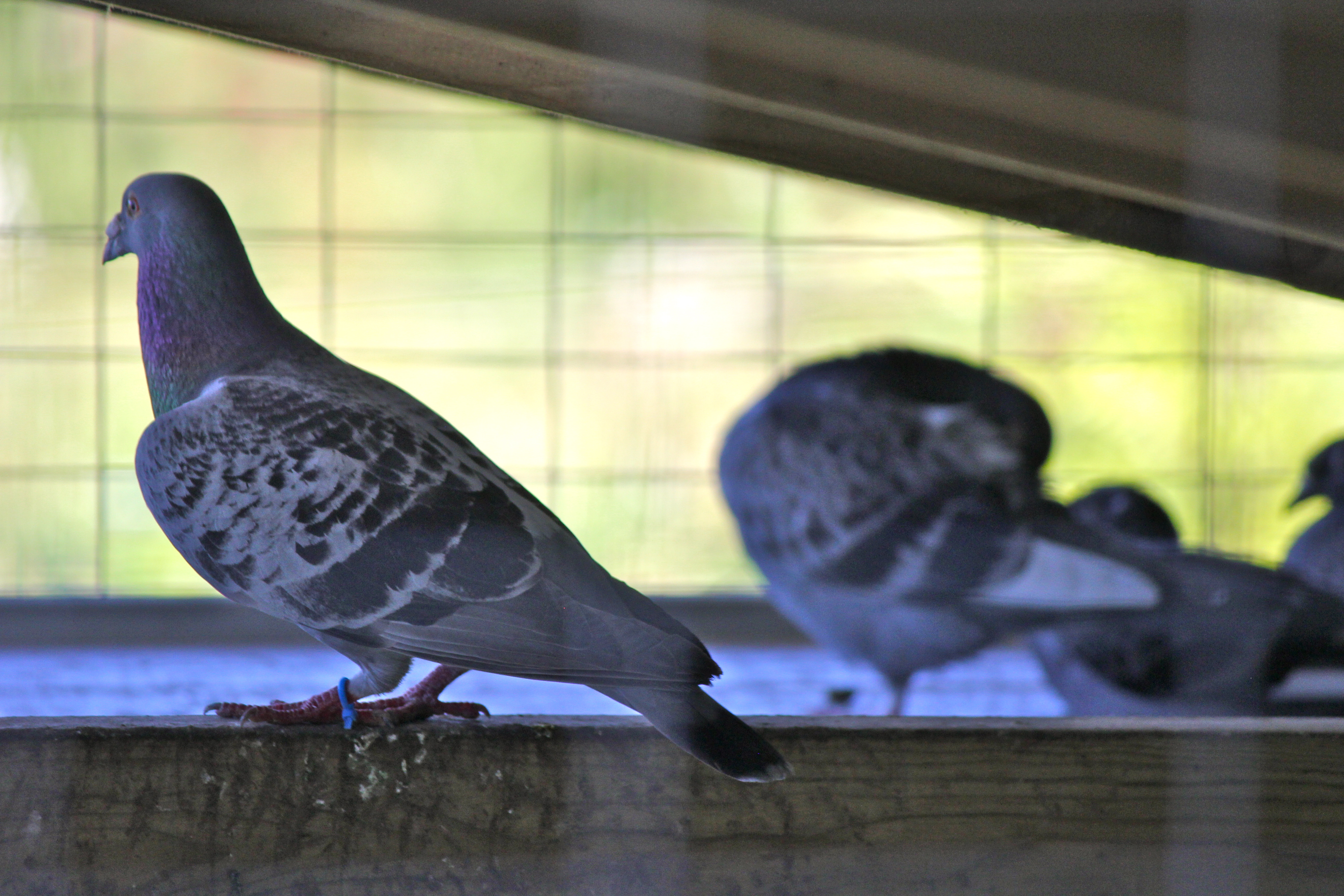 I thought I knew a fair amount about pigeons. I had a pet pigeon named Danny while in university in Nova Scotia. He had been found as a squab by a friend of mine who was too busy running a venue to continue caring for him. I took over the duties while he was still pretty young.
I lived in an old house converted into apartments, on the second floor. Danny, once he was old enough, occupied one of my ample bedroom windowsills. Coming inside to be fed, or when it was too cold and free to roam the city otherwise. It should be noted that my roommates at the time hated him and wanted him gone. He was charming though, and would bat his wings like a Mantis shrimp at my cats if they got too close. Definitely as good a pet, if not better, as any canary, zebra or society finch or budgie, all of which I have experience with.
It was always thrilling to have him follow me to school and join me for lunch. A lot of students were shocked to see what looked like a wild pigeon fly down and land on my shoulder while I was eating a sandwich out on the deck.
I also learned from reading multiple online experiments that if you do harm to a pigeon, they will remember your face for the rest of their lives. Only such intelligent, well-adapted birds could have acquired such a bad rap.
Now I have five homing pigeons. I thought they could just live in the coop with the chickens and that was kind of that. I considered the possibility that the moment I let them out to fly the first time they would just return home to the guy I bought them from, but he had assured me they were young, unflown birds and I could probably safely let them out in a couple of weeks. (That means that they’ve always been locked up and haven’t been able to fly around and really “lock in” where home is by taking note of landmarks and such. Some people say that even unflown pigeons know where they are geographically and can find their way back and I tend to agree. Hoping my pigeons will feel spoiled enough to want to stay here though, fingers crossed.) Well, once turned loose in the pen they flew to the highest point on top of the coop and that was that. I set them up with ample food and water and let them be. First mistake.
Apparently a hungry pigeon is a friendly pigeon. After a day or three of pigeons who wanted nothing to do with me, I decided I needed to remove the food bowl and instead feed them once or twice a day and call them to the feed with the same sound every time. This will eventually set me up to be able to let them loose in the morning before they’ve been fed, and hopefully then call them back for breakfast. If I can practice this routine over and over, I can coop train my birds. Then I can slowly progress to taking them farther distances away for flight training. I allow them to free feed for around an hour or so while I complete the rest of my farm chores. I give them a mixture of wild bird seed, whole grains and laying pellets. The pellets are not a big hit.
Well, it worked. I now have an attentive group of pigeons who are very interested in me and what I’m doing.
Another aspect I didn’t know was that pigeons are extremely territorial, to the point that the nicer the setup they have at home, the faster they’ll race back. Some people suggest nest boxes that are 30 by 24 inches. That’s nearly the size of a rabbit cage! I decided to compromise and made them a six unit plywood nesting shelf with holes that are about 16″ wide by 11″ deep and 12″ tall. I figure they can always claim two if they require more space. I don’t plan to keep a lot of pigeons, so it should do for now.

Waiting for a snack
Well, the rabbits were packed up and trucked off to the swap this morning. As I predicted, there were plenty of admirers but no buyers. I did give out my number to a few people though, which will hopefully translate to some sales later on.
There were lots of things on offer, it was probably the best-attended swap I’ve been to so far, even though it was rainy. I managed to pick up a few excellent new additions to the homestead and only spent a grand total of $56.
My first purchase was something I’ve been wanting for a long time… Homing pigeons. Ok, I did want fantail pigeons, but I needed birds that could occupy the upper quadrant of the chicken pen and fantails are not great fliers. Plus, with homing pigeons you can drive them miles away and let them go and they find their way home. You can’t have that kind of fun with a fantail!
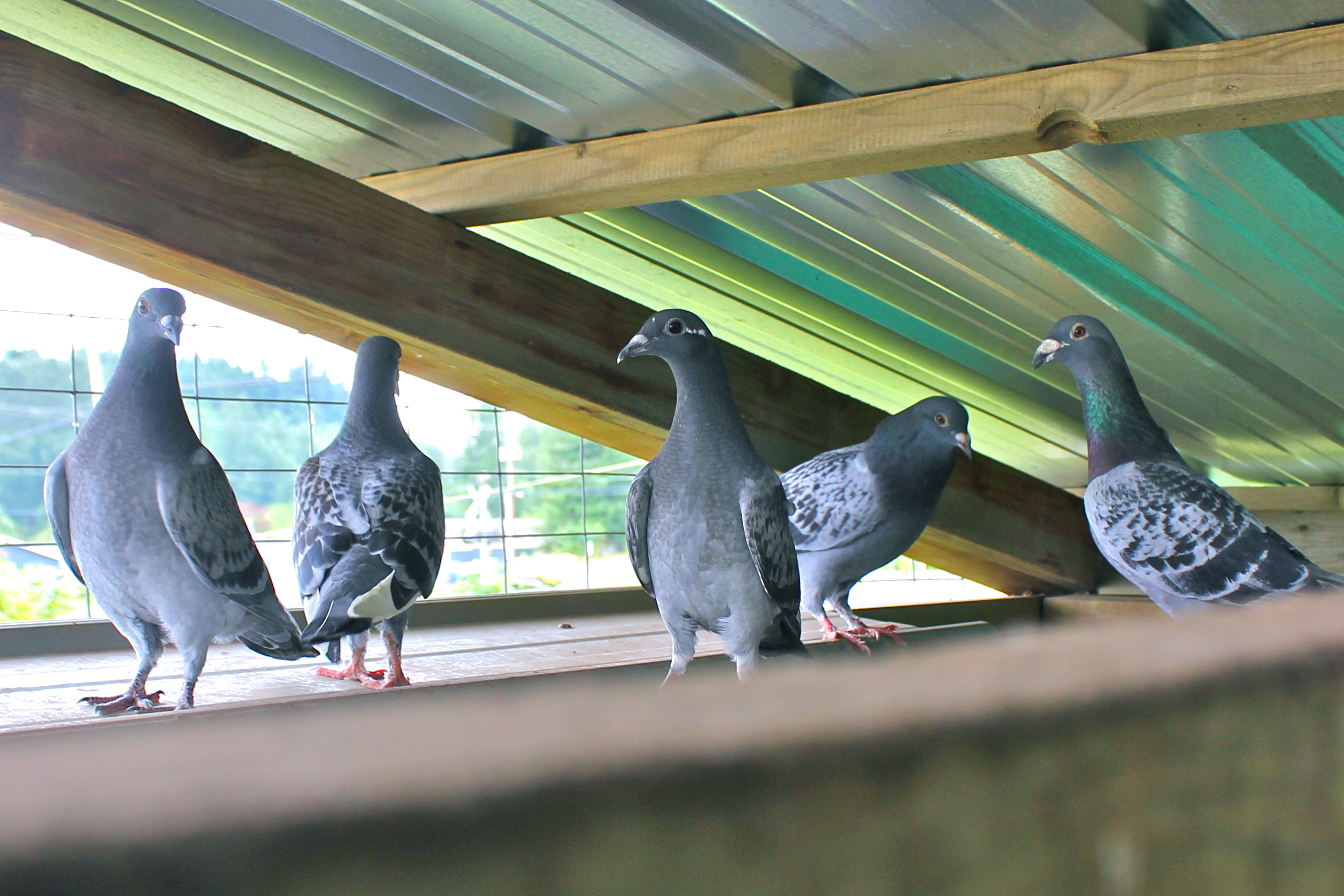
My five new homers
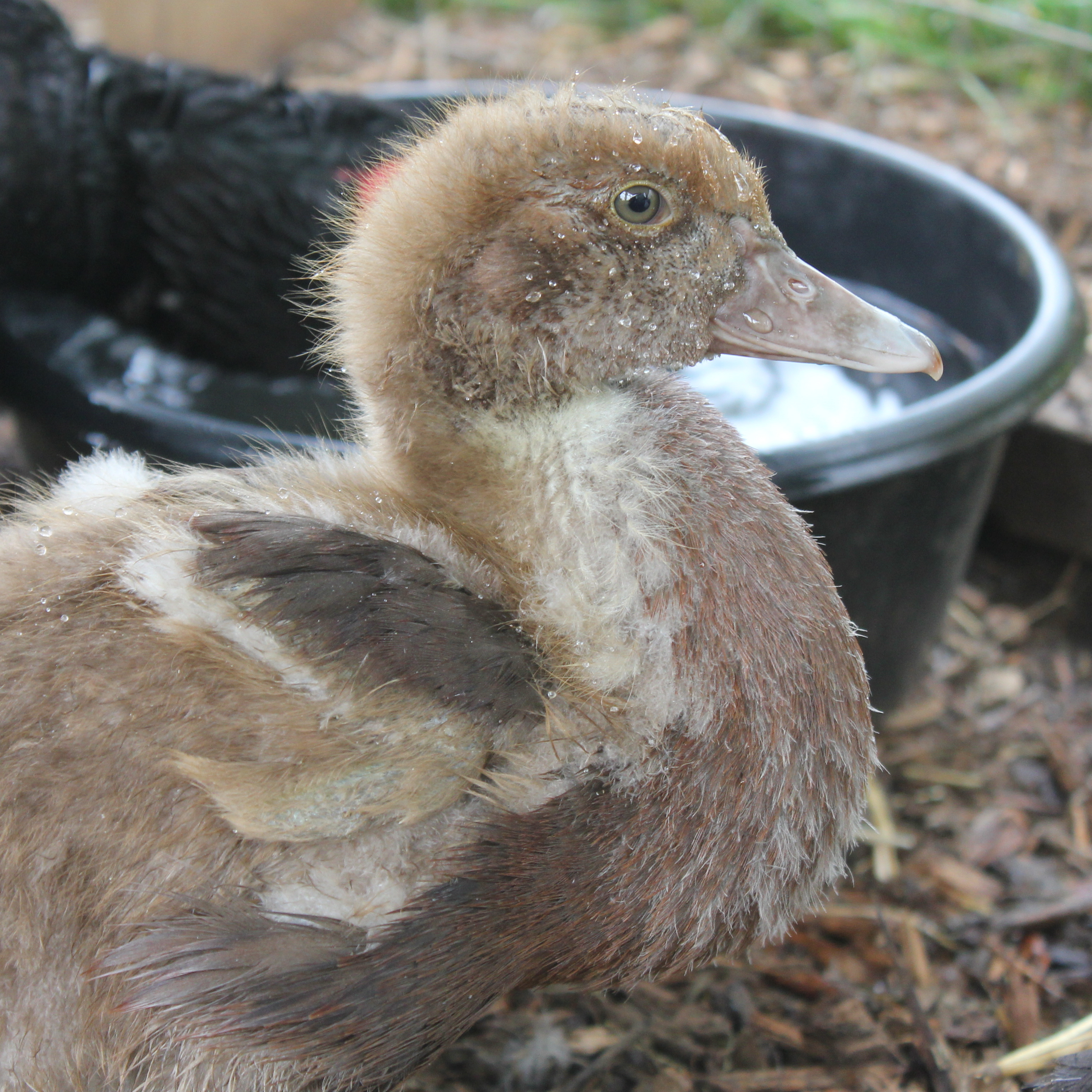
The second purchase was a pair of chocolate Muscovy ducklings. I know, the last thing I need is more ducklings but I really want the chocolate color, so hopefully they will stay on as breeders. The other, older ducklings will probably all be going to freezer camp at the 12 week mark, around the beginning of August.
Third purchase was another long-time desire of mine… Barred Rock chickens! Barred Rocks were the breed I wanted first when I moved here, but somehow it never worked out. Today I purchased a young pullet and cockerel pair from a lovely little girl who told me they have been kissed goodnight every day since they were born. They certainly are very friendly birds. I’m going to try making my version of a “No-Crow” collar for the rooster to see if it actually works. It’s just a little fabric collar that goes around the neck and prevents the rooster from getting a full big breath of air to let out a big crow. I’m skeptical but it sure would be awesome to hatch out my own chicken chicks!
My final purchase for $6 was a dozen pastel green Ameraucana hatching eggs. They’ll be going into the incubator with the latest clutch of quail eggs in the next few days. I’m very excited to see what develops!

East Vancouver Beekeepers. Local Honey, Local Queens
An adventure in beekeeping
Raising bees holistically in New Hampshire
Shh…germination in progress
The more I studied beekeeping, the less I knew, until, finally, I knew nothing. But, even though I knew nothing, I still had plenty to unlearn. Charles Martin Simon
Tales of an urban bee farmer
Professional Development and Homesteading in an Ever Changing World
My Life in Rescue and Reiki
A young woman and her adventures in 'the sport of kings'.
This WordPress.com site is the bee's knees
Sustainible Living and farming on a Quarter Acre
{salty wit + a sweet tooth}
four decades of organic vegetable gardening and barely a clue
Extreme Global Rescue
 Abernathy's Rabbitry