In the Coop: Nest Box Pile Up

Image

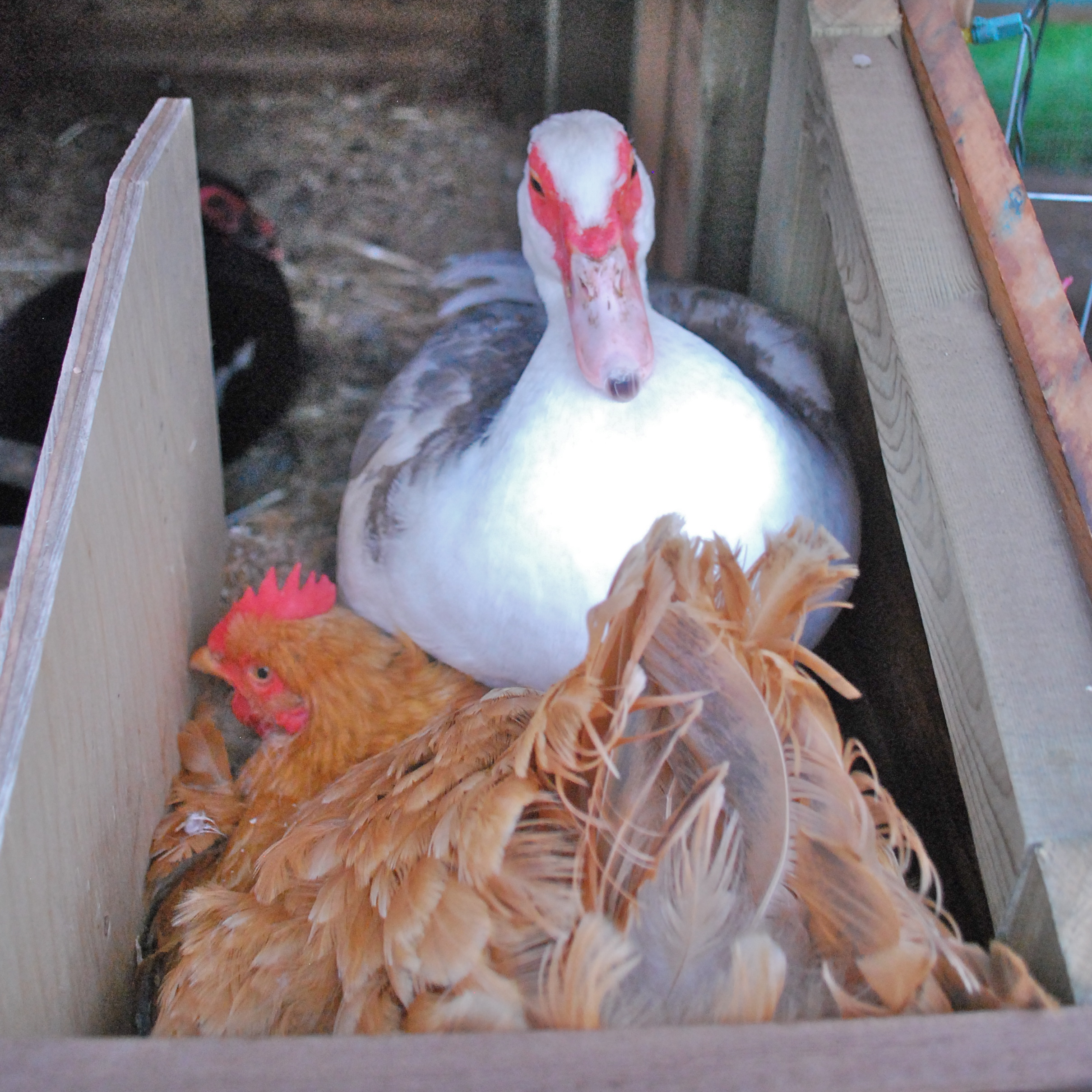
“Oh no please, allow me!”

The first livestock I ever got upon purchasing my first house a year and half ago were four little Muscovy ducklings. I was planning to raise them to eventually hatch their own eggs. Unfortunately one morning, as they were nearing laying age, they were all massacred by two roaming neighborhood pitbulls. It was grisly and heartbreaking.

Fast forward to today, I now have the most secure coop on the block and a new pair of Muscovies living safely inside. About a week or so ago I noticed a somewhat larger, waxy, off-white egg in the nest box. Hmm, did I have a chicken with a health issue? I brought the egg inside and was about to research it when I realized… Of course, it’s a duck egg.

YES! I had my first duck egg. Every day there was another one and I dutifully removed any chicken eggs that appeared in the nest, hoping she would sit on the clutch. Well, it turns out that I now have another first, my first broody hen. Obviously it was the Buff Orpington who went broody first, can she tell these eggs have been fertilized or what?

Unfortunately the duck wants to brood her eggs too. So what does that leave us? A duck and a chicken stuffed into the same nest – a fluffed up and hissing pile of poultry.

Fermenting Feed for Chickens

Image

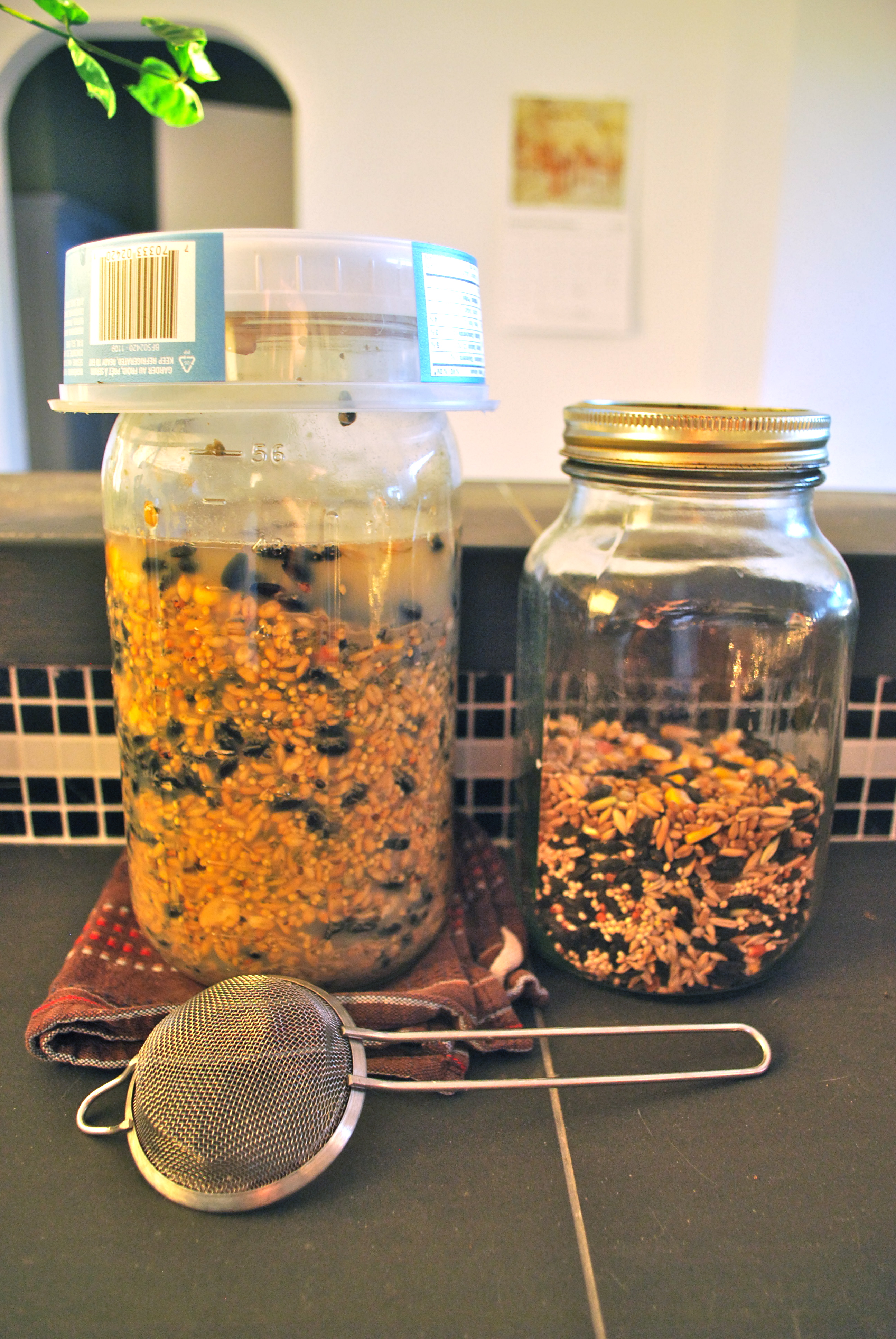
My current fermented feed setup

I’ve been making my own fermented chicken feed for a few months now, and it’s been a great success. The chickens and ducks love it, and consider it a special treat. I usually give my small flock about four small scoops a day in a little dish, and it gets cleaned up in about ten minutes. It has a pleasant smell, like unfiltered sake. Even the dog enjoys the few little grains that fall to the floor during preparation.

My recipe is simple. I just mix in whatever feed grains I have on hand, add a bit of kelp meal and then some water and give it a good shake. Right now I use corn, wheat, oats, barley, millet, black oil sunflower seeds and peanuts. Wild bird seed also works well. Over the next few days the grains lacto-ferment, which introduces Lactobacillus, Leuconostoc, Pediococcus, and other beneficial bacteria and yeasts into the culture.

Technically you can ferment normal pelleted or crumbled chicken feed as well, but I like to use whole grains. My poultry don’t usually get scratch, but sometimes I fill up the feeder with whole grains instead of pellets. I’ve never understood the saying that scratch should be considered “like candy” for chickens. I mean, these are whole grains. If I planted them they would grow. They store nutrients much better and are a lot less processed than commercial feeds, and I’m pretty darn sure commercial feed is made from processed whole grains, I mean come on.

You can start your fermentation jar or bucket by simply adding grains, adding water to cover and leaving it to sit at room temperature for about 3-4 days. Once it starts to smell sour and you see bubbles forming, then you know it’s ready; but even minimally soaked grain has improved digestibility by reducing the phytic acid and enzyme inhibitors found in all grains, seeds and legumes. Every time you remove some of the feed, refill the jar with more fresh grain and water and continue the cycle. In their lactic acid bath, the grains will be preserved indefinitely.

There’s enough natural lactic acid bacteria in the air and on the grains to get your culture going without adding anything else. If a white scum develops on the surface don’t fret, this is the scoby, and is normal. Just shake up the jar to mix it back in. The longer you keep your jar going, the more beneficial it becomes as the culture ages and matures, much like a good sourdough starter. It’s recommended to keep your jar covered and it goes without saying if you see mold developing, best to toss it out and start again.

Fermented feed has been found to increase egg weight and shell thickness, as well as boost intestinal health by forming a natural barrier to acid-sensitive pathogens like E. coli and Salmonella. It also lowers feed consumption due to more effective digestion, according to a British Poultry Science study from 2009. Another 2009 study by the African Journal of Biotechnology showed that fermented feed reduces the level of anti-nutrients found in grains and seeds, and greatly improves the bioavailability of vitamins and minerals during digestion.

Not only does fermentation preserve vitamins in grains, it also creates new vitamins, especially B vitamins like folic acid, riboflavin, niacin, and thiamin.

I haven’t noticed much of a difference yet in my hens but fermented foods have long been known to be conducive to good health in many species, including humans. I encourage you to give it a try!
Why Quail are Better Than Chickens

Image

1 week old Tibetan type Coturnix quail chick

Ok, I don’t really think quail are better than chickens, but I do think that they are vastly underrated.

The type of quail I have are Coturnix, or Japanese quail. They are a small, hardy gamebird that are very easy to raise and need very little space. Consider them as low-maintenance pets that are fun to watch and provide the added benefit of meat and eggs.

-They are ground dwellers who rarely fly and so require little headroom. 8 to 10 inches is sufficient. They also require very little living area, about one square foot per bird.

-Quail mature much faster than chickens. The hens begin laying beautiful, edible speckled eggs at approximately 6 weeks of age and continue to lay almost an egg a day for about a year or so before production slows. About 8% of their overall body weight per day!

-Quail meat is absolutely delicious, and quail are incredibly quick and easy to process. I can do one in about three minutes flat with a pair of kitchen scissors.

-Male quails don’t have a piercing crow like a rooster, it’s more of a wild-sounding trill which many people find pleasant.

-Quail eggs are very easy and forgiving for someone just learning to hatch. I’ve heard it said that you could probably leave quail eggs in the trunk of your car for a few weeks and they’d hatch.

-Quail eggs have more protein and nutrients than chicken eggs by weight, and are safely eaten raw. Not that I don’t consider chicken eggs safely eaten raw as well.

-They are friendly little birds who will come running when they see you approaching with dinner. I once had one lay an egg directly in my hand. Their feathers can also be used for fly-tying.

Personally, I think quail make ideal urban homesteading pets, especially in locations where chickens are not permitted. Their curious antics and beautiful plumage will suck you in just as much as their plentiful gourmet egg production. A perfect way to start? Get a trio of two females and a male. Now you have fertilized eggs that can be hatched out in an incubator to renew your flock when required, which is generally every six months to a year or so.

Image

Adult Coturnix quail