
 Went out to the barn to double check something and lo and behold, Esther has kindled her litter a day early. She gave me eight nice, healthy Californian/Creme d’Argent hybrid kits. That’s fourteen new spring bunnies born here today.
Tag Archives: meat rabbits
Californian Kits are Here
 On schedule, Samphire kindled seven kits this morning, one unfortunately was stillborn. I’ll have to monitor the nestbox closely from now on to make sure my new bedding experiment is doing the trick. I may add a piece of cardboard flooring if I find the kits burrowing down too much. It’s not that cold out right now but the kits need to stay extra warm for the first couple of weeks in order to develop well.
Help! My Meat Rabbits Won’t Breed

One of my Standard Rex pairs getting ready to breed as the jealous Californian buck looks on
Are you having problems getting your rabbits to do what they’re supposedly so famous for? They’re just sitting there in your barn, lying around in the lap of luxury, eating bag after bag of expensive food and your freezer is empty? So frustrating! Here are a few tips and tricks that have proven useful to me over the past four years running my rabbitry in getting more bang from my bucks. Get it?
First, we all know to bring the doe to the buck’s cage and not the other way around. This is because if you bring the buck to the doe, often he’ll be too interested in sniffing out the new territory than sex. If bringing her to him doesn’t work, you can also try putting them both in a neutral area. I’ve noticed if I put my pair in a tractor/cage together outside on the grass, often they’ll get in the mood. You can also try putting them in a larger than usual enclosure and this added freedom and fresh air may inspire them. Of course, there is also the rare recalcitrant doe who must have the buck brought to her in order to get the deed done. Some people also swear by taking an unwilling doe for a car ride. It’s unknown whether this works by jumpstarting the survival instinct or simply the vibration.
Some does also require that the buck puts some effort into breeding and will refuse him if he doesn’t give her a good chase. If you have a lazy buck who just wants to mount and not chase, try your doe with another more energetic buck and see if she acquiesces so you know what’s up. You’ll also have usually better luck breeding a young doe, say between 6 months to a year old, as opposed to an older doe who has never been bred and may become permanently uninterested.
Light plays an important role in rabbit receptivity. Nature has built that into them so that there are less babies born in the harsher winter months when there is less food and more predation. If your rabbits get no artificial light, they might be reluctant to breed in the darker months. Adding a single lightbulb on for a few hours a day either before or after the sun rises or sets, will often make a big difference. You may also want to try breeding around dawn or dusk, when rabbits are naturally more active.
Temperature too can make rabbits unwilling to breed if it’s either too hot or too cold. Rabbits can even become temporarily sterile if temperatures are too high for extended periods.
Not her time of the month maybe? Nope, rabbits are induced ovulators that drop their eggs whenever successful mating occurs. This also means that you will have better luck conceiving if you always breed your pair twice. I usually wait for the buck to fall off once or twice, then separate them, then put them together again in a few hours. If you’re not sure what it means for the buck to ‘fall off’, don’t worry, you’ll know it when you see it. Some bucks even scream when they do. I’ve heard different accounts of how much time is best to wait between breedings, from 1 hour to 8 hours. I generally wait between one to four hours or so. It’s also important to make sure the male’s equipment is in good shape. An injured or sore-looking penis or testicles may inhibit fertility or willingness.
Doe rabbits are more inclined to lift during certain periods and you can tell how receptive they are by checking the color of the vulva. A darker pink/purplish color is best for breeding, while very light pinkish-white is generally a no-go. I personally never bother doing this. If my does refuse to breed, I just keep putting them back in every day until they do. You will often also have better luck breeding a doe if she still has kits with her. A quick way to test receptability is to stroke your doe along her back and see if she lifts her hind end and tail for you. A doe who does this will almost surely lift for the buck.
Food. One trick I’ve learned is to wait to feed your rabbits until after a breeding has occurred. If she refuses, she refuses, and of course still gets fed, but if she accepts then they sort of start viewing the food as a reward. I also think they have more energy when they’re hungry and will sometimes just sit there like lazy bums if they’ve already eaten. Another important aspect to consider is that if your bucks are fat, they’ll be too lazy to breed. You want to keep them slim and trim. This goes double for does, who will sometimes have trouble conceiving if they’re too fat.
Something I use a lot here on my little farm is apple cider vinegar. One use is to put about a teaspoon in the doe’s water (32 oz) for a few days if she’s refusing to lift. I don’t know if it’s actually the vinegar helping or just coincidence, but I’ve seemingly had success with it in the past. You can also try giving your doe more fresh food. A very safe treat that I like to offer is blackberry bramble.
Cleanliness. I’ve noticed that if the barn is a bit stinky or I’ve been neglecting my chores, the rabbits get a bit depressed. I know I wouldn’t feel too frisky if I was living in dirty conditions, so I can’t blame them. Try giving your hutches or barn a good thorough cleaning and you may find your rabbits more willing.
Good luck!

DIY Rabbit Nesting Boxes – Trial and Error

Esther with a moustache of the new bedding we’re trying. I think she approves
When I started researching meat rabbits, way before I ever had any, I wondered what I would use for nesting boxes. The traditional sheet metal boxes that I see used most often are hard to find where I live and very expensive when located. There’s one on a shelf at the local feed store that I think is around $40 and looks from the thick coat of dust on it like it’s been sitting unsold for many years. I wonder why…
I’ve also seen many wooden nesting boxes used. To me, that seems like a lot of work for a heavy nesting box that will absorb urine and is difficult to disinfect. I know the importance of disinfecting nesting boxes after each use as I had to deal with a couple of cases of mastitis last year. My rabbit recovered both times but it’s not something I’d like to repeat.
A nice solution would be if there was something cheap and plastic I could buy at a hardware store that would fit the bill, sort of like a squat planter box maybe. Something like that may exist, but I haven’t found it yet. I have wondered if a plastic dishpan might work, but I have yet to try this out.
So my solution was to follow guidelines in the Storey’s Guide to Raising Rabbits and build wire mesh nestboxes. I had already built all my rabbit cages, so I already had the mesh and tools. Despite the popularity of the book, I don’t think I’ve ever seen anyone else ever use a box like this, for whatever reason. I know once I posted a Youtube video which showed the box in use, a local rabbit breeder I know commented to me that she noticed I was using wire boxes and to not be surprised if I lost most of my kits. That scared me a bit. I asked her why, and she said the kits would either get too cold or the mother would flip the lightweight nest over. Well, I wasn’t going to let either of those things happen.
At first I would cut out a fresh cardboard liner for each new litter, then fill the box with woodchips and straw. The cardboard had to be in one single piece or the does would pull out each side and toss them. Well, turns out you actually go through a lot of cardboard that way and measuring out and cutting the liners is tedious. I hated it. I also need my used cardboard to make packaging for my other business and there’s no way I’m going to go and buy new cardboard. Do you know how expensive it is?
I experimented once without the liner and all the woodchips fell out through the mesh in just a few days. Thankfully the kits survived but I needed to add new bedding each day and they were obviously struggling to stay warm in the depleted nest.
Now I think I’ve found a better solution. I don’t know why I didn’t think of it before, but this time I shoved a whole bunch of shredded newspapers into the bottom of the nests and topped them off with the straw. The problem with straw is that my rabbits like to eat it. Generally though enough is left in the nest for it to work. They won’t be eating the paper I bet. So far, it looks like the shreds make a nice soft and yet solid base to the nest, and it doesn’t seem to want to fall out the holes. The rabbits seem happy with it and it’s absorbent, practically free and should insulate well. I keep the does from moving or flipping over their nests by attaching the back to the cage wall with a dog leash clip.
These wire mesh nests are nice and light when removing them to inspect kits, they can be very easily sanitized in a container with some bleach and water, they were cheap and easy to make, and they’ll last a very long time. I worried a bit about the sharp front corners at first, but I smoothed everything off well with a grinder when I made them and the rabbits seem to have no problems. I’ve seen enough wild rabbits deep in bramble bushes to know that they know how to avoid being impaled on sharp objects.

Very pregnant Creme d’Argent doe and nest box
My nestboxes are made of 1/2 inch by 1 inch rabbit cage flooring wire, and measure 18 inches long by 10 inches wide by 8 inches tall with a 5 inch tall front lip. They are held together with hog rings or c-clips.
Back to the Rabbits

Hybrid meat bunnies
I haven’t posted about rabbits for awhile, especially considering the name of this site. There have been a lot of changes in the past few months.
The biggest and best change is that I finally replaced the roof on my barn. For two years whenever it rained the poor bunnies had to live with the occasional drip which slowly turned into a constant drizzle as the tarp I put up weathered away. I even lost a whole litter once when they were drowned by accident. That was a horrible experience. Now I’ve installed a nice new metal roof that I’m proud to say I built myself and learned a lot in the process. I still have work to do on it yet like fascia boards but at least things are now watertight. You wouldn’t believe the constant anxiety it was causing me knowing the rabbits were living without a proper roof! Summers were fine but spring and fall are very wet here. Soon I will be replacing the old falling-off, flip-up garage door with some nice dutch barn doors. To these I would also like to add a dog/cat door so my team can maintain a constant mouse vigil.
I also went through a paring down process with the rabbits themselves. My first purebred rabbits here were Silver Martens, as that was all I could get at the time. While they were nice rabbits, they just didn’t grow fast enough or large enough for me to be viable as meat rabbits. So I got rid of them.
Now I’m down to four does and two bucks. I have Esther, my reliable Creme d’Argent doe, Samphire, my Californian doe, Tuna, my Black Otter Standard Rex doe and Bluefin, her daughter, a Blue Otter Standard Rex. My bucks are Scorch, the Californian and Timmy the Black Otter Rex. It’s a nice variety and a good number for me right now I think.
As of this moment all of my does are (fingers-crossed) bred. I’m expecting a litter of Cal/Creme meat hybrids, a litter of pure Cals, and hopefully two litters of Standard Rex. Three of those litters are due this Wednesday. Nest boxes go in tomorrow.
I resisted getting Californian rabbits at first. Not sure why, I guess they looked kind of boring to me as predominantly white rabbits. Now I’ve changed my mind, and I really like my Cal pair. They were skittish at first, but have calmed down a lot as adults and seem to enjoy petting. They are never, ever aggressive. I also love Esther, my Creme doe. She’s been with me from the beginning and was a gift from a local rabbit breeder. She’s a big, beautiful, sweet girl who is a fantastic mother, does excellent on forage and has never shown a hint of aggression, ever.
Then there are the Rexes. While Timmy, who is an ex-pet rabbit would never think of being mean (he is also the only rabbit who I can free range in the yard and trust to return to his cage), the girls have had their moments. Both Rex does have stomped, growled, boxed and lunged at me, although I’ve never been bitten. I’m kind of split on the issue because I really like both of them as breeders (not that they’ve proven to be reliable mothers yet at this point), but I also don’t see the point of having aggressive rabbits here at all. It’s possible they act out primarily when hormonal, so I’ll have to be mindful of that. They’ll have a chance to prove themselves as moms in the next few weeks and that will help my decision, I’m sure. At least I hope it does.
They’ve been very good lately, but that may be because spring brings lots of fresh treats. If they continue to be aggressive with me once they have kits, I think I’ll have no choice but to cull once the kits are weaned. I do not want to be bitten by a rabbit.
Check back soon for baby bunnies!
Simple Rabbit Liver Pate

If you raise meat rabbits, you probably have lots of rabbit liver. I like sauteed fresh livers with crispy fried sage and garlic, but with a little extra effort you can make a delectable and creamy liver pate. The proportions are not so important, but I find that using my copper pan makes a better tasting pate than non-stick.
Rabbit Liver Pate
Fresh livers from 4 rabbits
2 cloves garlic
Sea salt and fresh ground pepper to taste
1T butter
1T cognac
Add butter to a copper saute pan on medium high heat. Salt and pepper your rabbit livers on both sides and saute for about 1-2 minutes per side. The centers should still be pink. Slice garlic and add to pan when you have about 2 minutes cooking time left. Remove livers when done and set aside. Add cognac to garlic in pan and cook for another 2 minutes. Remove from heat.
Add livers, garlic and pan drippings to a food processor. Pulse until very smooth and add more salt if required. Serve warm or cold with toasted baguette rounds. Can also be frozen. Serves 4. Enjoy!
Respecting Rabbit Claws
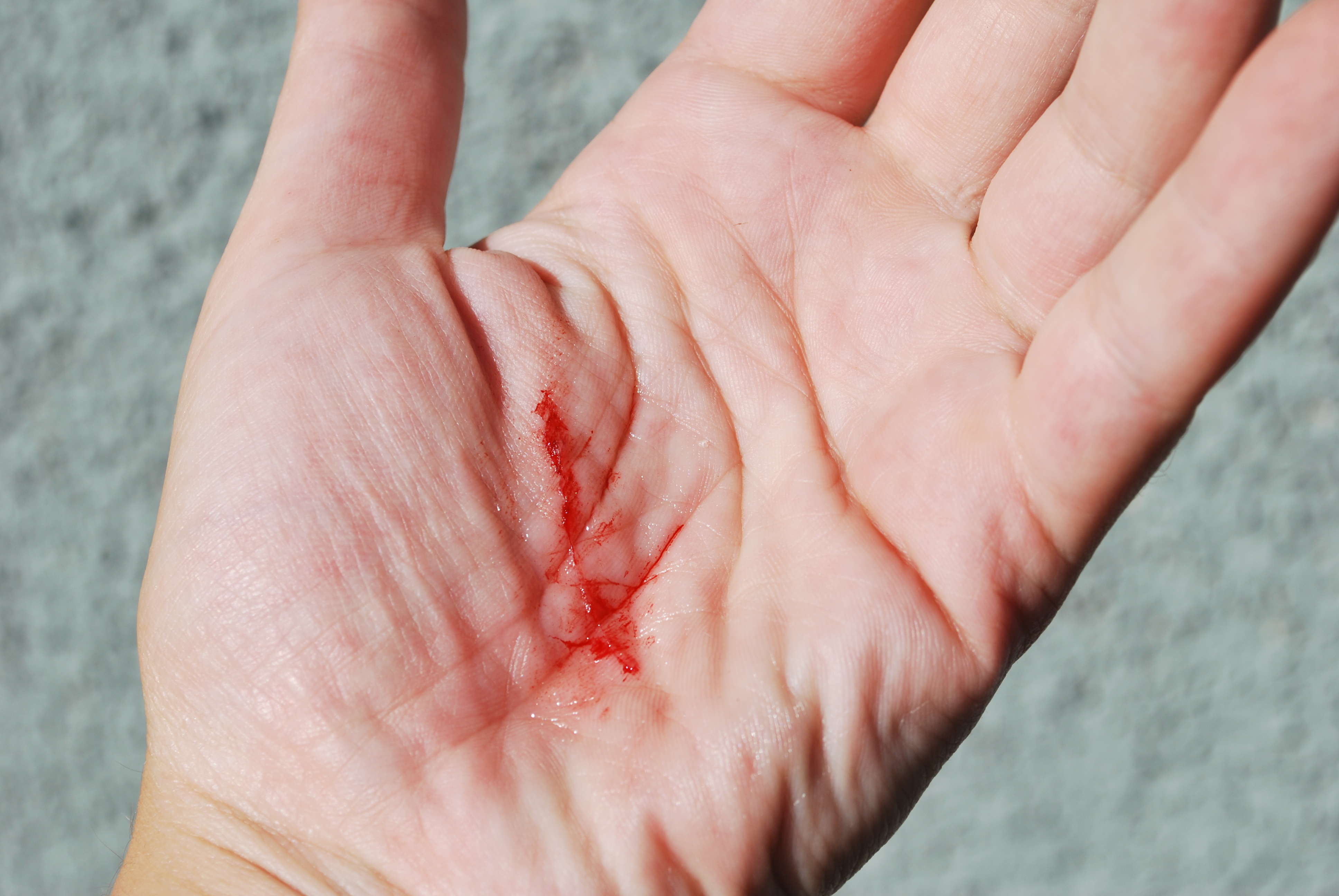 I keep telling myself that I will no longer be maimed by my rabbits.
I keep thinking I will always remember to wear gloves, I will always have long sleeves on, I will always have a thick shirt on. These are the areas the rabbits will get you. They will slash your wrists, arms and stomach as you try to transport them by the scruff or by cradling in your arms. A rabbit can kick its hind legs up behind its head and get you real good when you carry them by the scruff.
My arms and wrists are now a myriad of scars in various stages of healing. Usually I do remember to wear safety gear but sometimes I get an urge to move a rabbit right away who I think will be nice about it. All it takes is one second of hysteria though, something rabbits are all too prone to.
I remember a story told to me last year by a veteran rabbit raiser at a rabbit show. They once had an incident where a man holding a Flemish Giant in his arms was disemboweled by the kicking hind legs when the rabbit started to panic. His intestines spilled out and he was rushed to surgery, where he barely survived.
Yesterday I was reminded again that although my rabbits have never bitten me, their claws are not to be underestimated. Moving a Blue Rex doe for breeding earned me a deep wound in my left palm which makes chores a little more difficult. Rabbit claws will slice you right open like a scalpel. I try not to take it too personally.
Another Case for Hybrid Vigor? Comparing Weights at 7 Weeks
I have two seven week old litters of rabbit kits right now, one are purebred Californians and one are Creme d’argent/Californian hybrids. The hybrid kits are actually a day younger than the Cals.
Well today was sexing and weighing day. Visually, the purebred kits were a lot smaller to me. I have heard that Cals can look smaller while still making weight so I was interested to see the results. Both litters have been on the same diet, with the Cals being a litter of 8 and the hybrids a litter of 9.
Well, chalk another one up for hybrid vigor because the mixed kits are a LOT bigger than the purebreds.
Californian kit weights: 918g (buck), 952g (doe), 966g (buck), 975g (doe), 1015g (buck), 1035g (buck), 1077g (buck) and 1098g (doe). Average weight per kit: 1005g.
Hybrid Cal/Creme kit weights: 1127g (buck), 1153g (doe), 1180g (doe), 1229g (doe), 1270g (doe), 1287g (doe), 1327g (doe), 1346g (buck) and 1357g (doe). Average weight per kit: 1253g. That’s 248g more than the Cals who are a day older. That’s nearly half a pound heavier each!
Hybrid Kit Weights – Nine Weeks

Enjoying some blackberry bramble
The Creme d’Argent and Silver Marten hybrid kits are now nine weeks old. Do some people’s rabbits reach butcher weight (let’s say five pounds) by eight weeks? Sometimes I hear about that happening but find it hard to believe.
Here are the recorded weights for this week: 1227g, 1275g, 1481g, 1485g, 1523g, 1533g, 1602g and 1626g. That’s a total weight of 11752g and a total increase from last week of 1320g.
First Californian Litter

Newborn Californian kits
Today marks the date of our very first purebred Californian litter. It was also Samphire and Scorch’s first litter and things couldn’t have gone more smoothly.
Samphire ripped her prepared nest box to shreds when it was put in (I should have known better than to line it with a paper feed bag!) and so I replaced the shredded bag with a new cardboard liner and she went to work getting it cozy. I use wire nest boxes so they need a new liner every time to hold the wood chips and straw inside.
Yesterday afternoon I noticed that she had started pulling fur, which is a first here. Generally all the moms here pull fur immediately before kindling and not a minute sooner. Fur in the nest box means kits in the nest box. I was pretty sure from all this motherly activity that Sam was going to do a great job.
Today I woke up to eight very pink and fat looking kits, all born in the nest box. There was one uneaten placenta that needed to be removed and a few kits had some scratches on them, but other than that things went perfectly. Now if I could only get the person who sold me these rabbits to finally give me their pedigrees. I’ve paid for them and I would like to have them, it’s been months now without any reply. Very frustrating.
Esther, my Creme d’Argent, was also bred to Scorch at the same time, but she has a habit of kindling on day 32. She looks huge, so most likely we will have even more new kits tomorrow. Yay!
 Abernathy's Rabbitry